


Blog
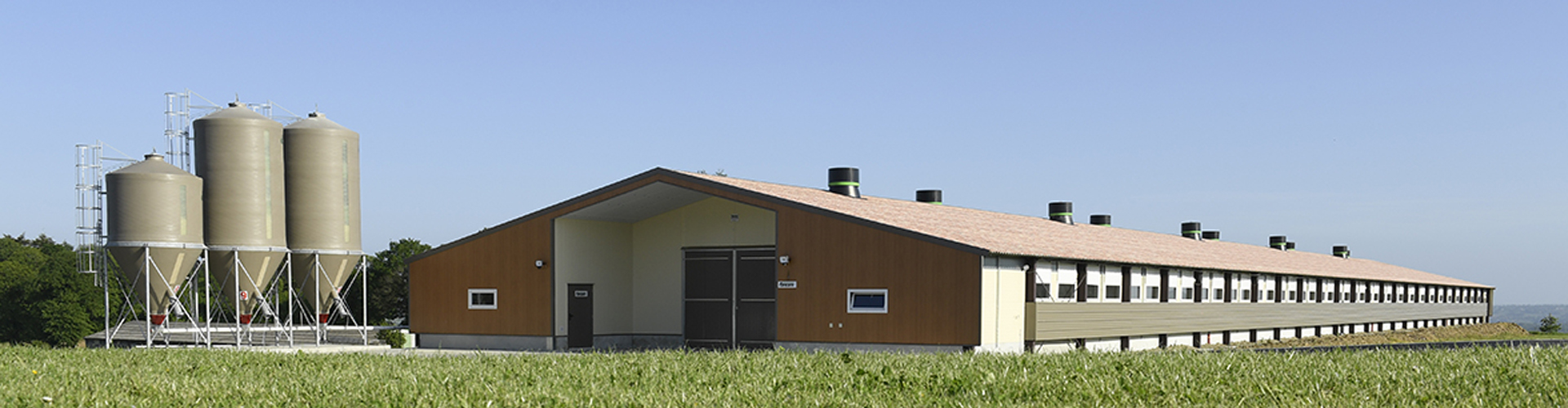
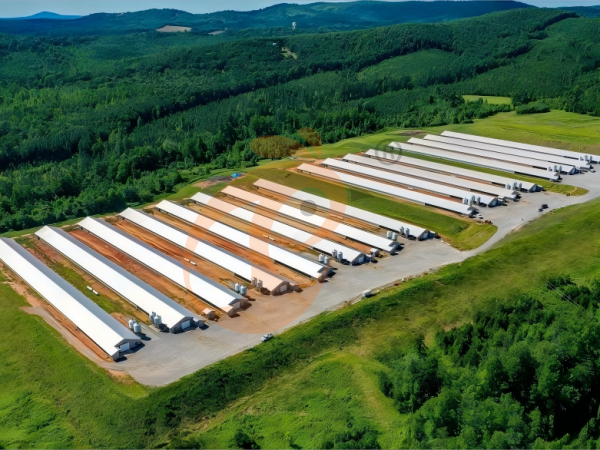
Floor rearing poultry equipment establishes the foundation for efficient commercial poultry production systems in broiler and layer farming operations.
Poultry house performance depends on automated feeding systems, nipple drinking lines, ventilation capacity, heating control, and environmental monitoring integration.
Modern poultry production requires precise equipment coordination to maintain stable growth rate, feed conversion ratio, and flock uniformity across production cycles.
Equipment configuration determines air exchange rate, water delivery accuracy, thermal stability, and lighting consistency in controlled poultry environments.
Proper system design supports high-density stocking management, reduces mortality rate, and improves overall production efficiency in commercial poultry facilities.
Get professional poultry farm construction guidance, equipment selection solutions, and the latest price lists, whatsApp to +8618830120193, click to learn more:
Automatic Feeding System
The automatic feeding system is the primary equipment responsible for delivering feed evenly throughout the poultry house.
Feed accounts for approximately 60% to 70% of total poultry production costs, making efficient feed delivery extremely important.
Modern floor rearing farms typically use pan feeding systems connected to feed silos and auger conveyors.
Feed is automatically transported from storage bins into feeding lines according to programmed schedules.
Data is for reference only.Swipe horizontally to view full table.
Uniform feed distribution reduces competition and improves flock consistency.
Commercial farms commonly achieve body weight uniformity above 85% when feeding equipment is properly designed and maintained.
Why Feed Distribution Uniformity Matters
Even if a poultry farm purchases high-quality feed, poor distribution can create significant performance differences within the flock.
When birds have unequal access to feed, dominant birds consume more nutrients while weaker birds fall behind.
This results in uneven growth, increased management difficulty, and lower processing efficiency.
A properly designed automatic feeding system can distribute feed across a 120 m poultry house in less than 4 minutes, ensuring all birds begin feeding at nearly the same time.
Nipple Drinking System
Water is the most consumed nutrient in poultry production.
Birds can survive temporary feed shortages, but water interruptions quickly lead to reduced performance and health problems.
Most modern floor rearing poultry houses use nipple drinking systems because they reduce water wastage and maintain cleaner litter conditions.
Data is for reference only.Swipe horizontally to view full table.
Water consumption is also a useful management indicator.
A sudden reduction of more than 10% often signals disease, stress, or equipment malfunction.
Proper Nipple Line Design
Commercial broiler houses generally install one nipple for every 10 to 12 birds.
Water pressure should increase gradually as birds grow.
Excessive pressure causes leakage, while insufficient pressure limits water access.
Well-maintained nipple systems can reduce water waste by more than 20 L per 1,000 birds each day compared with traditional open drinkers.
Data is for reference only.Swipe horizontally to view full table.
Ventilation Equipment
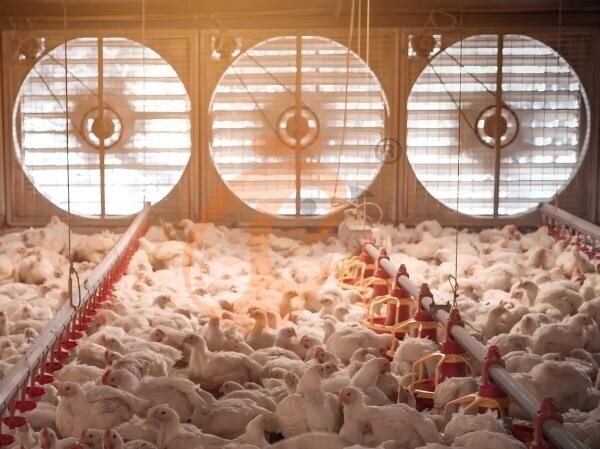
Ventilation equipment is responsible for maintaining air quality, temperature stability, and moisture control inside the poultry house.
Bird respiration, manure decomposition, and environmental heat continuously affect house conditions.
Without adequate airflow, ammonia concentration rises rapidly and growth performance declines.
Data is for reference only.Swipe horizontally to view full table.
Large commercial poultry houses often use multiple tunnel ventilation fans operating together to achieve complete air exchange every 60 to 90 seconds during hot weather.
Air Quality Science In Poultry Houses
Birds require oxygen just as critically as feed and water.
Research in commercial broiler production shows that elevated ammonia levels can damage respiratory tissues and reduce growth efficiency.
Poultry producers generally aim to maintain ammonia concentrations below 20 ppm and carbon dioxide levels below 3000 ppm.
Data is for reference only.Swipe horizontally to view full table.
Effective ventilation not only improves growth but also reduces litter moisture and disease pressure.
Cooling Pad System
Cooling pads work together with ventilation fans to reduce house temperatures during summer.
Water continuously circulates through cellulose cooling pads installed along one side of the poultry house.
As air passes through the wet pad surface, evaporation removes heat from incoming air.
Data is for reference only.Swipe horizontally to view full table.
In hot climates, cooling pads can lower incoming air temperature by 6°C to 12°C depending on humidity conditions.
Importance Of Heat Stress Prevention
Broilers begin experiencing heat stress when environmental temperatures exceed approximately 30°C.
Heat stress can reduce feed intake by 1.5% to 2.0% for every 1°C increase above the comfort zone.
During severe heat waves, mortality losses can become significant without proper cooling equipment.
Data is for reference only.Swipe horizontally to view full table.
For this reason, cooling pads are considered essential equipment in many commercial poultry regions.
Poultry House Heating System
Chicks have limited ability to regulate body temperature immediately after hatching.
Heating systems provide the warmth necessary for early development.
Brooding temperatures must be carefully controlled to support feed intake and immune system development.
Data is for reference only.Swipe horizontally to view full table.
Temperature deviations of only 2°C to 3°C can significantly affect chick activity and growth performance during the first week.
Poultry House Lighting System
Lighting affects feeding behavior, movement patterns, growth performance, and reproductive activity.
Modern poultry houses increasingly utilize LED lighting due to lower electricity consumption and longer operating life.
Data is for reference only.Swipe horizontally to view full table.
Appropriate lighting programs help birds locate feed and water while reducing unnecessary activity that wastes energy.
Energy Savings From LED Technology
Traditional incandescent bulbs may consume 60 W or more per unit.
Equivalent poultry-house LED fixtures typically consume between 8 W and 12 W while providing similar illumination.
For a poultry house containing 100 fixtures, annual electricity savings can exceed 4,000 kWh.
Environmental Monitoring And Control System
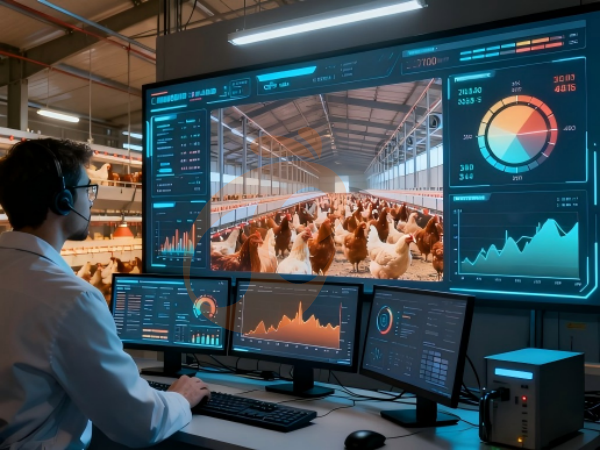
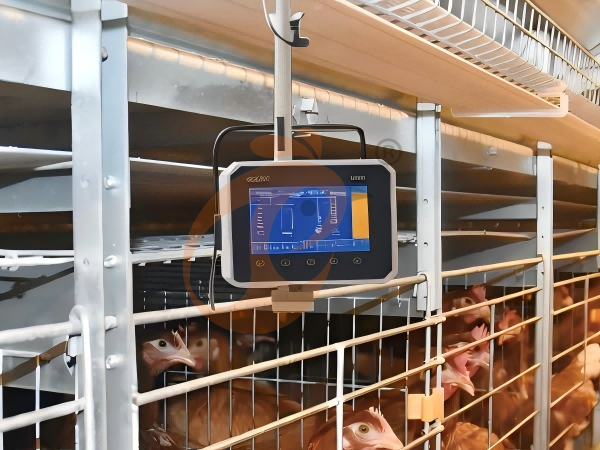
Environmental monitoring systems collect real-time information from sensors installed throughout the poultry house.
Modern controllers automatically adjust fans, heaters, cooling pads, and lighting equipment according to programmed targets.
Data is for reference only.Swipe horizontally to view full table.
Real-time monitoring reduces management errors and allows rapid response to environmental changes.
Integrated Equipment Performance Example
The following example illustrates typical equipment quantities.
Data is for reference only.Swipe horizontally to view full table.
Proper sizing prevents bottlenecks that can limit bird performance.
A complete floor rearing poultry house equipped with automated feeding, drinking, ventilation, cooling, heating, and monitoring systems may require an investment ranging from USD 45,000 to USD 120,000 depending on house dimensions and automation level.
European union standard reference only.
How These Seven Equipment Types Work Together
The effectiveness of floor rearing poultry production depends on the interaction between all equipment systems rather than any single component.
Feeders supply nutrients.
Drinkers provide hydration.
Ventilation equipment maintains oxygen supply and removes excess moisture.
Cooling pads protect birds during hot weather.
Heating systems support early chick development.
Lighting systems regulate feeding behavior.
Environmental controllers continuously coordinate all house equipment.
When these systems operate as an integrated unit, producers can achieve consistent growth rates, improved feed conversion, and lower mortality levels.
Frequently Asked Questions
Q1: What is the most important equipment in a floor rearing poultry house?
The automatic feeding system is usually considered the foundation of daily poultry production because feed consumption directly affects growth rate, feed conversion ratio, and production cost.
Proper feeder design also improves flock uniformity and reduces feed waste.
Q2: How many birds can one nipple drinker serve?
Commercial poultry farms generally design one nipple for every 10 to 12 broilers.
Proper nipple spacing, water pressure adjustment, and routine maintenance help ensure consistent water access throughout the flock.
Q3: Why is environmental control important for poultry farming?
Environmental control systems continuously monitor temperature, humidity, airflow, ammonia concentration, and carbon dioxide levels.
Stable environmental conditions improve bird comfort, reduce disease pressure, support feed intake, and increase overall production efficiency.
Taiyu (HK) Group - One Of China Largest Poultry Equipment Manufacturer
Professional manufacturing of floor rearing poultry equipment including feeding, drinking, ventilation, cooling, heating, and environmental control systems.
Global factory-direct supply supporting commercial poultry farms with competitive pricing and stable product quality.
Complete poultry equipment solutions available for broiler farms, layer farms, and breeder farm projects.
Experienced engineering teams provide customized poultry house design and turn-key project services worldwide.
Reliable after-sales support, installation guidance, and technical training for long-term poultry production success.
Contact Us To Received Your Customized Poultry Farm Plan
Headquarters And Branchs
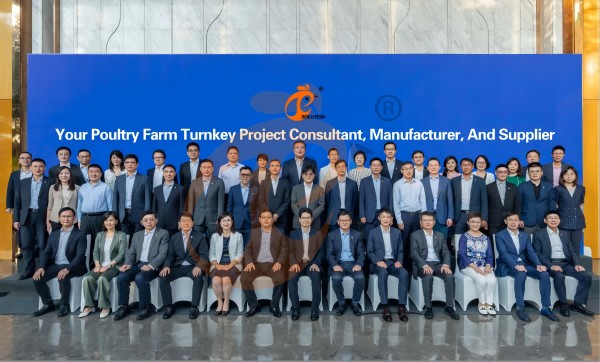
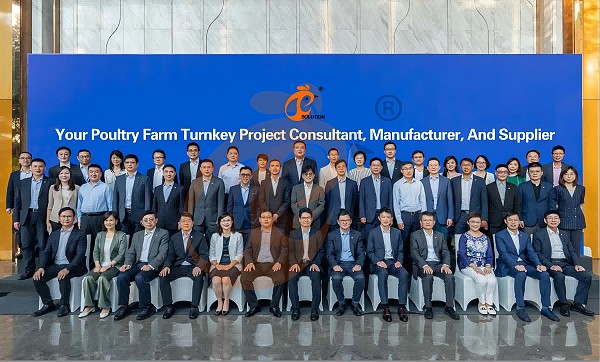
Hong Kong Headquarter Management Team
Hong Kong Headquarter Taiyu Industrial Group CO., LTD
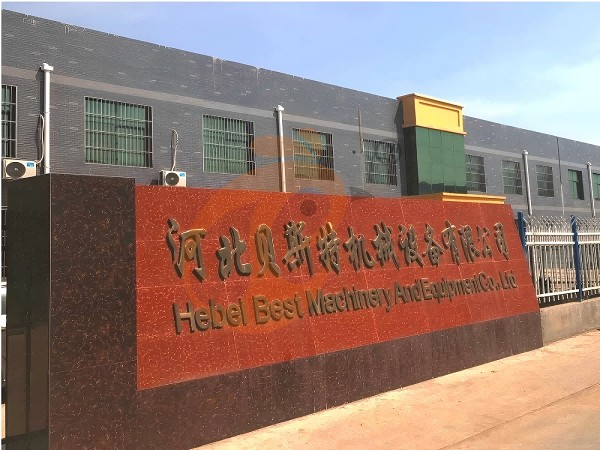
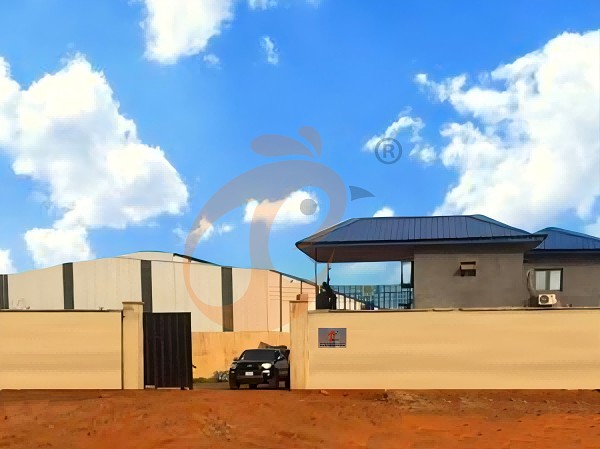
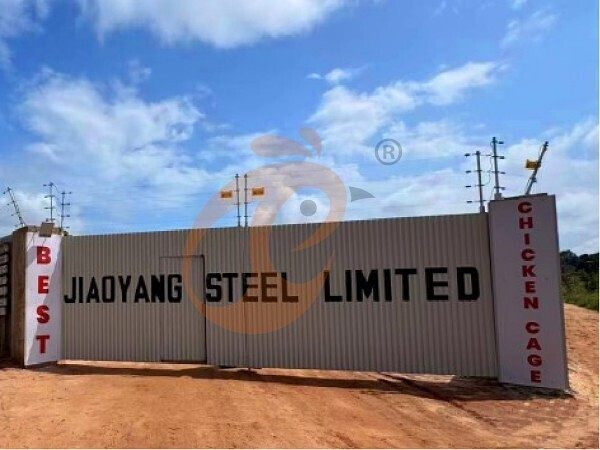
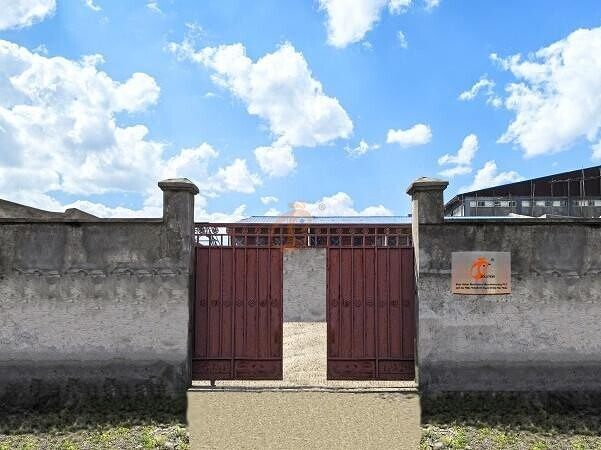
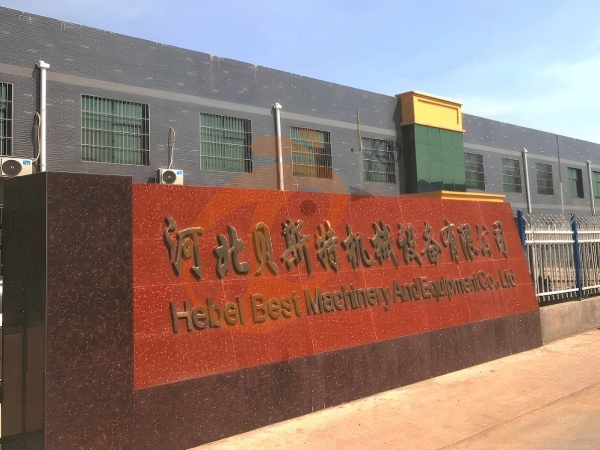
China Hebei Best Machinery And Equipment CO., LTD
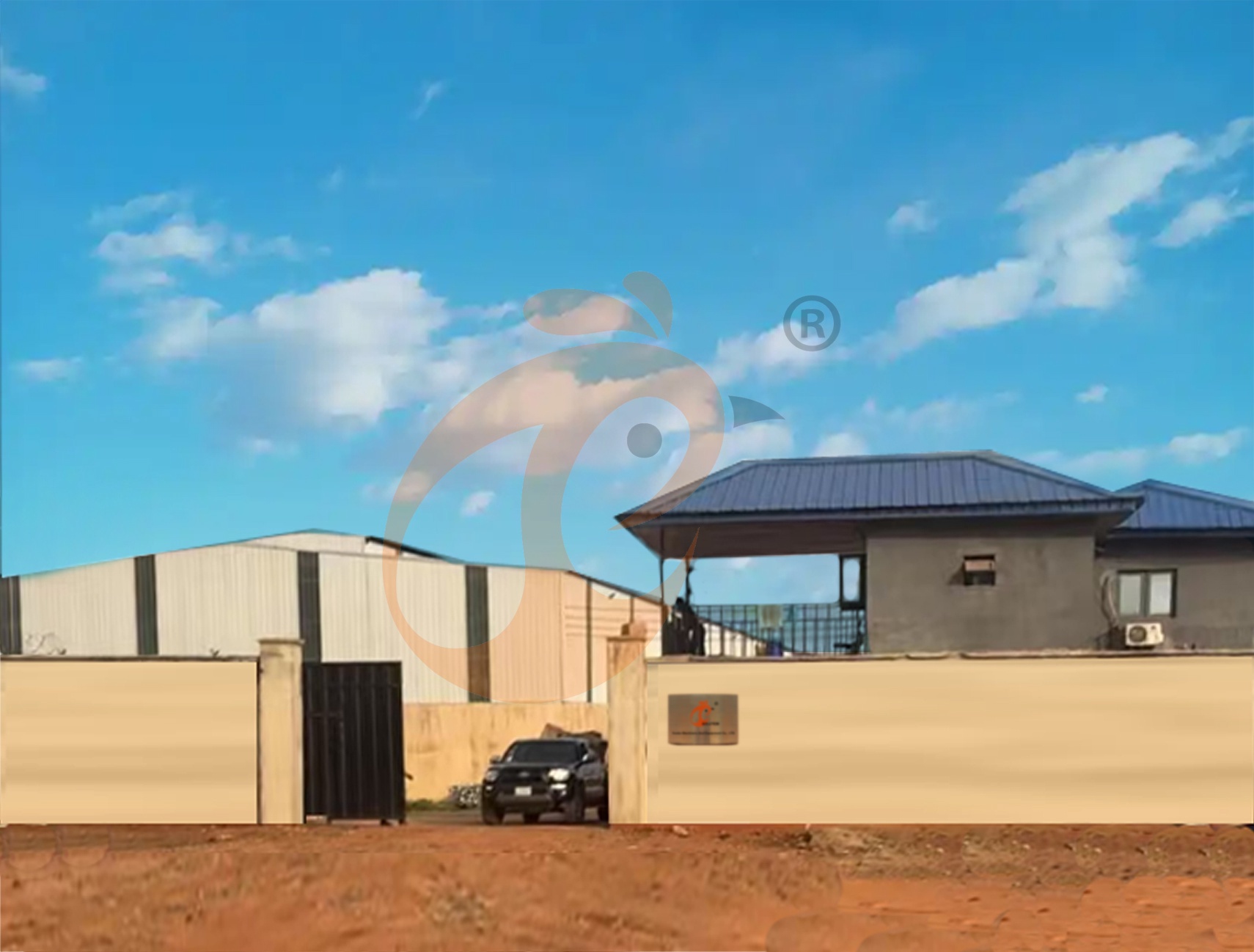
Nigeria Vanke Machinery And Equipment CO., LTD
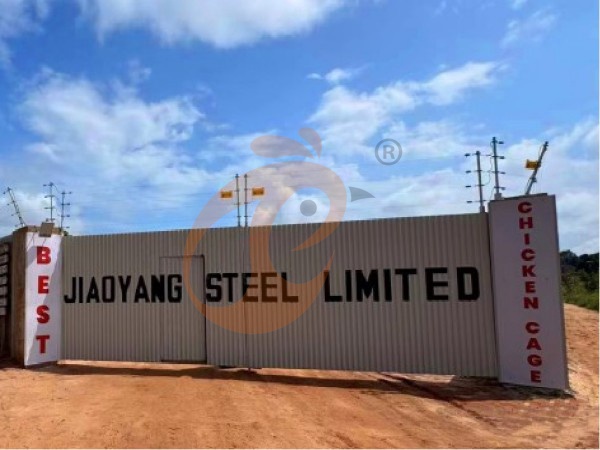
Tanzania Best Machinery And Equipment CO., LTD
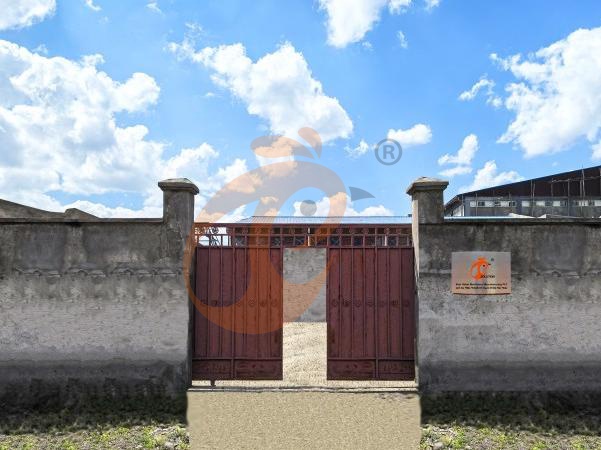
Ethiopia Best Hebei Machinery Manufacturing PLC
Reception /24 WhatsApp NO. : +8618830120193
FAQ
What Ventilation Requirements Are Needed In Floor Rearing Poultry System For Poultry Chicken Farms?
Tunnel airflow velocity ranges from 1.8–2.5 m/s for heat stress reduction.
Static pressure levels are controlled at 18–28 Pa for uniform air distribution.
What Litter Management Standards Are Used In Floor Rearing Poultry System For Poultry Chicken Production?
Moisture content is controlled below 25% to prevent ammonia buildup.
Replacement cycle occurs every 35–45 days depending on flock density.
What Feeding System Configuration Is Used In Floor Rearing Poultry System For Poultry Chicken Farms?
Feed distribution speed ranges from 12–18 meters per minute in automated lines.
Feed trough height is adjusted between 5–10 cm for chick accessibility.
- poultry farm
- poultry farms
- poultry house
- cage
- poultry farm construction
- poultry house design
- automatic feeding system
- poultry equipment
- chickencage
- bestchickencage
- Nigeria
- layer farm
- broiler farm
- commercial poultry farms
- poultry farming
- poultry house heating
- poultry house lighting
- modern poultry house
- poultry equipment manufacturer
- poultry house lighting system
- poultry house performance
- poultry farm plan
- feed silo
- Ethiopia
Message
Products recommended
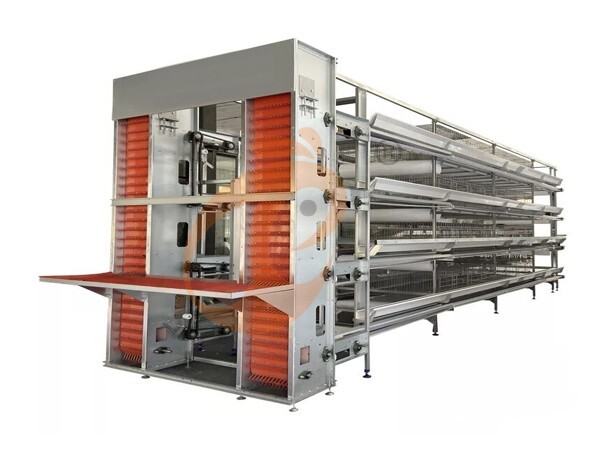
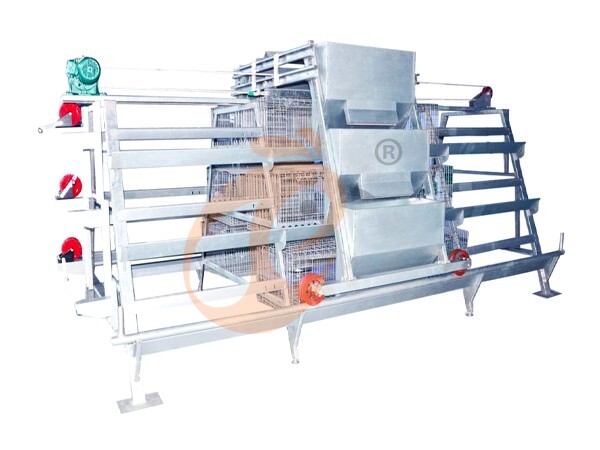
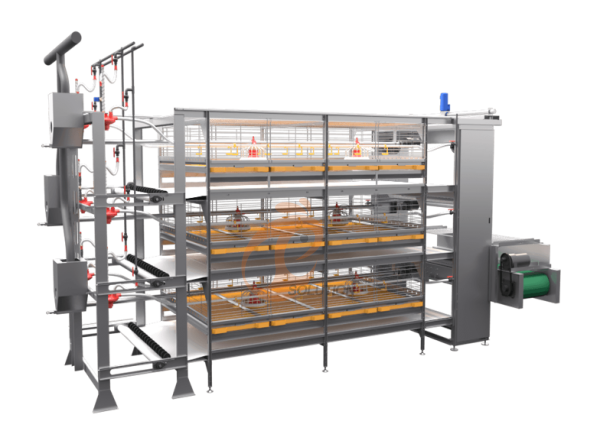
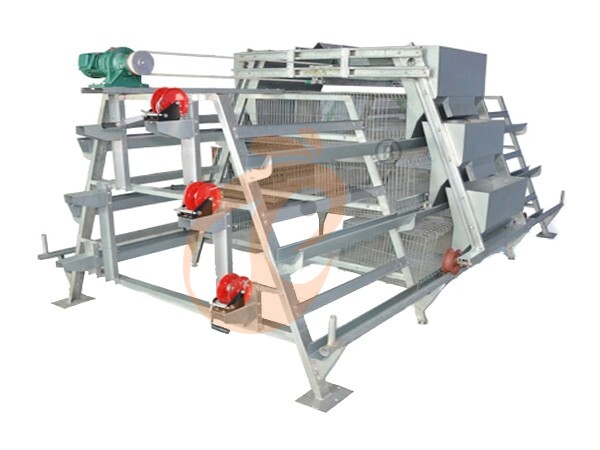
 >30,000 Pullets Automatic H Type Battery Cage1. More than 30,000 pullets a house, choose it.
2. It is designed to rearing older than 1 day old pullets to 12 to 16 weeks old chicken starting laying eggs.
3. Its lifespan is more than 25 years.
4. Its structure are Vcloud artificial intelligent fusion, electric control cabinet, automatic equipment of drinking, feeding, manure clean, manual harvesting.
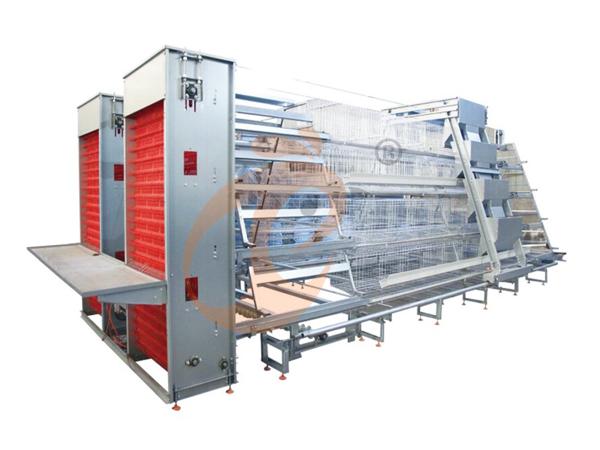
5. Our 24 hour online reception What’sApp NO. is +8618830120193 <30,000 Pullets Automatic A Type Battery Cage1. 10,000 to 30,000 pullets a house, choose it.
2. It is designed to rearing older than 1 day old pullets to 12 to 16 weeks old chicken starting laying eggs.
3. Its lifespan is more than 25 years.
4. Its structure are Vcloud artificial intelligent fusion, electric control cabinet, automatic equipment of drinking, feeding, manure clean, manual harvesting.
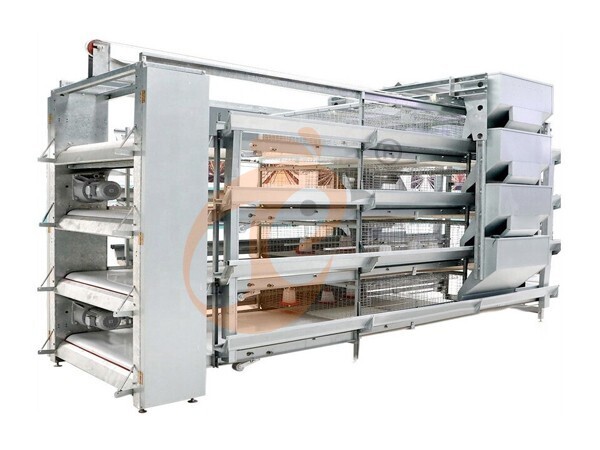
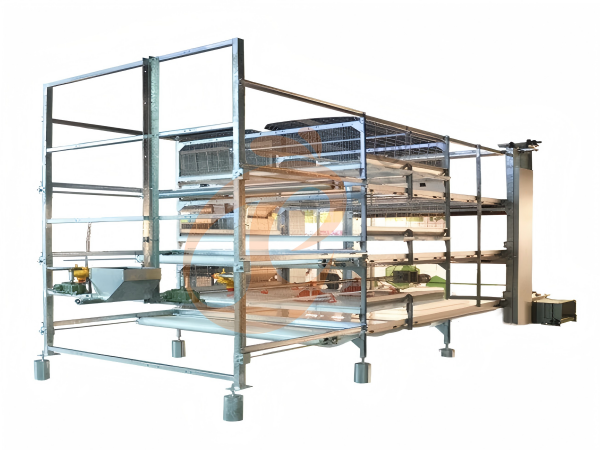
5. Our 24 hour online reception What’sApp NO. is +86 18830120193. >30,000 Broilers Semi-Automatic Harvest H Type Battery Cage1. More than 30,000 broilers a house, choose it.
2. It is designed to rearing 1 to 45 day old adult broiler ready for market.
3. Its lifespan is more than 20 years.
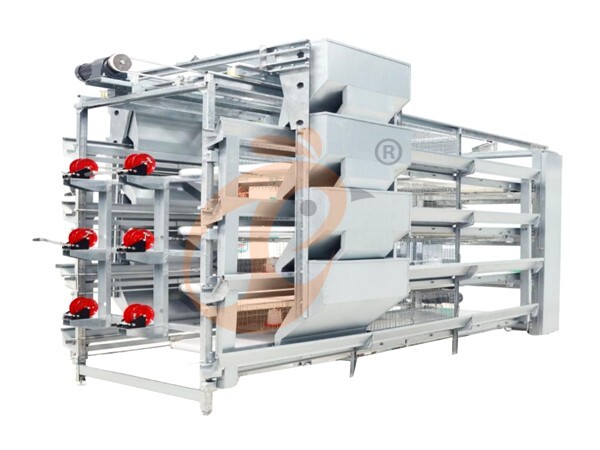
4. Our 24 hour online reception What’sApp NO. is +8618830120193, +234 8111199996. >30,000 Broilers Manual Harvest H Type Battery Cage1. More than 30,000 broilers a house, choose it.
2. It is designed to rearing 1 to 45 day old adult broiler ready for market.
3. Its lifespan is more than 20 years.
4. Its structure are Vcloud artificial intelligent fusion, electric control cabinet, automatic equipment of drinking, feeding and manure clean, manual harvesting.
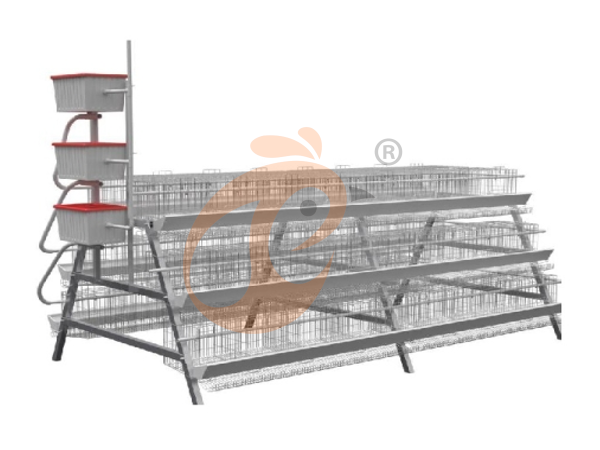
5. Our 24 hour online reception What’sApp NO. is +8618830120193, +234 8111199996. <30,000 Broilers Manual Harvest A Type Battery Cage1. Less 30,000 broilers a house, choose it.
2. It is designed to rearing 1 to 45 day old adult broiler ready for market.
3. Its lifespan is more than 20 years.
4. Its structure are Vcloud artificial intelligent fusion, electric control cabinet, automatic equipment of drinking, feeding and manure clean, manual harvesting.
5. Our 24 hour online reception What’sApp NO. is +8618830120193, +234 8111199996. HK Headquarter Offers EU-standard Poultry Farm Solutions, Manufacture Poultry Farm Equipment1. Continuous communication with the EU and the US
2. China, Nigeria, Ethiopia, Tanzania branch companies and factories
3. The products’ quality is customized for local poultry farms
4. Poultry cage and poultry farm equipment stock for sale
5. 24 online reception Whatsapp NO. : +8618830120193,contact us to get full information China Branch Offer Poultry Farm Business Plan, Manufacture Poultry Farm Equipment1. Address: Flat/RM 2416, 24/F, Runxing Building, Youyi Nan Street, Shijiazhuang City, Hebei Province, China
2. Poultry cage and poultry farm equipment factory and stock for sale
3. Customized for local poultry farms
4. Quality and design are based on Euro
5. 24 online reception Whatsapp NO. : +8618830120193 Nigeria Branch Offer Poultry Farm Business Plan, Manufacture Poultry Farm Equipment1. Address: After Sinoma Office, 200 Meters Near Danco Filling Station, Lagos/Ibadan Expressway, Lagos State, Nigeria
2. Poultry cage and poultry farm equipment factory and stock for sale
3. Customized for Nigerian poultry farms
4. Quality and design are based on Euro
5. 24 online reception Whatsapp NO. : +8618830120193 Ethiopia Branch Offer Poultry Farm Business Plan, Manufacture Poultry Farm Equipment1. Address: Gelan Gura, Akaki-kaliti Sub City, Addis Ababa, Ethiopia
2. Poultry cage and poultry farm equipment stock for sale
3. Customized for Ethiopian poultry farms
4. Quality and design are based on Euro
5. 24 online reception Whatsapp NO. : +8618830120193, contact us to get price list Tanzania Branch Offer Poultry Farm Business Plan, Manufacture Poultry Farm Equipment1. Address: No.8, Sova Road, Msufini, Mlandizi, Kibaha, Pwani, Tanzania
2. Poultry cage and poultry farm equipment factory and stock for sale
3. Customized for Tanzanian poultry farms
4. Quality and design are based on Euro
5. 24 online reception Whatsapp NO. : +8618830120193


Contact