


Blog
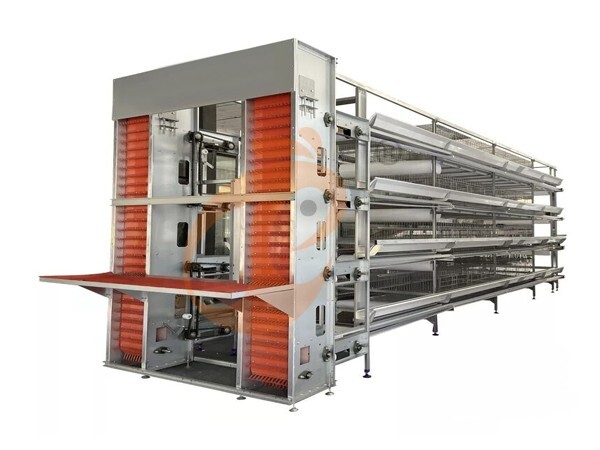
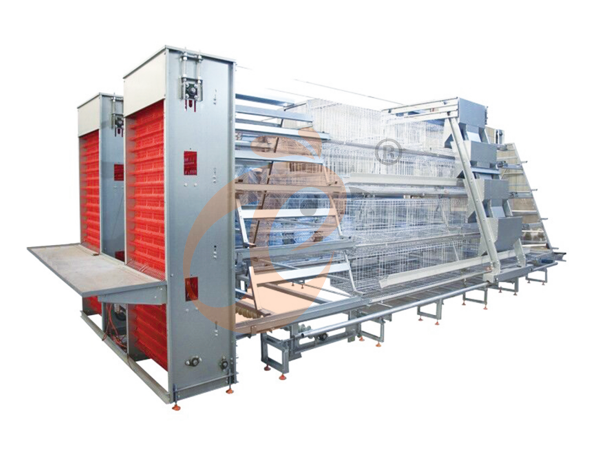
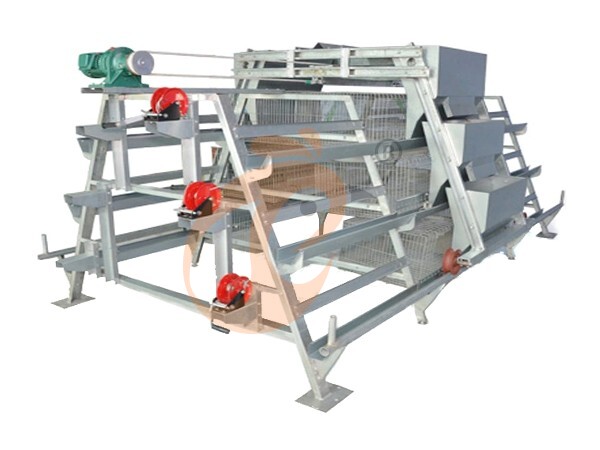
A type layer chicken cage system delivers structured poultry housing with optimized space planning, durable galvanized components, and automated farming compatibility for modern egg production projects.
Automatic poultry cage system solutions integrate feeding, drinking, manure management, and control technologies to support commercial farm efficiency.
Commercial poultry equipment selection requires evaluation of cage capacity, structural design, safety protection, and long-term operational reliability.
Advanced cage engineering supports different production scales with configurations providing 120 to 200 birds per set and calculated structural volumes from 9.77 m³ to 14.78 m³.
Professional poultry projects combine mechanical precision, installation planning, and technical support to achieve stable production performance.
Get professional poultry farm construction guidance, equipment selection solutions, and the latest price lists, whatsApp to +8618830120193, click to learn more:
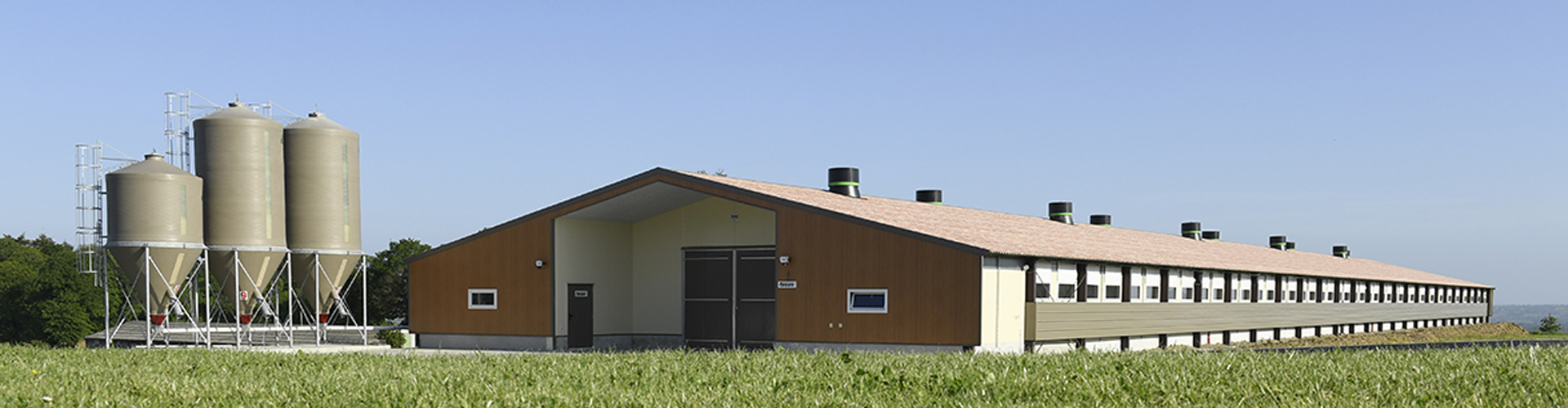
Introduction To A Type Poultry Cage Safety Design
A type layer chicken cage system is designed for commercial laying hen production where efficient space utilization and reliable operation are essential.
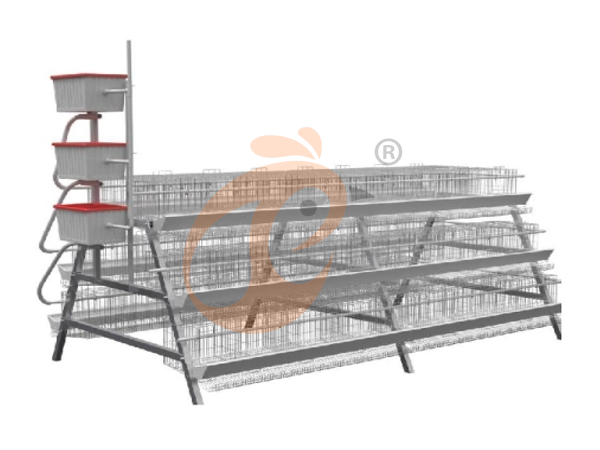
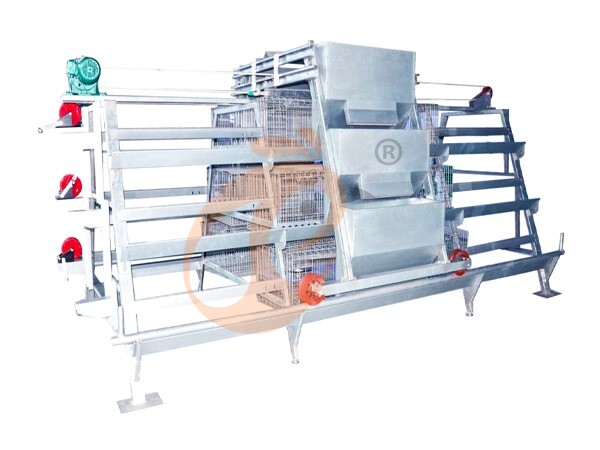
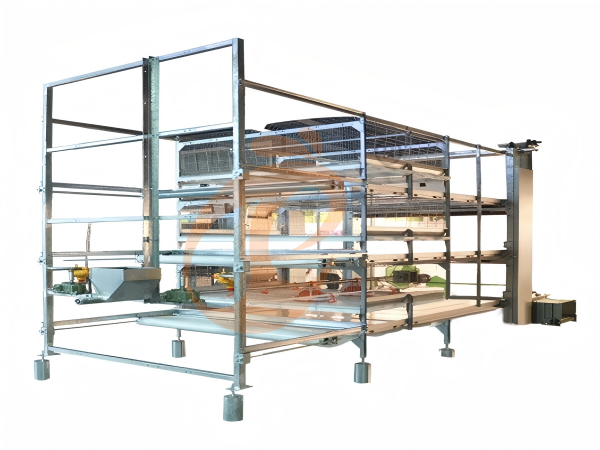
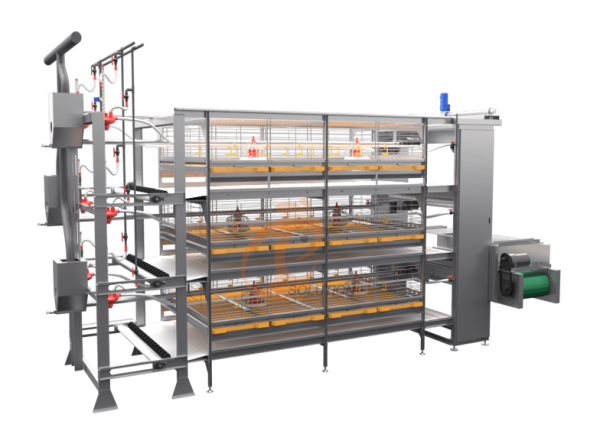
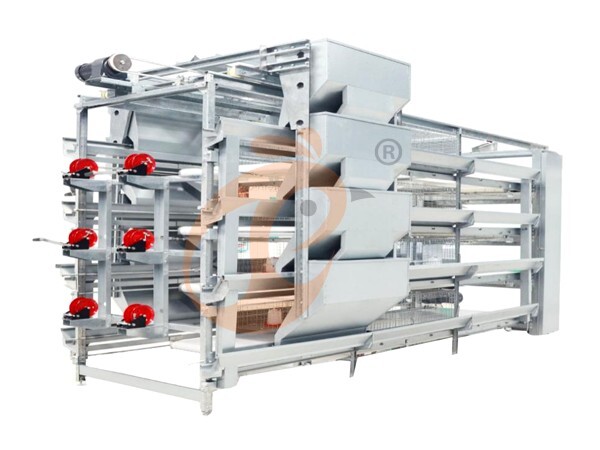
The stepped cage structure combines galvanized steel frames, welded wire panels, feeding systems, drinking lines, and optional automation equipment into one integrated farming solution.
Modern A type systems are commonly configured with three, four, or five tiers according to building height and farm capacity requirements.
Safety evaluation should focus on structural stability, bird protection, equipment coordination, hygiene management, and electrical control reliability.
A properly engineered cage system should maintain stable performance under continuous farm operation.
The A1 configuration uses a three-tier structure with a calculated cage volume of approximately 9.77 m³ and supports 120 birds per set.
The A2 configuration increases vertical utilization with approximately 11.62 m³ structural volume and accommodates 160 birds per set.
The A3 configuration expands production capacity with approximately 14.78 m³ structural volume and provides 200 bird positions per set.
These calculated values help farms evaluate installation planning, building space utilization, and equipment arrangement.
Frame Material Safety Parameters
The frame structure is the foundation of an A type poultry cage system.
Commercial cage manufacturing commonly applies Q235 steel and hot-dip galvanizing processes to improve corrosion resistance in humid poultry house environments.
A professional frame design requires accurate welding, stable connections, and consistent dimensional control.
The structure should maintain alignment during transportation, installation, and long-term operation.
Data is for reference only.Swipe horizontally to view full table.
A reliable frame reduces maintenance requirements.
The structure also provides a stable platform for automatic feeding equipment, drinking systems, and manure handling units.
Five Must-Check Safety Points For Cage Selection
Selecting an automatic poultry cage system requires technical assessment before purchasing decisions.
The first checkpoint is structural material quality because frame strength influences overall equipment stability.
The second checkpoint is cage interior protection because birds directly contact mesh surfaces and floor structures.
The third checkpoint is feeding and drinking reliability because daily supply systems affect production consistency.
The fourth checkpoint is manure management because waste separation influences farm hygiene.
The fifth checkpoint is automation safety because electrical control systems manage multiple operating functions.
A complete inspection process helps investors select commercial poultry equipment matching farm requirements.
Wire Mesh Protection Standards
Wire mesh design directly influences bird movement safety and cage service performance.
High-quality welded mesh should maintain smooth surfaces, consistent openings, and reliable connection points.
Professional A type layer chicken cage system production uses processed galvanized wire materials to reduce surface defects and improve cleaning convenience.
Data is for reference only.Swipe horizontally to view full table.
The mesh structure should provide balanced support and ventilation performance.
Regular inspection helps maintain safe operating conditions throughout production cycles.
Cage Floor And Egg Protection Design
The cage floor connects bird support requirements with egg collection efficiency.
A suitable floor design requires accurate inclination control and stable wire arrangement.
The floor should allow eggs to move toward collection areas while reducing unnecessary impact during transportation.
Commercial systems often combine reinforced floor structures with automatic egg collection equipment for improved workflow.
Data is for reference only.Swipe horizontally to view full table.
A well-designed floor system supports cleaner egg handling.
Accurate manufacturing improves consistency between different cage units.
Feeding And Drinking Safety System
Automatic feeding and drinking functions are important parts of modern commercial poultry equipment.
The feeding system should distribute feed evenly across cage sections.
The drinking system should maintain stable water delivery through pressure control components and nipple drinker arrangements.
Automatic poultry cage system configurations often combine feeding motors, pipelines, regulators, and control devices for coordinated operation.
Data is for reference only.Swipe horizontally to view full table.
A coordinated supply system reduces manual workload.
Stable feeding and drinking performance supports consistent farm management.
Manure Management Safety Design
Waste management is a core safety section of an automatic poultry cage system because accumulated waste can influence equipment cleanliness, maintenance frequency, and farm environmental control.
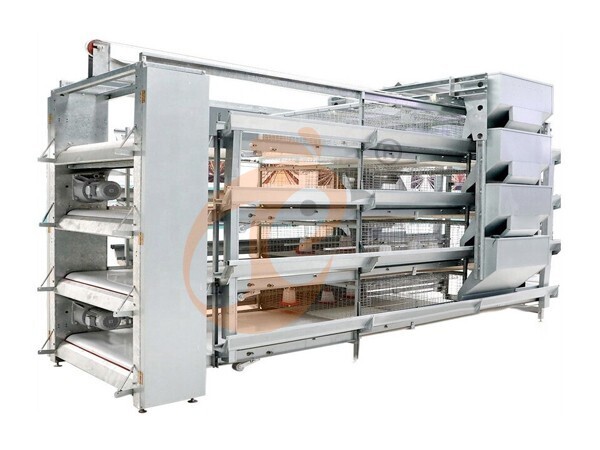
A professional manure removal structure separates waste collection areas from bird housing sections through dedicated conveyor systems.
Modern A type layer chicken cage system projects commonly integrate automatic manure belts, drive units, and control modules to improve continuous operation efficiency.
The manure transportation process should maintain stable movement speed, accurate alignment, and reliable discharge performance.
A suitable system design considers cage tier quantity, building length, manure output, and maintenance accessibility.
Data is for reference only.Swipe horizontally to view full table.
Automatic manure systems reduce manual cleaning workload.
Commercial poultry farms often select belt-based removal solutions because systems can be integrated with different cage arrangements and farm automation levels.
Automation Control And Electrical Safety
Automation control is an important component of commercial poultry equipment because multiple operating units require coordinated management.
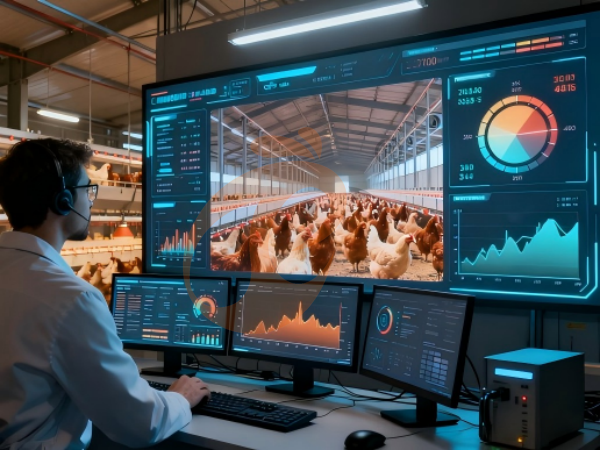
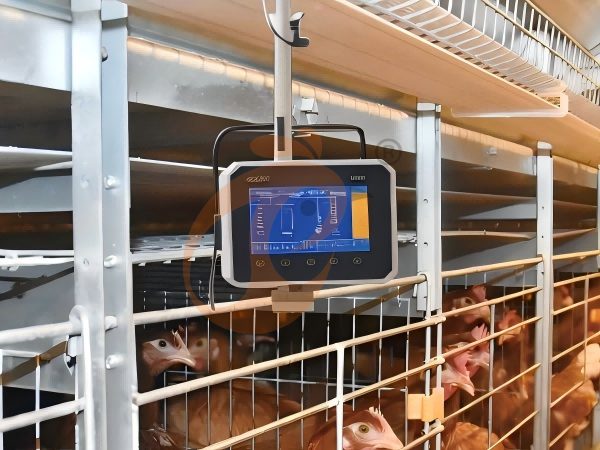
A complete automatic poultry cage system can connect feeding motors, drinking devices, manure conveyors, environmental sensors, and alarm functions through centralized control equipment.
Electrical safety design should include overload protection, emergency operation functions, and stable communication between control components.
Modern poultry projects commonly use PLC controllers and automated management systems to improve operational accuracy.
Data is for reference only.Swipe horizontally to view full table.
A well-designed control system helps operators monitor equipment conditions.
Automation configuration should match farm size, production targets, and maintenance capability.
Ventilation Safety Integration Design
Ventilation coordination affects the operating environment of an A type layer chicken cage system.
The cage arrangement should allow airflow movement between different levels while maintaining compatibility with ventilation equipment.
Commercial poultry buildings usually combine cage systems with fans, sensors, and environmental control units to maintain production conditions.
A professional ventilation layout considers cage position, air inlet location, exhaust direction, and equipment spacing.
Data is for reference only.Swipe horizontally to view full table.
Effective ventilation planning supports equipment durability and farm management.
Environmental control should be considered during cage installation rather than added after project completion.
Emergency Protection Mechanisms
Automated poultry production requires emergency protection because feeding, drinking, and manure systems operate through electrical and mechanical components.
Safety devices should provide rapid response when abnormal operating conditions occur.
A complete protection system includes motor overload monitoring, manual control functions, and alarm communication.
Professional poultry equipment projects normally combine emergency devices with automation cabinets to improve operational reliability.
Data is for reference only.Swipe horizontally to view full table.
Emergency systems require regular inspection.
Testing procedures should confirm that operators can quickly control equipment during unexpected situations.
Maintenance Access And Inspection Safety
Maintenance accessibility influences the long-term operating performance of an automatic poultry cage system.
A practical cage design provides inspection access for frame connections, feeding components, water pipelines, and manure equipment.
Modular structures allow replacement of individual components without affecting complete production lines.
Commercial poultry equipment suppliers often provide installation guidance and spare component planning for international farm projects.
Data is for reference only.Swipe horizontally to view full table.
Maintenance-friendly design reduces equipment downtime.
Regular inspection schedules help maintain consistent system performance.
Biosecurity Protection Strategy
Biosecurity protection is closely connected with cage structure, cleaning systems, and equipment arrangement.
An A type layer chicken cage system separates birds from manure collection areas through elevated cage layouts and dedicated waste handling structures.
Automatic drinking systems, smooth galvanized surfaces, and controlled cleaning procedures support improved farm hygiene management.
Modern cage solutions integrate feeding, drinking, manure removal, and egg collection functions into coordinated production systems.
Data is for reference only.Swipe horizontally to view full table.
A structured biosecurity approach improves farm management efficiency.
Equipment selection should consider cleaning requirements before installation.
Long-Term Structural Reliability Evaluation
Long-term reliability depends on material selection, manufacturing accuracy, installation quality, and maintenance procedures.
A commercial poultry equipment solution should maintain stable performance during repeated production cycles.
Hot-dip galvanized steel frames, reinforced connections, and automated accessories are commonly applied in commercial layer cage projects.
The selected cage configuration should match farm capacity planning and building conditions.
The A1 model provides approximately 120 birds per set, while A2 and A3 configurations support approximately 160 and 200 birds per set.
These capacity levels help farms select suitable equipment layouts according to production planning.
Data is for reference only.Swipe horizontally to view full table.
Reliable engineering improves investment efficiency.
Regular technical inspection supports continuous farm operation.
Final Selection Recommendations
Selecting an automatic poultry cage system requires evaluation of structural design, production capacity, automation compatibility, and maintenance requirements.
Farm projects should review cage dimensions, bird capacity, equipment integration, and installation conditions before purchasing decisions.
The A1, A2, and A3 configurations provide different production arrangements with three-tier, four-tier, and five-tier structures.
Each model should be matched with building height, management strategy, and production objectives.
Commercial poultry equipment investment planning should include equipment costs, transportation expenses, installation services, and technical support.
European union standard reference only.
A professional supplier should provide complete technical documentation and project coordination.
Frequently Asked Questions
Q1: What safety features should an A type poultry cage system include?
An A type poultry cage system should include reinforced steel frames, protected wire structures, automatic feeding equipment, drinking control systems, manure removal units, and electrical safety modules.
A complete configuration should match farm capacity planning, building dimensions, and management requirements.
Three-tier, four-tier, and five-tier structures can provide different production arrangements with approximately 120, 160, and 200 birds per set.
Q2: How does automatic poultry cage system improve farm operation safety?
An automatic poultry cage system improves daily management through coordinated operation between feeding motors, drinking pipelines, manure conveyors, and environmental monitoring equipment.
Integrated automation reduces repeated manual tasks and supports accurate equipment control.
Modern systems may combine feeding, drinking, manure management, and farm monitoring functions within one project solution.
Q3: Why is commercial poultry equipment selection important for large farms?
Commercial poultry equipment selection influences installation efficiency, maintenance planning, and long-term production stability.
Professional farm projects require matching cage configuration, automation level, house structure, and technical service capability.
A properly planned system helps farms establish efficient production workflows with complete equipment integration.
Taiyu (HK) Group - One Of China Biggest A Type Poultry Cage System Manufacturer
A type poultry cage system provides integrated layer farming equipment with galvanized cage structures, feeding systems, drinking solutions, manure handling modules, and scalable production configurations for commercial poultry farms.
Global factory direct supply delivers poultry equipment solutions including cage manufacturing, technical design, project consultation, and customized production planning for international customers.
Turn-key engineering services cover poultry farm planning, equipment configuration, manufacturing coordination, delivery arrangement, installation support, and operational guidance for complete farm projects.
Professional poultry equipment manufacturing supports automatic systems, farm automation integration, environmental control equipment, and customized solutions based on different project requirements.
Export-oriented project teams provide technical documentation, spare parts planning, after-sales assistance, and global service coordination for poultry production facilities.
Contact Us To Received Your Customized Poultry Farm Plan
Headquarters And Branchs
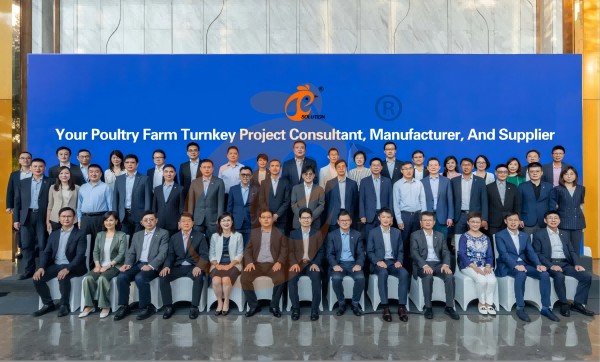
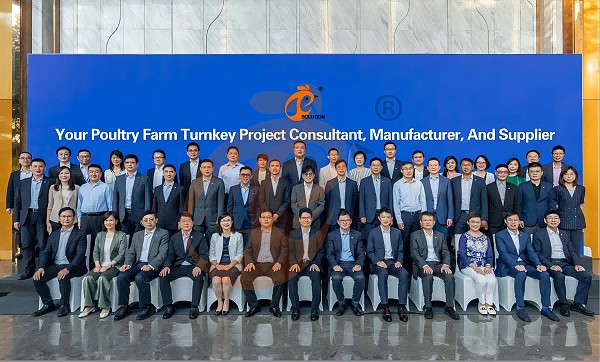
Hong Kong Headquarter Management Team
Hong Kong Headquarter Taiyu Industrial Group CO., LTD
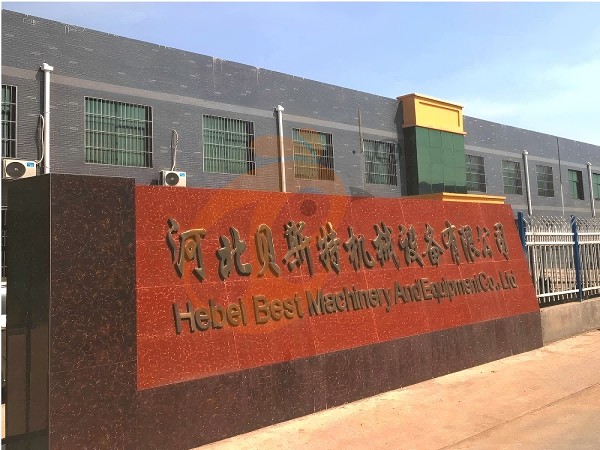
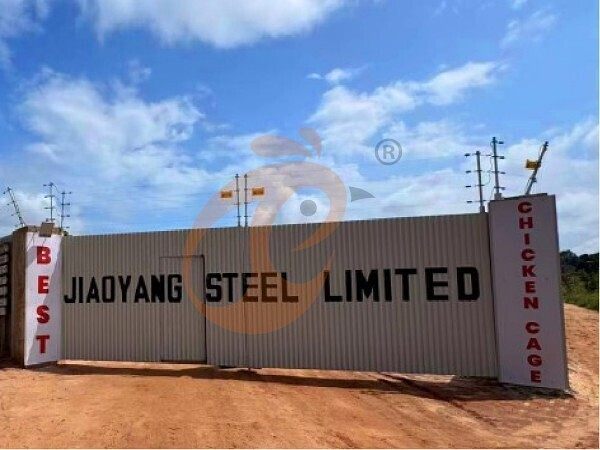
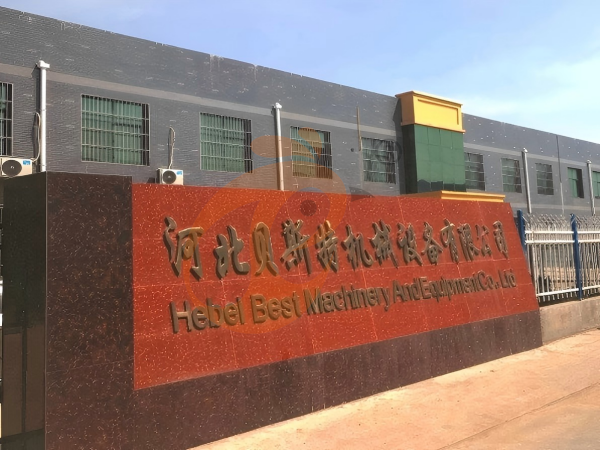
China Hebei Best Machinery And Equipment CO., LTD
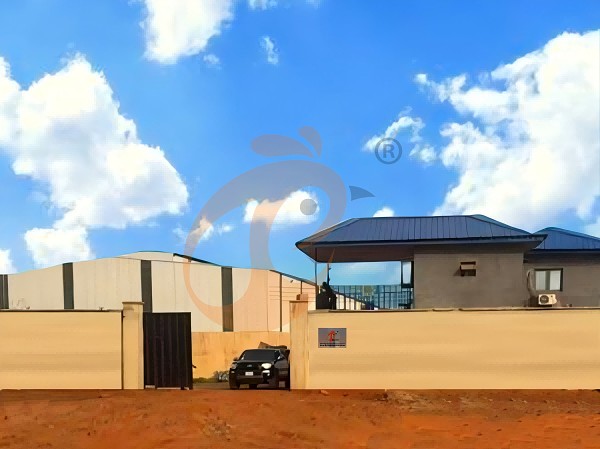
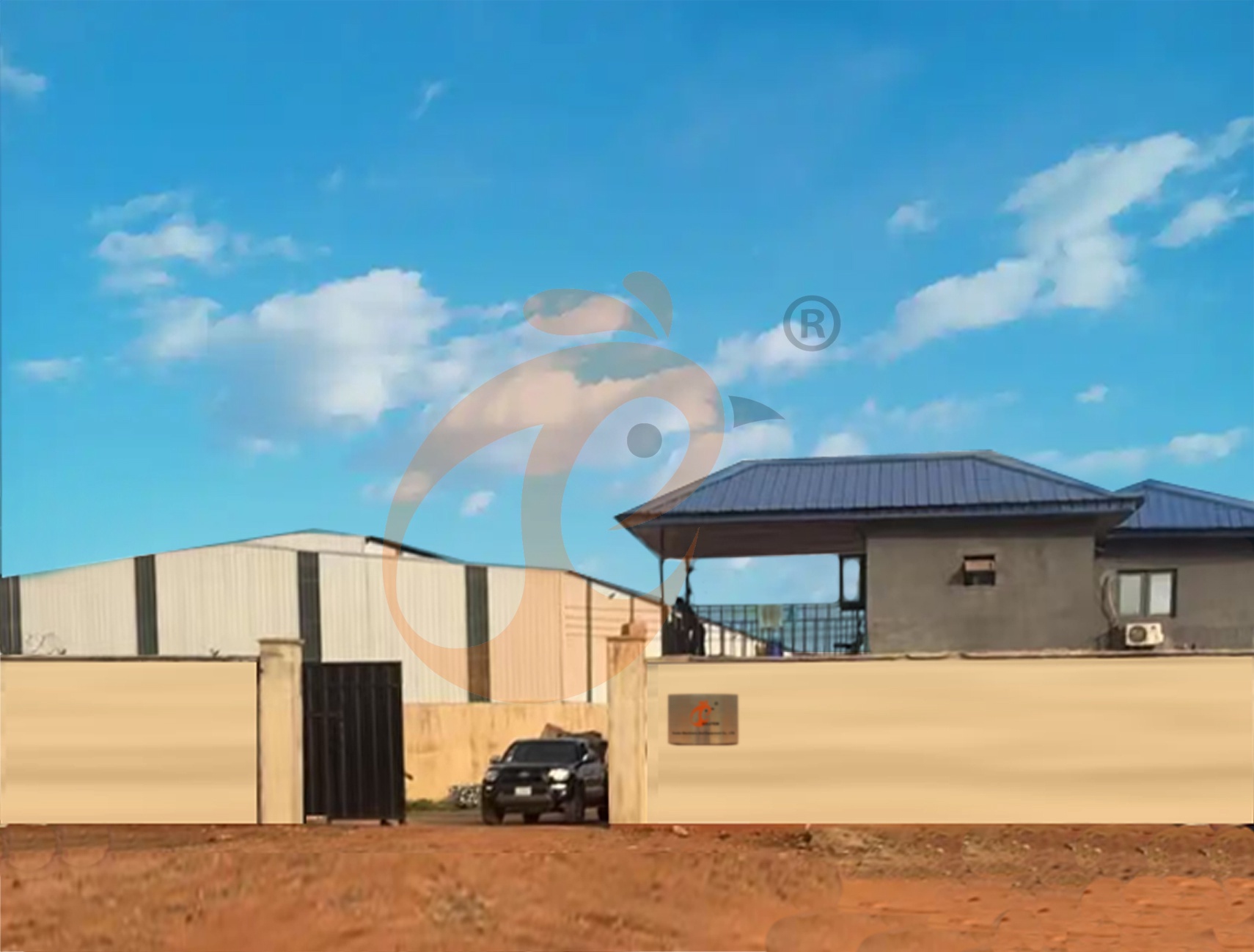
Nigeria Vanke Machinery And Equipment CO., LTD
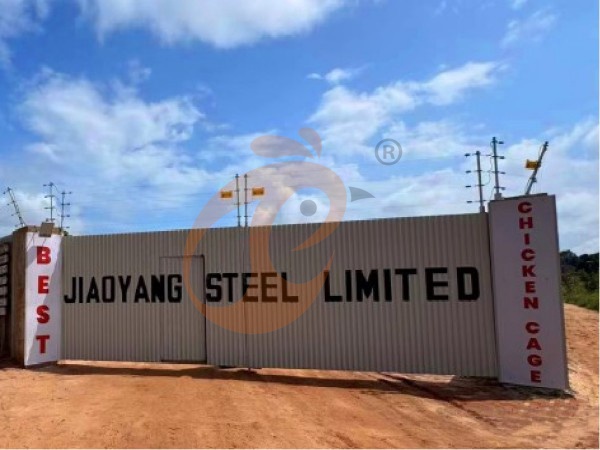
Tanzania Best Machinery And Equipment CO., LTD
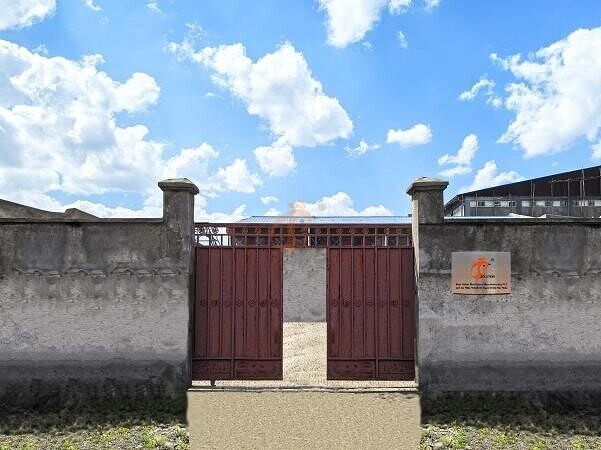
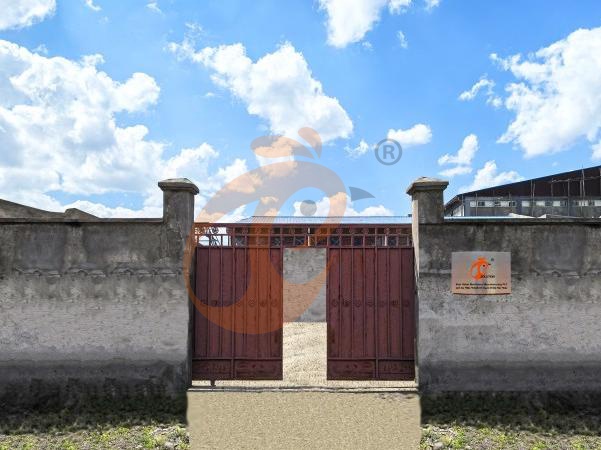
Ethiopia Best Hebei Machinery Manufacturing PLC
Reception /24 WhatsApp NO. : +8618830120193
FAQ
How To Reduce Pecking And Aggression In A-Type Chicken Cage Layers?
Even lighting and good ventilation
Provide supplemental feed and water
Mortality rate: 2–3%
Egg production rate: 90–96%
What Are The Recommended Aisle Widths In A-Type Chicken Cage Houses?
Facilitates manual operation and equipment access
Farm capacity per house: 10,000–50,000 birds
Egg production rate: 90–96%
How To Ensure Proper Airflow In A-Type Layer Cage Farm?
Roof vents and air ducts designed properly
Reduce heat stress and humidity
Egg production rate: 90–96%
FCR: 1.9–2.2
- poultry farm
- chicken cage
- poultry farms
- layer cage
- poultry house
- poultry cage
- cage
- galvanized cage
- poultry farm construction
- poultry cage system
- chicken cage system
- automatic poultry cage system
- poultry cage system manufacturer
- automatic poultry cage
- poultry farm planning
- poultry cage safety
- automatic drinking system
- poultry equipment
- egg collection equipment
- automatic egg collection equipment
- chickencage
- a type layer chicken cage
- a type poultry cage
- bestchickencage
- cage system
- cage systems
- h cage
- layer chicken cage
- Nigeria
- layer farm
- egg production system
- layer chicken cage system
- egg production project
- modern poultry farms
- commercial poultry farms
- poultry equipment supplier
- layer farming equipment
- cage design
- modern poultry farm
- automatic egg collection
- poultry farm plan
- poultry equipment suppliers
- Ethiopia
Message
Products recommended
 >30,000 Pullets Automatic H Type Battery Cage1. More than 30,000 pullets a house, choose it.
2. It is designed to rearing older than 1 day old pullets to 12 to 16 weeks old chicken starting laying eggs.
3. Its lifespan is more than 25 years.
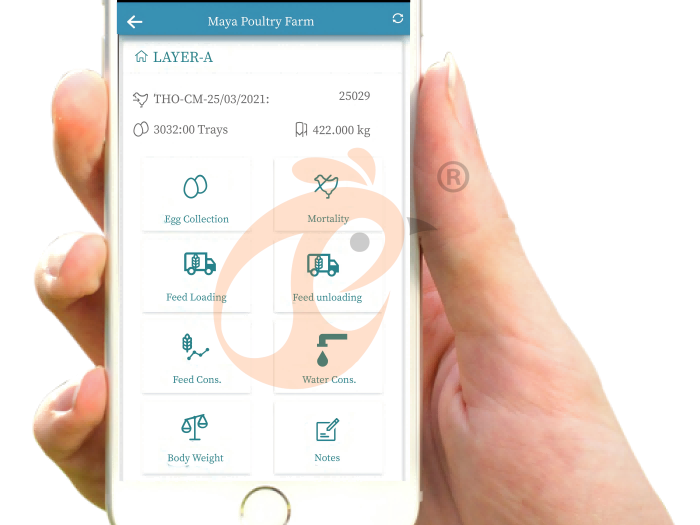
4. Its structure are Vcloud artificial intelligent fusion, electric control cabinet, automatic equipment of drinking, feeding, manure clean, manual harvesting.
5. Our 24 hour online reception What’sApp NO. is +8618830120193 <30,000 Pullets Automatic A Type Battery Cage1. 10,000 to 30,000 pullets a house, choose it.
2. It is designed to rearing older than 1 day old pullets to 12 to 16 weeks old chicken starting laying eggs.
3. Its lifespan is more than 25 years.
4. Its structure are Vcloud artificial intelligent fusion, electric control cabinet, automatic equipment of drinking, feeding, manure clean, manual harvesting.
5. Our 24 hour online reception What’sApp NO. is +86 18830120193. >30,000 Broilers Semi-Automatic Harvest H Type Battery Cage1. More than 30,000 broilers a house, choose it.
2. It is designed to rearing 1 to 45 day old adult broiler ready for market.
3. Its lifespan is more than 20 years.
4. Our 24 hour online reception What’sApp NO. is +8618830120193, +234 8111199996. >30,000 Broilers Manual Harvest H Type Battery Cage1. More than 30,000 broilers a house, choose it.
2. It is designed to rearing 1 to 45 day old adult broiler ready for market.
3. Its lifespan is more than 20 years.
4. Its structure are Vcloud artificial intelligent fusion, electric control cabinet, automatic equipment of drinking, feeding and manure clean, manual harvesting.
5. Our 24 hour online reception What’sApp NO. is +8618830120193, +234 8111199996. <30,000 Broilers Manual Harvest A Type Battery Cage1. Less 30,000 broilers a house, choose it.
2. It is designed to rearing 1 to 45 day old adult broiler ready for market.
3. Its lifespan is more than 20 years.
4. Its structure are Vcloud artificial intelligent fusion, electric control cabinet, automatic equipment of drinking, feeding and manure clean, manual harvesting.
5. Our 24 hour online reception What’sApp NO. is +8618830120193, +234 8111199996. HK Headquarter Offers EU-standard Poultry Farm Solutions, Manufacture Poultry Farm Equipment1. Continuous communication with the EU and the US
2. China, Nigeria, Ethiopia, Tanzania branch companies and factories
3. The products’ quality is customized for local poultry farms
4. Poultry cage and poultry farm equipment stock for sale
5. 24 online reception Whatsapp NO. : +8618830120193,contact us to get full information China Branch Offer Poultry Farm Business Plan, Manufacture Poultry Farm Equipment1. Address: Flat/RM 2416, 24/F, Runxing Building, Youyi Nan Street, Shijiazhuang City, Hebei Province, China
2. Poultry cage and poultry farm equipment factory and stock for sale
3. Customized for local poultry farms
4. Quality and design are based on Euro
5. 24 online reception Whatsapp NO. : +8618830120193 Nigeria Branch Offer Poultry Farm Business Plan, Manufacture Poultry Farm Equipment1. Address: After Sinoma Office, 200 Meters Near Danco Filling Station, Lagos/Ibadan Expressway, Lagos State, Nigeria
2. Poultry cage and poultry farm equipment factory and stock for sale
3. Customized for Nigerian poultry farms
4. Quality and design are based on Euro
5. 24 online reception Whatsapp NO. : +8618830120193 Ethiopia Branch Offer Poultry Farm Business Plan, Manufacture Poultry Farm Equipment1. Address: Gelan Gura, Akaki-kaliti Sub City, Addis Ababa, Ethiopia
2. Poultry cage and poultry farm equipment stock for sale
3. Customized for Ethiopian poultry farms
4. Quality and design are based on Euro
5. 24 online reception Whatsapp NO. : +8618830120193, contact us to get price list Tanzania Branch Offer Poultry Farm Business Plan, Manufacture Poultry Farm Equipment1. Address: No.8, Sova Road, Msufini, Mlandizi, Kibaha, Pwani, Tanzania
2. Poultry cage and poultry farm equipment factory and stock for sale
3. Customized for Tanzanian poultry farms
4. Quality and design are based on Euro
5. 24 online reception Whatsapp NO. : +8618830120193


Contact