


Blog
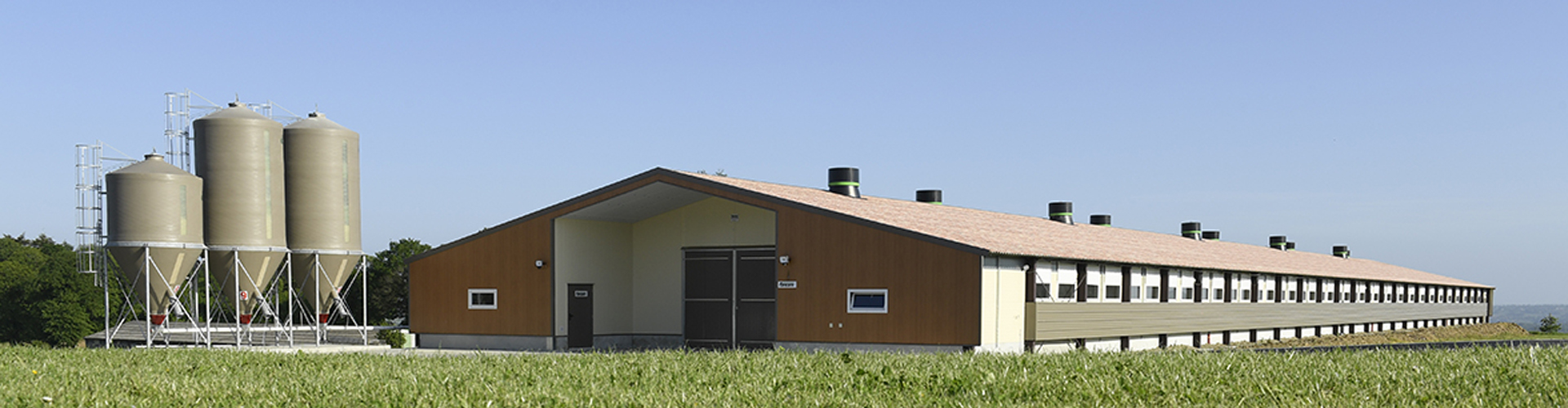
- Free range system for layers vs cage determines how housing design, automation, hygiene, and daily flock management connect with commercial egg production, with modern projects commonly engineered around 95 m buildings and 7.5 m internal heights.
Free range layer systems support controlled bird movement, while layer cage systems emphasize organized feeding, collection, manure handling, and efficient space utilization across commercial poultry houses.
Automatic feeding, nipple drinking, ventilation, nest systems, and egg conveyors create measurable production workflows for farms seeking consistent management and scalable poultry equipment integration.
Egg quality depends on genetics, nutrition, flock health, environmental control, nesting behavior, and egg handling rather than housing category alone, making equipment engineering an important commercial consideration.
- Proper equipment selection can align free-range production or cage production with market positioning, labor planning, biosecurity requirements, building dimensions, and long-term expansion objectives.
Get professional poultry farm construction guidance, equipment selection solutions, and the latest price lists, whatsApp to +8618830120193, click to learn more:
The Real Question: What Makes A Better Egg?
Choosing between free-range and cage housing is not simply a question of egg quality.
A commercial layer project must connect bird management with feeding, drinking, ventilation, manure handling, and egg logistics.
For example, a properly engineered house can be designed around a 95 m building length and a 7.5 m internal height, allowing a layer cage system or free range layer system to work as one production system.
Egg quality is influenced by genetics, nutrition, flock health, environment, and handling.
Research comparing housing systems shows that housing type should be evaluated alongside the complete production environment rather than treated as the only determinant of physical egg quality.
Housing Structure Comparison
Data is for reference only.Swipe horizontally to view full table.
Engineering Points: Build Around The Production Workflow
ENGINEERING POINTS
A commercial free-range project should organize movement from feeding to nesting and then toward collection without creating unnecessary congestion.
A practical equipment layout can use 22–25 mm water pipelines and 15–30 kPa operating pressure for controlled drinking delivery.
For automated layer houses, the electrical and mechanical design should be coordinated before installation.
Commercial equipment packages commonly use 220/380 V power systems and 50/60 Hz frequency, depending on the destination market and motor configuration.
Egg Production Equipment Parameters
Data is for reference only.Swipe horizontally to view full table.
Process Structure: From Hen To Packed Egg
PROCESS STRUCTURE
Feed Storage → Feed Distribution → Drinking → Nesting → Egg Transfer → Central Collection → Grading → Packing
The objective is to eliminate production bottlenecks between individual systems.
In an integrated commercial project, a central egg room can be positioned beside the poultry house, while longitudinal conveyors connect production rows with the handling area.
One documented 100,000-layer design uses 235 cage sets and an equipment capacity of approximately 101,520 birds.
Free-range farms can use automated nests and egg conveyors to reduce repeated manual handling.
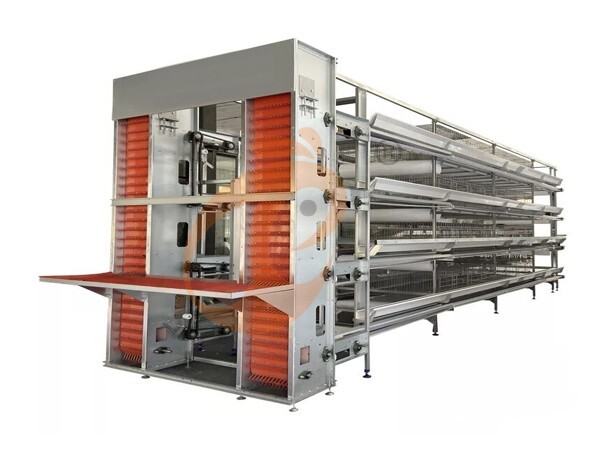
Cage systems can integrate egg belts directly into each tier, creating a continuous route from laying compartments to the collection point.
Egg Collection & Manure Equipment
Data is for reference only.Swipe horizontally to view full table.
Tip Card: How To Select Equipment
Tip Card
Tip 1 — Start With Capacity
Do not select a feeding or egg-handling machine before confirming the target flock.
A complete project can be engineered around 60–100 m row lengths, depending on building configuration.
Tip 2 — Design Maintenance Access
Motors, belts, bearings, sensors, and control panels need practical inspection routes.
Galvanized structural components with 1.5–2.0 mm frame components are available for commercial layer systems.
Tip 3 — Match Every Subsystem
Feeding, drinking, egg collection, ventilation, and manure equipment should be sized as one project instead of purchased independently.
Tip 4 — Plan Future Expansion
A modular layout makes it easier to add production rows, egg conveyors, or environmental-control equipment later.
Equipment Material & Durability
Data is for reference only.Swipe horizontally to view full table.
Equipment Combination Recommendation
Equipment Combination Recommendation
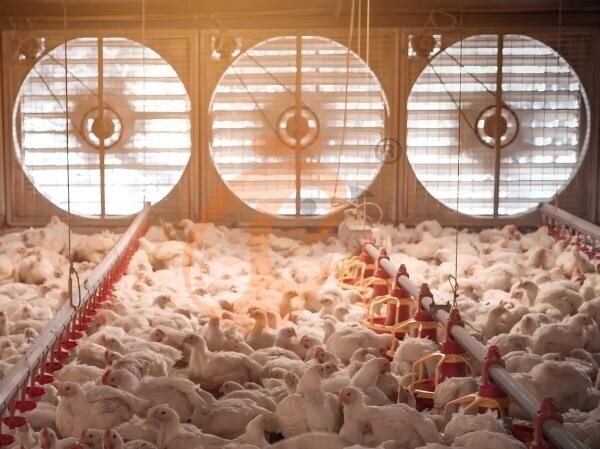
For a commercial free-range project, combine automatic feeding + nipple drinking + automated nest + egg conveyor + ventilation + environmental controller + manure management.
A properly engineered aviary solution can also use 8°–12° slope geometry to support egg movement toward collection areas.
For a commercial cage project, combine H-type or A-type cages + automatic feeding + nipple drinking + egg belts + manure belts + ventilation + cooling + centralized control.
A modern H-type installation can use 5 rows within a large commercial building, creating a coordinated equipment architecture.
Environmental Control Parameters
Data is for reference only.Swipe horizontally to view full table.
Nutrition, Management & Egg Quality
Data is for reference only.Swipe horizontally to view full table.
Nutrition remains a major component of shell and production management.
A published multi-tier layer study used stage-specific diets across the laying cycle, demonstrating why equipment decisions should be made together with feeding
management rather than separately.
Final Technical Decision Guide
Data is for reference only.Swipe horizontally to view full table.
Frequently Asked Questions
Q1: What is the main difference between a free range layer system and a layer cage system?
Free range layer systems prioritize controlled bird movement and cage-free housing, while layer cage systems organize birds, feeding, egg collection, and manure handling within defined cage tiers.
Commercial cage layouts may reach 8 tiers, while aviary designs commonly use 2–5 levels.
Q2: Can free range systems use automatic egg collection?
Yes.
Automated nests and egg conveyors can connect laying areas with centralized handling equipment, reducing manual transfer and improving workflow consistency.
Q3: Which equipment should be planned first for a commercial layer farm?
Building capacity and production layout should be established first, followed by coordinated feeding, drinking, ventilation, egg collection, manure management,
and environmental-control equipment.
Integrated planning prevents equipment capacity mismatches and simplifies future expansion.
Taiyu (HK) Group - One Of China Toppest Layer Cage System Manufacturer
Layer cage system integrates galvanized structural modules, automatic feeding, nipple drinking, egg collection, and manure handling for commercial layer projects, with configurable cage architecture supporting large-scale farm engineering.
Global factory-direct poultry equipment production covers layer cages, free range layer systems, feeding systems, drinking systems, ventilation equipment, egg collection equipment, and manure management equipment.
Turn-key engineering covers farm layout, equipment configuration, manufacturing, shipment, installation guidance, commissioning support, and project-based technical coordination for international poultry operations.
Project engineering supports commercial farms, agricultural investors, integrators, and distributors requiring coordinated poultry equipment specifications, production capacity planning, equipment matching, and scalable installation structures.
Factory-direct manufacturing provides equipment sourcing from China with technical documentation, component coordination, export packaging, and after-sales engineering support for complete layer-farming projects.
Contact Us To Received Your Customized Poultry Farm Plan
Headquarters And Branchs

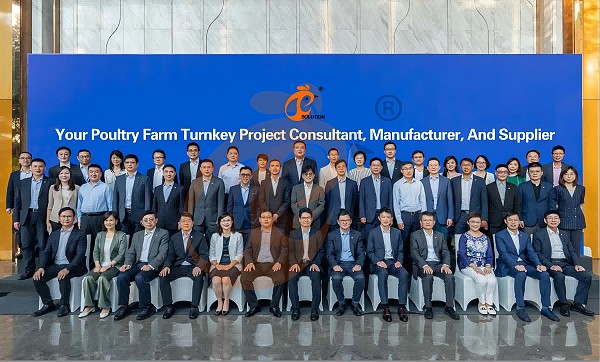
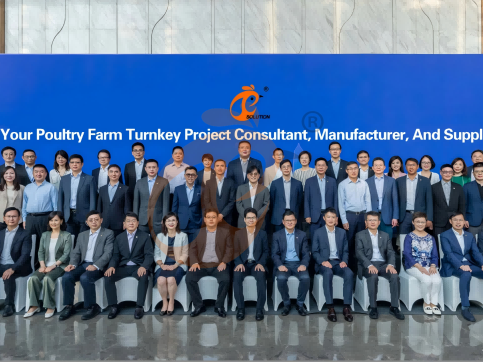
Hong Kong Headquarter Management Team
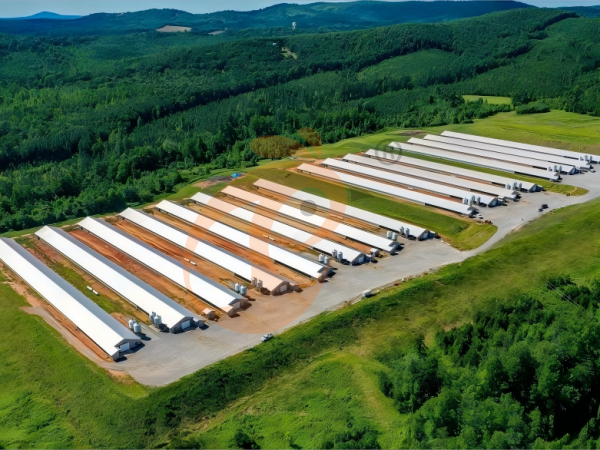
Hong Kong Headquarter Taiyu Industrial Group CO., LTD
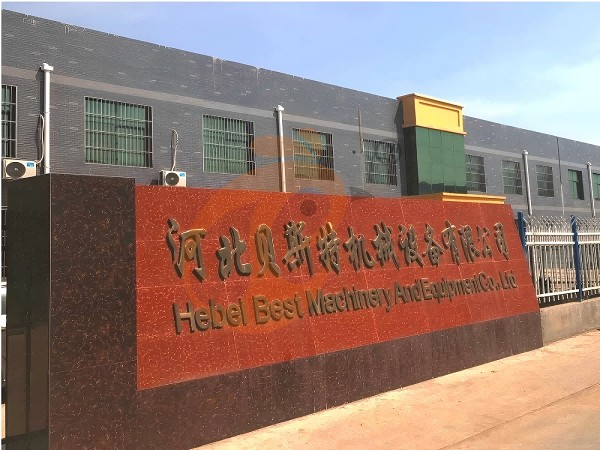
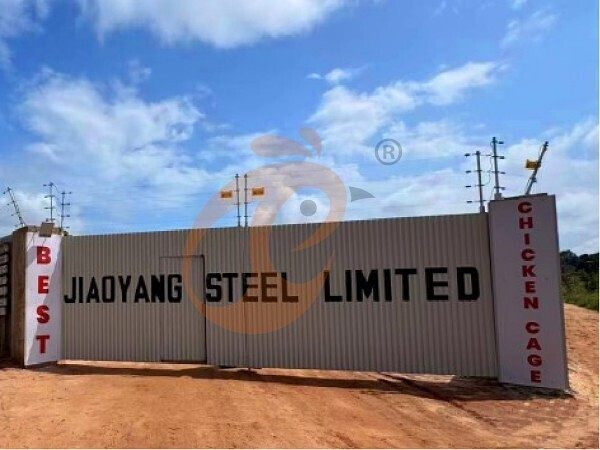
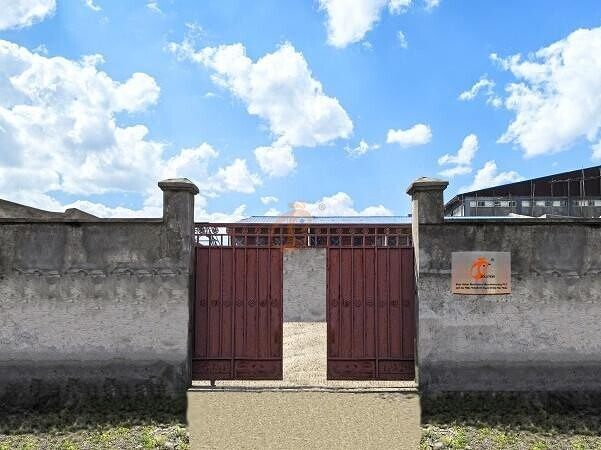
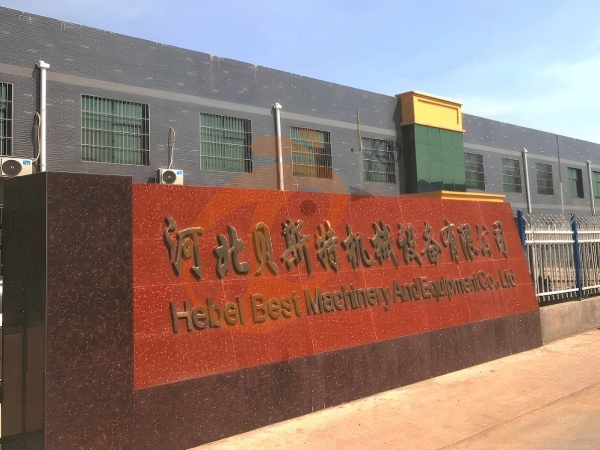
China Hebei Best Machinery And Equipment CO., LTD
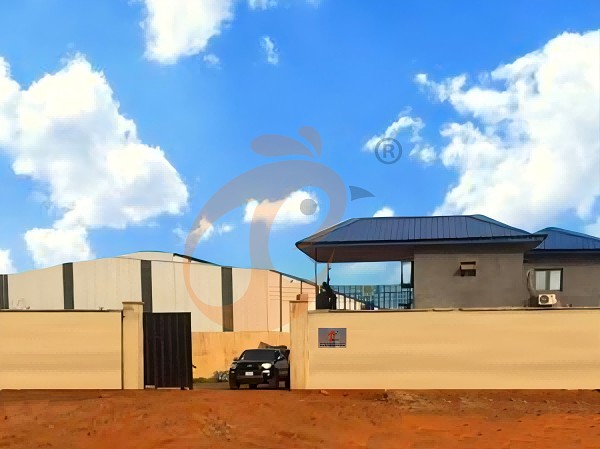
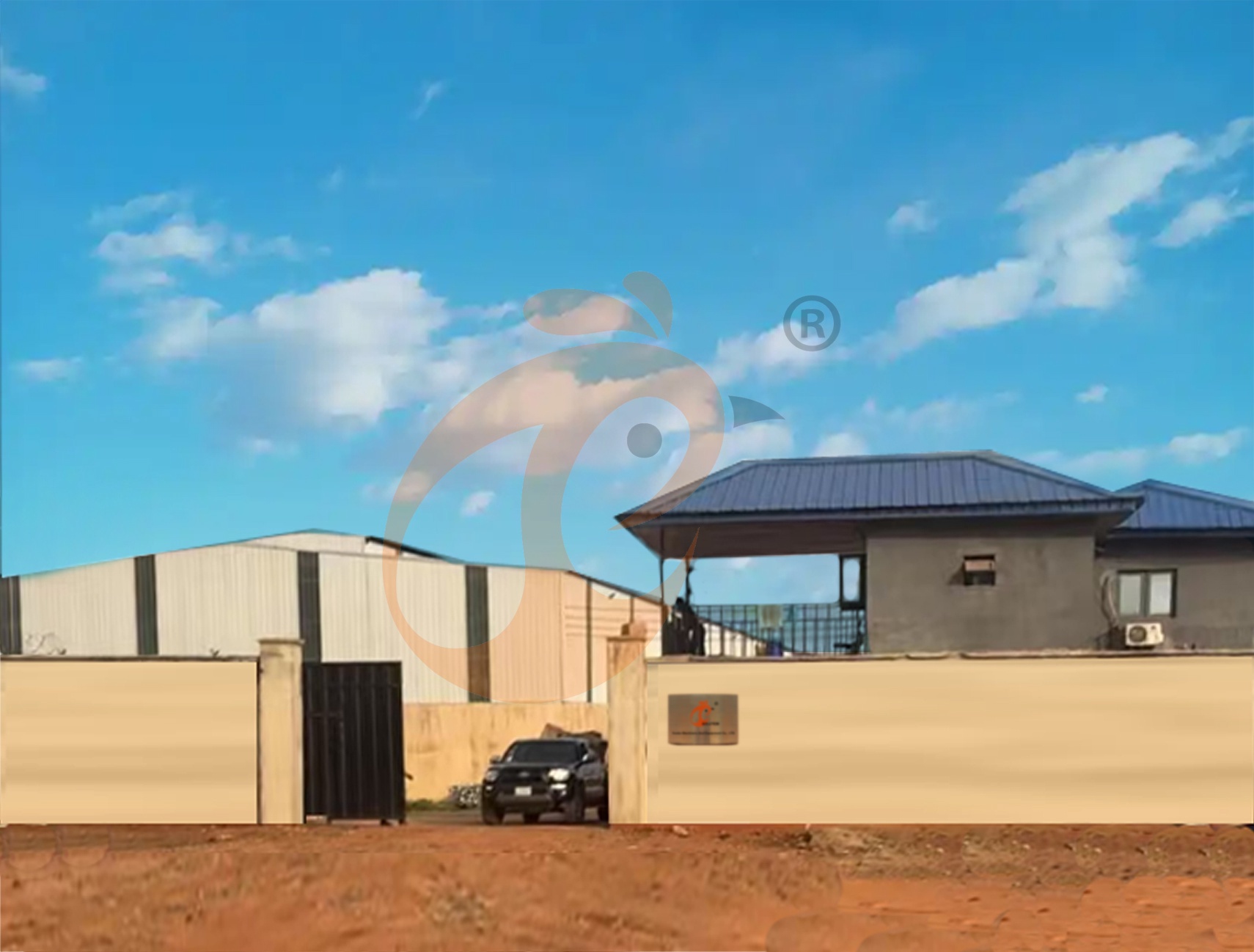
Nigeria Vanke Machinery And Equipment CO., LTD
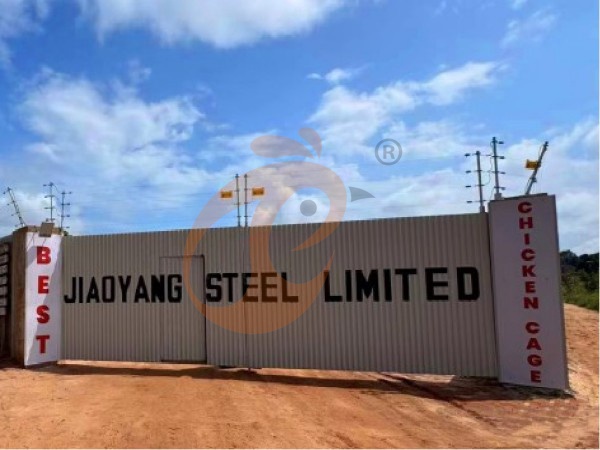
Tanzania Best Machinery And Equipment CO., LTD
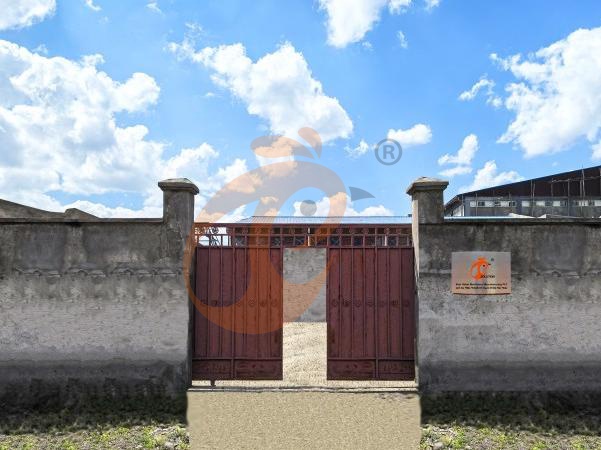
Ethiopia Best Hebei Machinery Manufacturing PLC
Reception /24 WhatsApp NO. : +8618830120193
FAQ
How Does Free Range System Affect Feed Consumption?
Energy expenditure increases daily intake variation by 15%–22% across seasons.
Feed conversion efficiency ranges from 1.9–2.3 depending on grazing intensity.
What Are The Housing Transition Management Standards In Free Range Poultry System?
Indoor-outdoor transition time is controlled within 10–15 minutes per flock movement cycle.
Lighting guidance systems operate at 5–8 lux to direct flock movement behavior.
What Are The Seasonal Adaptation Strategies In Free Range Poultry System?
Summer shade coverage is increased to 60%–80% of grazing area for heat stress reduction.
Rainfall drainage capacity handles 25–40 mm per hour precipitation levels for land usability.
- poultry farm
- layer cages
- layer cage
- poultry house
- cage
- poultry farm construction
- layer cage system
- layer cage system manufacturer
- poultry equipment
- egg collection equipment
- chickencage
- bestchickencage
- cage system
- colony cage
- cage systems
- Nigeria
- layer farm
- poultry equipment manufacturer
- automatic egg collection
- poultry farm plan
- automated layer cage
- Ethiopia
Message
Products recommended
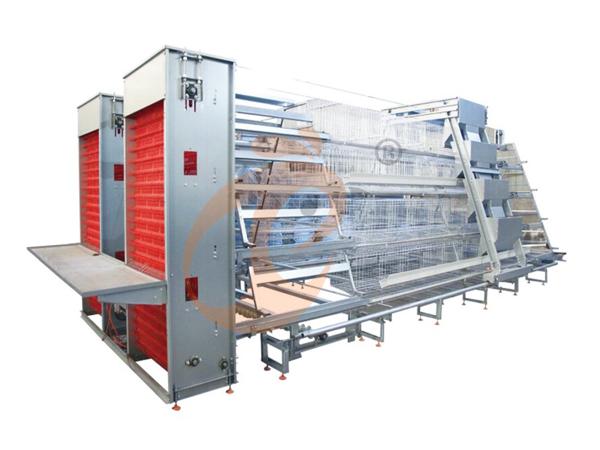
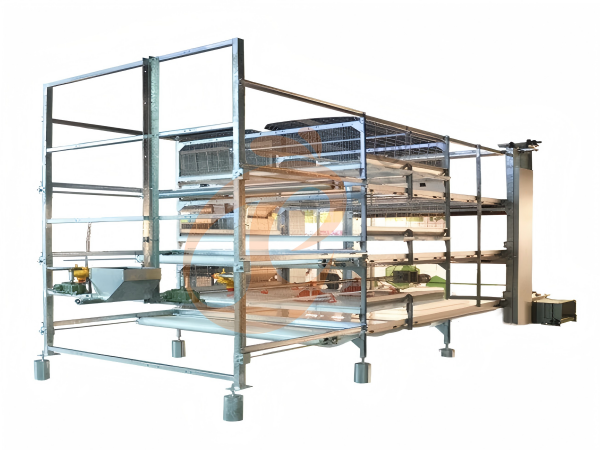
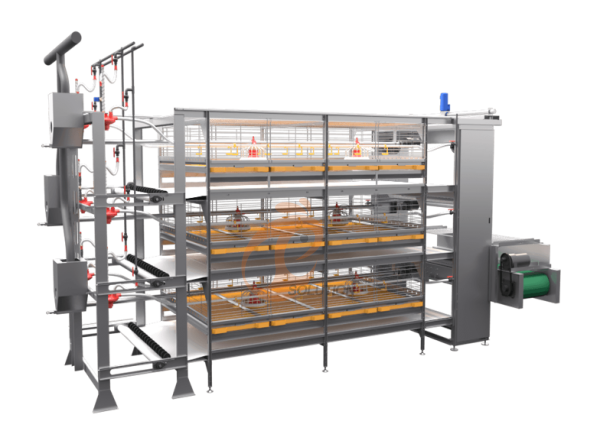
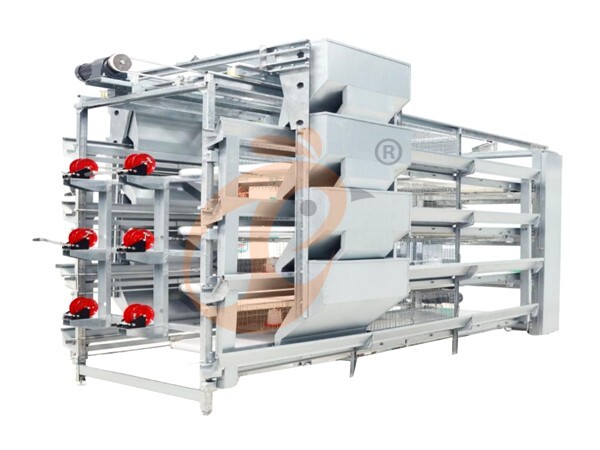
 >30,000 Pullets Automatic H Type Battery Cage1. More than 30,000 pullets a house, choose it.
2. It is designed to rearing older than 1 day old pullets to 12 to 16 weeks old chicken starting laying eggs.
3. Its lifespan is more than 25 years.
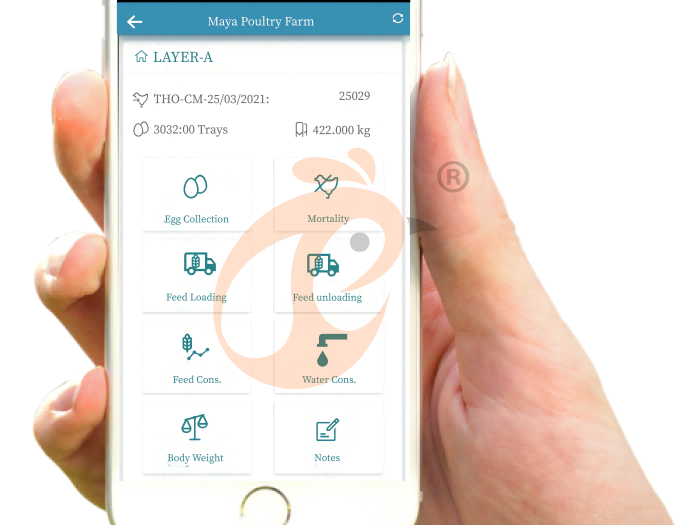
4. Its structure are Vcloud artificial intelligent fusion, electric control cabinet, automatic equipment of drinking, feeding, manure clean, manual harvesting.
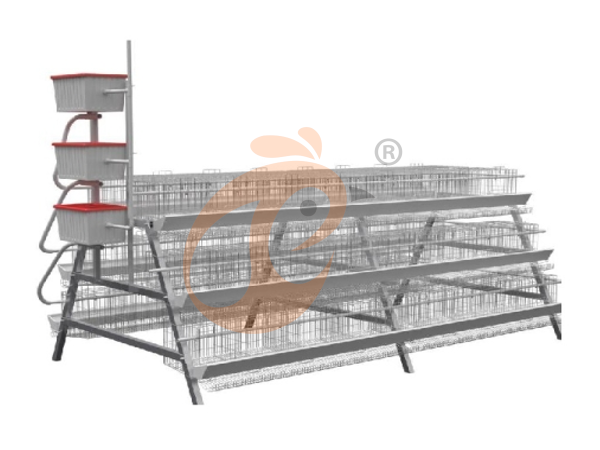
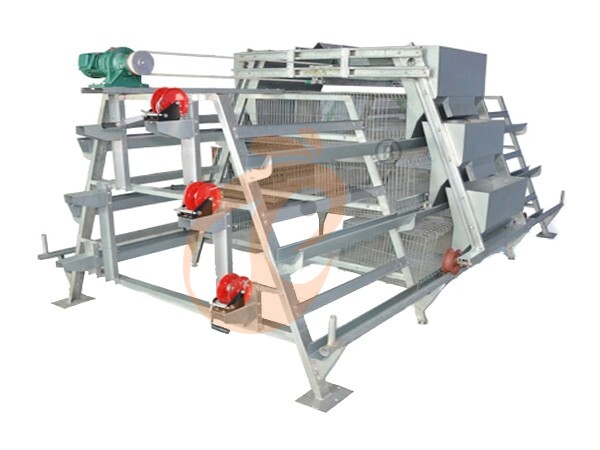
5. Our 24 hour online reception What’sApp NO. is +8618830120193 <30,000 Pullets Automatic A Type Battery Cage1. 10,000 to 30,000 pullets a house, choose it.
2. It is designed to rearing older than 1 day old pullets to 12 to 16 weeks old chicken starting laying eggs.
3. Its lifespan is more than 25 years.
4. Its structure are Vcloud artificial intelligent fusion, electric control cabinet, automatic equipment of drinking, feeding, manure clean, manual harvesting.
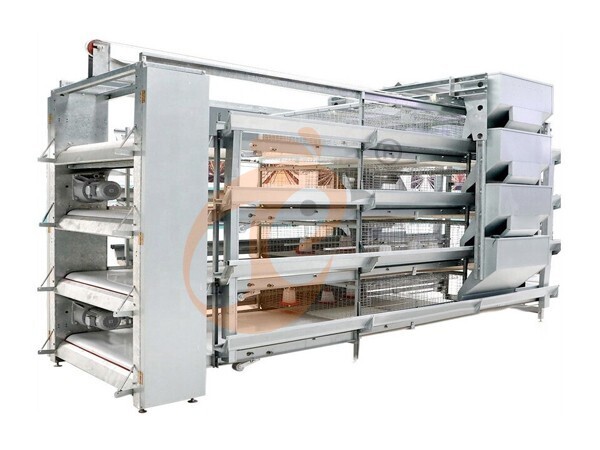
5. Our 24 hour online reception What’sApp NO. is +86 18830120193. >30,000 Broilers Semi-Automatic Harvest H Type Battery Cage1. More than 30,000 broilers a house, choose it.
2. It is designed to rearing 1 to 45 day old adult broiler ready for market.
3. Its lifespan is more than 20 years.
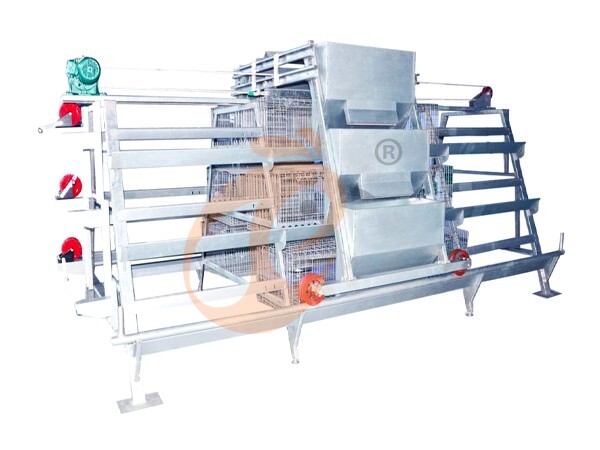
4. Our 24 hour online reception What’sApp NO. is +8618830120193, +234 8111199996. >30,000 Broilers Manual Harvest H Type Battery Cage1. More than 30,000 broilers a house, choose it.
2. It is designed to rearing 1 to 45 day old adult broiler ready for market.
3. Its lifespan is more than 20 years.
4. Its structure are Vcloud artificial intelligent fusion, electric control cabinet, automatic equipment of drinking, feeding and manure clean, manual harvesting.
5. Our 24 hour online reception What’sApp NO. is +8618830120193, +234 8111199996. <30,000 Broilers Manual Harvest A Type Battery Cage1. Less 30,000 broilers a house, choose it.
2. It is designed to rearing 1 to 45 day old adult broiler ready for market.
3. Its lifespan is more than 20 years.
4. Its structure are Vcloud artificial intelligent fusion, electric control cabinet, automatic equipment of drinking, feeding and manure clean, manual harvesting.
5. Our 24 hour online reception What’sApp NO. is +8618830120193, +234 8111199996. HK Headquarter Offers EU-standard Poultry Farm Solutions, Manufacture Poultry Farm Equipment1. Continuous communication with the EU and the US
2. China, Nigeria, Ethiopia, Tanzania branch companies and factories
3. The products’ quality is customized for local poultry farms
4. Poultry cage and poultry farm equipment stock for sale
5. 24 online reception Whatsapp NO. : +8618830120193,contact us to get full information China Branch Offer Poultry Farm Business Plan, Manufacture Poultry Farm Equipment1. Address: Flat/RM 2416, 24/F, Runxing Building, Youyi Nan Street, Shijiazhuang City, Hebei Province, China
2. Poultry cage and poultry farm equipment factory and stock for sale
3. Customized for local poultry farms
4. Quality and design are based on Euro
5. 24 online reception Whatsapp NO. : +8618830120193 Nigeria Branch Offer Poultry Farm Business Plan, Manufacture Poultry Farm Equipment1. Address: After Sinoma Office, 200 Meters Near Danco Filling Station, Lagos/Ibadan Expressway, Lagos State, Nigeria
2. Poultry cage and poultry farm equipment factory and stock for sale
3. Customized for Nigerian poultry farms
4. Quality and design are based on Euro
5. 24 online reception Whatsapp NO. : +8618830120193 Ethiopia Branch Offer Poultry Farm Business Plan, Manufacture Poultry Farm Equipment1. Address: Gelan Gura, Akaki-kaliti Sub City, Addis Ababa, Ethiopia
2. Poultry cage and poultry farm equipment stock for sale
3. Customized for Ethiopian poultry farms
4. Quality and design are based on Euro
5. 24 online reception Whatsapp NO. : +8618830120193, contact us to get price list Tanzania Branch Offer Poultry Farm Business Plan, Manufacture Poultry Farm Equipment1. Address: No.8, Sova Road, Msufini, Mlandizi, Kibaha, Pwani, Tanzania
2. Poultry cage and poultry farm equipment factory and stock for sale
3. Customized for Tanzanian poultry farms
4. Quality and design are based on Euro
5. 24 online reception Whatsapp NO. : +8618830120193


Contact