


Blog
Feed mill selection determines production flow, formulation flexibility, automation, and equipment investment for modern chicken farms.
Poultry feed mill equipment connects crushing, batching, mixing, pelletizing, cooling, screening, conveying, storage, and control into one production system.
Continuous feed mill configurations support stable material flow, while batch designs simplify recipe changes across starter, grower, finisher, and layer feeds.
Capacity planning should consider 12–20 operating hours alongside feed consumption, formula changes, labor, maintenance, and expansion requirements.
A properly engineered chicken feed mill balances equipment specifications, plant layout, automation, maintenance access, and long-term production economics.
Get professional poultry farm construction guidance, equipment selection solutions, and the latest price lists, whatsApp to +8618830120193, click to learn more:
Start With The Production Model, Not The Machine
For a chicken farm planning its own feed mill, the first question is not simply which feed mill is more advanced.
The real question is how feed will be produced every day.
A continuous feed mill keeps materials moving through the process, while a batch feed mill produces feed according to defined recipes and production cycles.
For example, a poultry operation processing 12 hours per day may require a different equipment configuration from a farm running its mill 20 hours per day.
Feed consumption patterns, formula changes, raw-material availability, and expansion plans should therefore be evaluated before selecting poultry feed mill equipment.
Continuous Vs Batch Feed Mill: Technical Comparison
Data is for reference only.Swipe horizontally to view full table.
Continuous production is normally engineered around uninterrupted material flow, while batch production is organized around recipe-controlled weighing and mixing.
Public feed-equipment specifications show batch mixers with batch sizes extending to several tonnes and complete feed mill plants designed around grinding, mixing, conditioning, pelleting, cooling, and screening.
The Continuous Route: A Production Flow
RAW MATERIALS
↓
Continuous Dosing
↓
Grinding
↓
Continuous Mixing
↓
Conditioning
↓
Pelletizing
↓
Cooling
↓
Screening
↓
Finished Feed
This structure is particularly useful when the feed formula remains stable for extended production periods.
A commercial poultry operation may run one formulation for 3–6 hours before changing to another formula, allowing poultry feed mill equipment to maintain a stable material stream.
From an equipment-supplier perspective, the major advantage is system integration.
Hammer mills, dosing equipment, conditioners, pellet mills, coolers, and automated controls can be engineered as one production line instead of independent machines.
Batch Feed Mill Equipment Parameters
Data is for reference only.Swipe horizontally to view full table.
Modern batch feed mill lines can combine weighing, grinding, mixing, conditioning, pelletizing, cooling, crumbling, screening, and bagging.
One published modular plant specification, for example, uses a 2,000-liter twin-shaft mixer and a 160-kW pellet mill.
For a poultry equipment supplier, such integration creates an important selling point.
Customers do not necessarily need to purchase unrelated machines, because complete poultry feed mill equipment can be engineered around the required process sequence.
The Batch Route: Where Formula Control Becomes The Main Feature
Think of a batch feed mill as a recipe-based production system.
Recipe A → Weigh → Grind → Mix → Pelletize
Recipe B → Weigh → Grind → Mix → Pelletize
Recipe C → Weigh → Grind → Mix → Pelletize
This operating structure is valuable for farms producing starter, grower, finisher, or layer feed within the same facility.
A change from one recipe to another can be organized as a defined production batch rather than changing the material flow of the entire feed mill.
For example, a mixer operating at 12 batches per hour can provide a practical production rhythm for operations requiring frequent recipe changes.
Modern paddle-mixer systems are designed for batch feed production and can support multiple liquid additions.
Grinding And Mixing Equipment Data
Data is for reference only.Swipe horizontally to view full table.
Published feed-equipment data lists hammer-mill capacities ranging from 0.5 to 60 t/h, while paddle mixers can cover approximately 0.5 to 40 t/h depending on model and material.
This is why equipment selection should be based on the complete process rather than a single machine.
If the hammer mill, mixer, pellet mill, and conveying system are not properly balanced, the nominal capacity of the largest machine does not represent actual production capacity.
Capacity Planning: Calculate Before You Buy
Required Mill Capacity = Daily Feed Requirement ÷ Effective Operating Hours
Then add allowances for cleaning, recipe changes, maintenance, and future growth.
For example, if a farm consumes 180 tonnes of feed per day and plans 15 effective production hours, theoretical production requirement is approximately 12 t/h before additional design allowance.
This calculation helps prevent a common purchasing mistake: selecting poultry feed mill equipment according to flock size alone.
The feed mill should be sized according to actual consumption and intended operating schedule.
Pelletizing Line: Equipment Specifications
Data is for reference only.Swipe horizontally to view full table.
Pelletizing performance depends on the interaction between formulation, steam conditioning, die geometry, feed rate, and cooling.
Poultry feed mill equipment commonly integrates conditioners and pellet mills because conditioning directly affects material entering the pellet press.
For chicken-feed production, the pellet line can also include a crumbler when starter or young-bird feed is required.
This allows one feed mill to support different physical feed forms without installing an entirely separate production system.
Formula Changes: The Practical Decision Test
Question 1:
How many feed formulas will be produced each day?
Question 2:
How frequently will the formula change?
Question 3:
Will the farm need to produce mash, pellets, and crumbles from the same facility?
If the operation produces 6 or more formulas per day, recipe management becomes an important equipment-selection factor.
A batch system can organize production around individual formulations, while a continuous system should be engineered with appropriate changeover and flushing procedures.
The equipment supplier should examine not only production volume but also the number of recipes, ingredient groups, micro-ingredients, and liquid additions involved in the chicken feed mill production plan.
Automation And Control System
Data is for reference only.Swipe horizontally to view full table.
Automation changes the role of the operator from manually controlling every machine to monitoring the production process.
A modern control system can coordinate dosing, grinding, mixing, pelletizing, temperature monitoring, alarms, and material routing from a centralized interface.
For a farm investing in poultry feed mill equipment, automation should be treated as part of the production equipment rather than an optional computer system.
Proper control integration can also make future equipment expansion easier.
Factory Layout And Installation Parameters
Data is for reference only.Swipe horizontally to view full table.
Plant layout has a direct effect on installation, maintenance, material flow, and future expansion.
A published modular feed mill example occupies approximately 450 m², with a structural height of 15 m and a pit depth of 2.5 m, illustrating how vertical and horizontal space must be considered during planning.
A professional equipment supplier should therefore provide more than machine quotations.
Layout drawings, foundation requirements, electrical load lists, process-flow diagrams, installation guidance, and commissioning support can significantly reduce project risk.
Choose The System Around Your Chicken Farm
Data is for reference only.Swipe horizontally to view full table.
The final choice should be based on measurable production requirements rather than the label ''continuous'' or ''batch''.
A poultry farm producing several feed formulas can benefit from precise recipe-based batching, while a large integrated operation with stable production
schedules may justify a more extensively automated process.
Frequently Asked Questions
Q1: What is the main difference between continuous and batch feed mills?
A continuous feed mill maintains material movement through connected processes, while a batch feed mill weighs and processes ingredients by recipe.
A farm producing 3–6 feed formulas may therefore place greater emphasis on recipe changeover and batch control.
Q2: Which feed mill is suitable for multiple chicken feed formulas?
Batch production provides a clear recipe-by-recipe workflow for starter, grower, finisher, and layer feed.
A properly configured chicken feed mill can also combine batching, mixing, pelletizing, cooling, and crumbling within one production system.
Q3: What should be considered before purchasing poultry feed mill equipment?
Daily feed consumption, operating schedule, raw materials, formulation quantity, pellet specifications, automation requirements, available building space, and future expansion should all enter the engineering calculation.
A preliminary project assessment should also compare equipment capacity against the farm's expected 5–10 year production plan.
Taiyu (HK) Group - One Of China Biggest Feed Mill Manufacturer
Feed mill systems integrate crushing, dosing, mixing, pelletizing, cooling, screening, conveying, and control, with complete lines configured around capacities from 2–100 t/h.
Global factory-direct supply covers poultry equipment, including hammer mills, mixers, pellet mills, coolers, crumblers, conveyors, silos, bagging units, and PLC control systems.
Turn-key engineering covers process design, equipment selection, layout planning, electrical integration, installation guidance, commissioning, and operator training for complete feed-production projects.
International project support provides equipment configuration, technical documentation, spare-parts planning, production-line balancing, and application engineering for poultry farms and commercial feed plants.
Factory-direct manufacturing supports project-specific specifications, modular expansion, equipment integration, and complete poultry feed mill equipment solutions from individual machines to integrated production lines.
Contact Us To Received Your Customized Poultry Farm Plan
Headquarters And Branchs
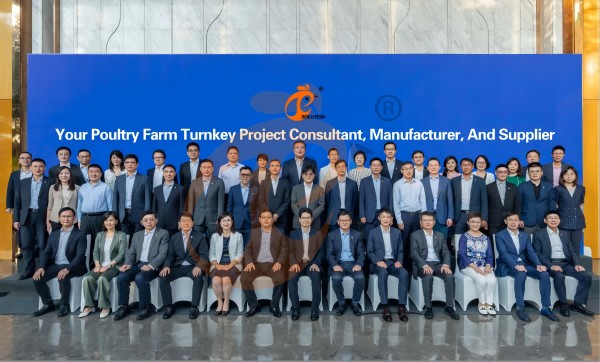
Hong Kong Headquarter Management Team
Hong Kong Headquarter Taiyu Industrial Group CO., LTD
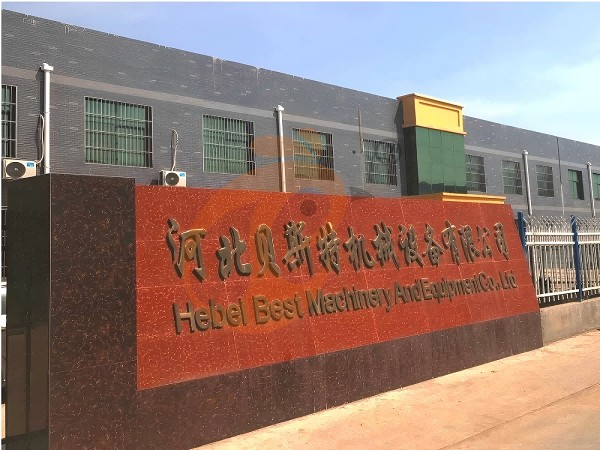
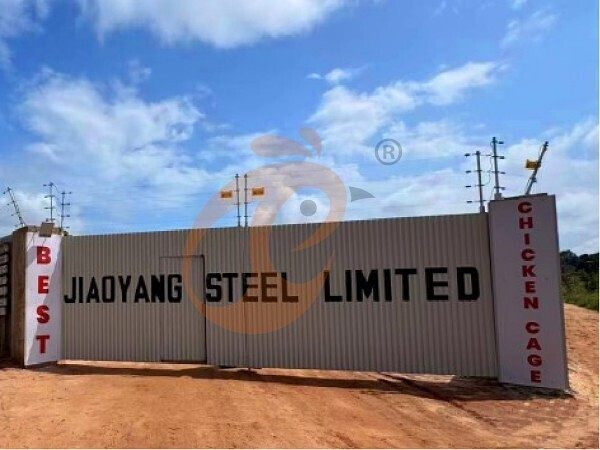
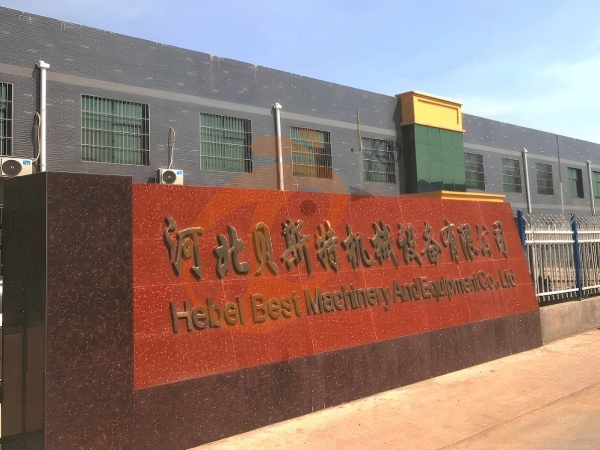
China Hebei Best Machinery And Equipment CO., LTD
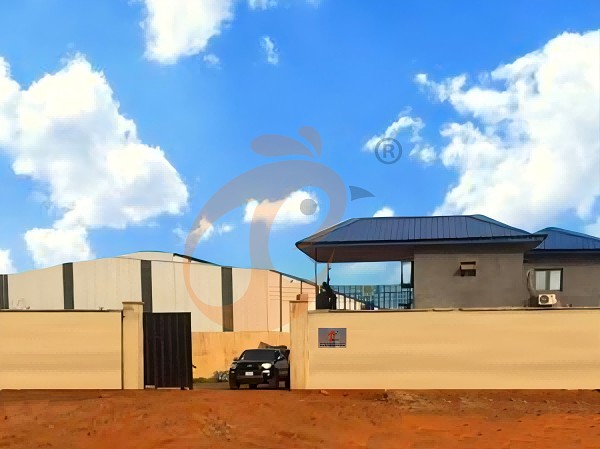
Nigeria Vanke Machinery And Equipment CO., LTD
Tanzania Best Machinery And Equipment CO., LTD
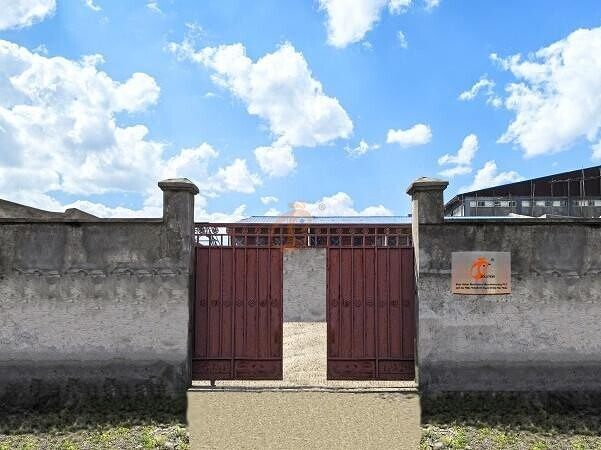
Ethiopia Best Hebei Machinery Manufacturing PLC
Reception /24 WhatsApp NO. : +8618830120193
FAQ
What Moisture Control Standards Are Required In Feed Milling For Poultry Chicken Feed?
Conditioning moisture increases to 16–18% before pelleting for optimal starch gelatinization.
Final feed moisture is controlled at 11–13% to ensure long-term storage stability.
What Energy Consumption Levels Are Standard In Feed Mixer And Feed Mill Operations For Poultry Chicken Farms?
Mixing systems require 3–8 kWh per batch depending on mixer volume and load ratio.
Pelletizing units operate at 60–90 kWh per ton for high-density poultry feed production.
What Raw Material Ratios Are Commonly Processed In Poultry Chicken Feed Mills?
Soybean meal accounts for 18–25% as main protein contributor for growth performance.
Premix addition remains at 2–5% ensuring vitamins and mineral balance stability.
- poultry farm
- poultry farms
- chicken farm
- cage
- poultry farm construction
- poultry equipment
- chickencage
- bestchickencage
- Nigeria
- modern chicken farm
- poultry equipment supplier
- poultry equipment manufacturer
- poultry feed mill
- chicken feed formula
- chicken farm planning
- poultry farm plan
- poultry feed
- chicken feed
- Ethiopia
Message
Products recommended
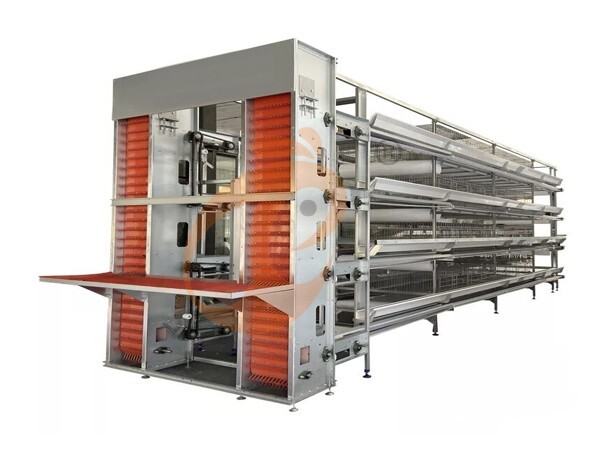
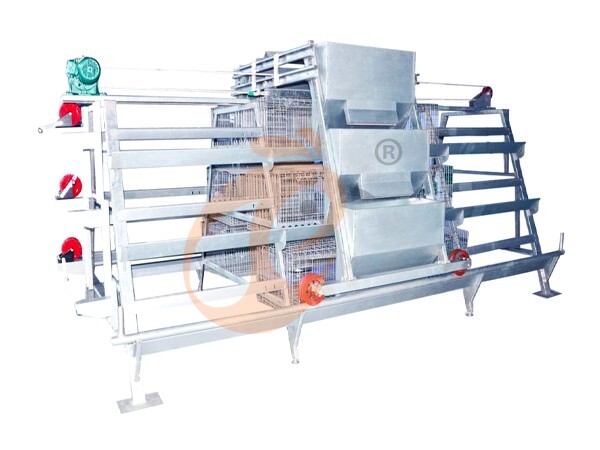
 >30,000 Pullets Automatic H Type Battery Cage1. More than 30,000 pullets a house, choose it.
2. It is designed to rearing older than 1 day old pullets to 12 to 16 weeks old chicken starting laying eggs.
3. Its lifespan is more than 25 years.
4. Its structure are Vcloud artificial intelligent fusion, electric control cabinet, automatic equipment of drinking, feeding, manure clean, manual harvesting.
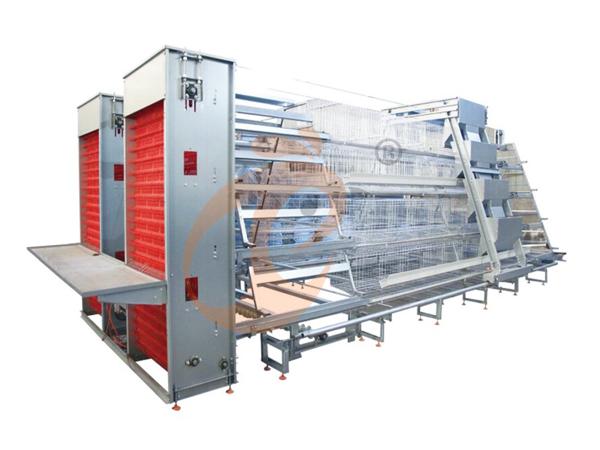
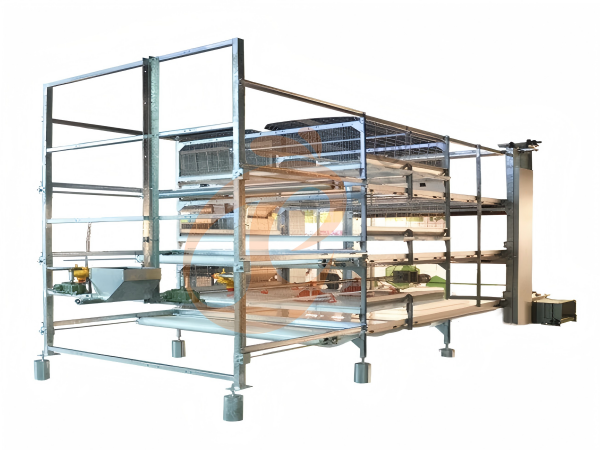
5. Our 24 hour online reception What’sApp NO. is +8618830120193 <30,000 Pullets Automatic A Type Battery Cage1. 10,000 to 30,000 pullets a house, choose it.
2. It is designed to rearing older than 1 day old pullets to 12 to 16 weeks old chicken starting laying eggs.
3. Its lifespan is more than 25 years.
4. Its structure are Vcloud artificial intelligent fusion, electric control cabinet, automatic equipment of drinking, feeding, manure clean, manual harvesting.
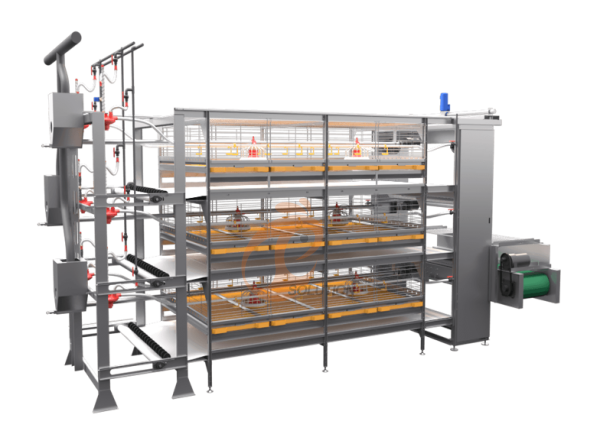
5. Our 24 hour online reception What’sApp NO. is +86 18830120193. >30,000 Broilers Semi-Automatic Harvest H Type Battery Cage1. More than 30,000 broilers a house, choose it.
2. It is designed to rearing 1 to 45 day old adult broiler ready for market.
3. Its lifespan is more than 20 years.
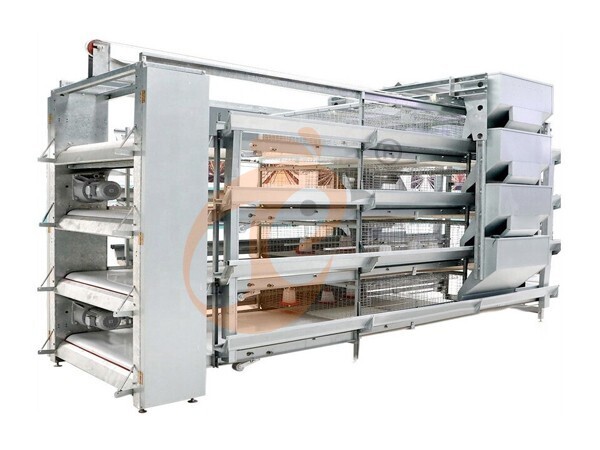
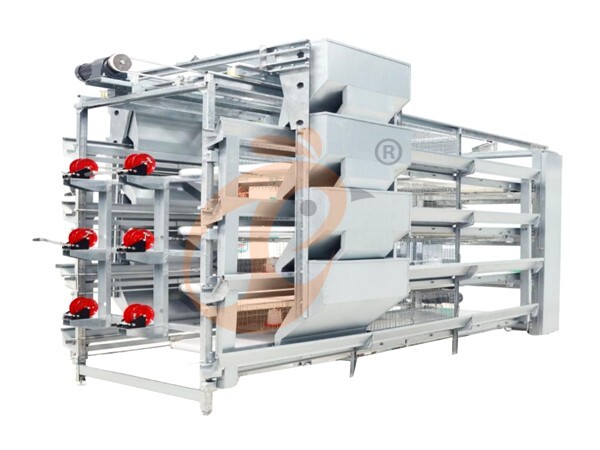
4. Our 24 hour online reception What’sApp NO. is +8618830120193, +234 8111199996. >30,000 Broilers Manual Harvest H Type Battery Cage1. More than 30,000 broilers a house, choose it.
2. It is designed to rearing 1 to 45 day old adult broiler ready for market.
3. Its lifespan is more than 20 years.
4. Its structure are Vcloud artificial intelligent fusion, electric control cabinet, automatic equipment of drinking, feeding and manure clean, manual harvesting.
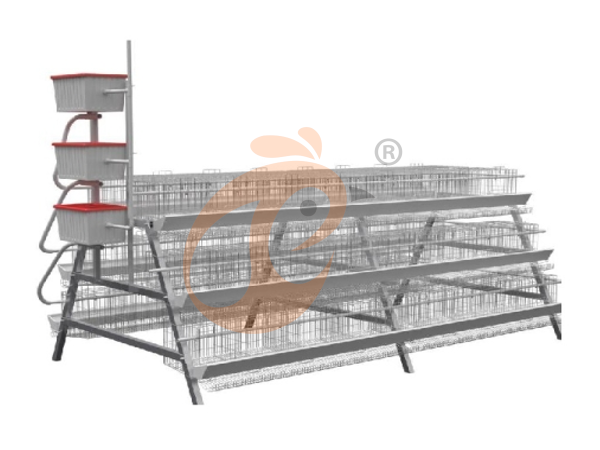
5. Our 24 hour online reception What’sApp NO. is +8618830120193, +234 8111199996. <30,000 Broilers Manual Harvest A Type Battery Cage1. Less 30,000 broilers a house, choose it.
2. It is designed to rearing 1 to 45 day old adult broiler ready for market.
3. Its lifespan is more than 20 years.
4. Its structure are Vcloud artificial intelligent fusion, electric control cabinet, automatic equipment of drinking, feeding and manure clean, manual harvesting.
5. Our 24 hour online reception What’sApp NO. is +8618830120193, +234 8111199996. HK Headquarter Offers EU-standard Poultry Farm Solutions, Manufacture Poultry Farm Equipment1. Continuous communication with the EU and the US
2. China, Nigeria, Ethiopia, Tanzania branch companies and factories
3. The products’ quality is customized for local poultry farms
4. Poultry cage and poultry farm equipment stock for sale
5. 24 online reception Whatsapp NO. : +8618830120193,contact us to get full information China Branch Offer Poultry Farm Business Plan, Manufacture Poultry Farm Equipment1. Address: Flat/RM 2416, 24/F, Runxing Building, Youyi Nan Street, Shijiazhuang City, Hebei Province, China
2. Poultry cage and poultry farm equipment factory and stock for sale
3. Customized for local poultry farms
4. Quality and design are based on Euro
5. 24 online reception Whatsapp NO. : +8618830120193 Nigeria Branch Offer Poultry Farm Business Plan, Manufacture Poultry Farm Equipment1. Address: After Sinoma Office, 200 Meters Near Danco Filling Station, Lagos/Ibadan Expressway, Lagos State, Nigeria
2. Poultry cage and poultry farm equipment factory and stock for sale
3. Customized for Nigerian poultry farms
4. Quality and design are based on Euro
5. 24 online reception Whatsapp NO. : +8618830120193 Ethiopia Branch Offer Poultry Farm Business Plan, Manufacture Poultry Farm Equipment1. Address: Gelan Gura, Akaki-kaliti Sub City, Addis Ababa, Ethiopia
2. Poultry cage and poultry farm equipment stock for sale
3. Customized for Ethiopian poultry farms
4. Quality and design are based on Euro
5. 24 online reception Whatsapp NO. : +8618830120193, contact us to get price list Tanzania Branch Offer Poultry Farm Business Plan, Manufacture Poultry Farm Equipment1. Address: No.8, Sova Road, Msufini, Mlandizi, Kibaha, Pwani, Tanzania
2. Poultry cage and poultry farm equipment factory and stock for sale
3. Customized for Tanzanian poultry farms
4. Quality and design are based on Euro
5. 24 online reception Whatsapp NO. : +8618830120193


Contact