


Blog
Feed mill equipment creates measurable financial value by lowering feed processing costs, improving production stability, and supporting annual throughput beyond 18,000 metric tons while reducing raw material variation by approximately 1.8%.
Automated poultry feed production line solutions improve batching precision, equipment utilization, and production continuity, creating stronger investment confidence for commercial poultry enterprises operating under competitive market conditions.
Modern automatic feed processing system technology combines intelligent control, durable mechanical design, and energy-efficient operation to support sustainable poultry production with predictable operating expenses.
Reliable engineering design, optimized material flow, and compatible poultry house equipment simplify future capacity expansion while reducing unnecessary maintenance interruptions throughout equipment service life.
- Long-term profitability depends on selecting integrated manufacturing solutions instead of isolated machines, allowing poultry farms to balance investment cost, production quality, operational efficiency, and biological performance.
Get professional poultry farm construction guidance, equipment selection solutions, and the latest price lists, whatsApp to +8618830120193, click to learn more:
Reliable Engineering Reduces Lifecycle Cost
Equipment reliability influences production continuity more than short-term purchasing cost.
Stable mechanical transmission, precision machining, and standardized assembly reduce unexpected shutdown frequency across the entire production cycle.
A well-designed automatic feed processing system can maintain bearing vibration below 1.9 mm/s after long operating hours, helping maintenance teams schedule servicing before failures occur.
Data is for reference only. Swipe horizontally to view full table.
Production Scale Should Match Future Expansion
Equipment capacity should satisfy current production while leaving sufficient room for future business growth.
Oversized systems increase idle operating costs, while undersized configurations limit market expansion opportunities.
Professional poultry feed production line planning normally reserves 18% production flexibility without affecting daily operating efficiency.
Data is for reference only. Swipe horizontally to view full table.
Scientific Feed Processing Supports Better Poultry Growth
Feed processing quality affects digestion efficiency as much as nutritional formulation.
Proper conditioning temperature, accurate moisture control, and consistent pellet formation improve nutrient availability while reducing ingredient separation during transportation.
Commercial observations indicate dust generation below 0.9% helps maintain cleaner feeding environments and supports more consistent flock performance across different poultry breeds.
Data is for reference only. Swipe horizontally to view full table.
Selecting A Complete Equipment Supplier
Purchasing individual machines from multiple suppliers often creates compatibility challenges during installation and future maintenance.
An integrated feed mill equipment solution ensures synchronized control logic, unified spare parts management, and coordinated engineering support throughout the entire project lifecycle.
Centralized system design also simplifies commissioning while cable routing remains organized within installation tolerances of approximately ±3 mm.
Data is for reference only. Swipe horizontally to view full table.
Frequently Asked Questions
Q1: What is a good payback period for feed mill equipment?
Most commercial poultry farms target a payback period between 2 and 4 years, depending on production volume, raw material pricing, and operating efficiency.
Q2: How does automation improve feed mill return on investment?
Automation reduces weighing deviation, minimizes manual errors, and improves production consistency.
Many automated production lines maintain formula accuracy within ±0.10%, reducing ingredient waste over long operating periods.
Q3: Why choose an integrated poultry feed production line instead of individual machines?
Integrated systems improve compatibility between equipment, simplify installation, reduce maintenance complexity, and provide more stable long-term production compared with separately sourced machines.
Taiyu (HK) Group - One Of China Largest Feed Mill Equipment Manufacturer
Feed mill equipment is engineered with standardized manufacturing, precision machining, modular assembly, and scalable configurations for commercial poultry feed production.
Global factory-direct supply supports customized poultry equipment projects with stable quality management and efficient international delivery.
Complete Turn-key engineering covers process design, equipment manufacturing, installation supervision, commissioning, and operator training.
Integrated poultry equipment solutions include poultry houses, feeding systems, drinking systems, ventilation systems, environmental control systems, manure removal systems, and feed processing lines.
Professional engineering teams provide lifecycle technical support, spare parts management, process optimization, and overseas project implementation for commercial poultry farms.
Contact Us To Received Your Customized Poultry Farm Plan
Headquarters And Branchs

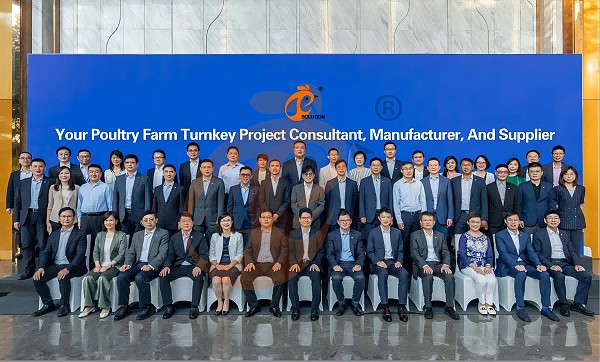
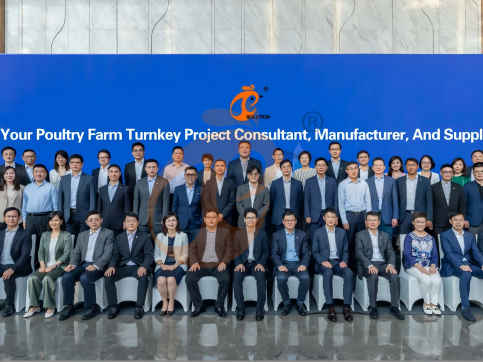
Hong Kong Headquarter Management Team
Hong Kong Headquarter Taiyu Industrial Group CO., LTD
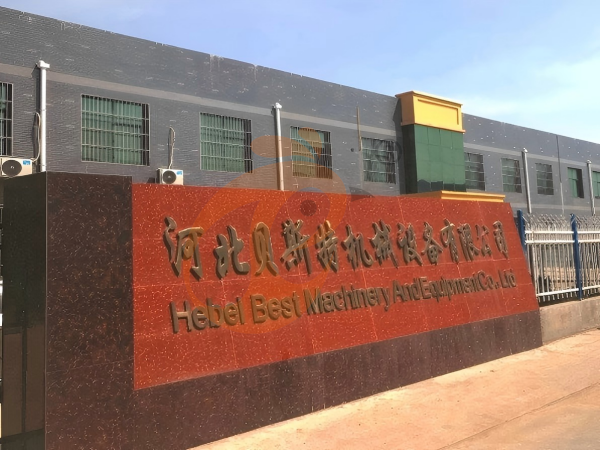
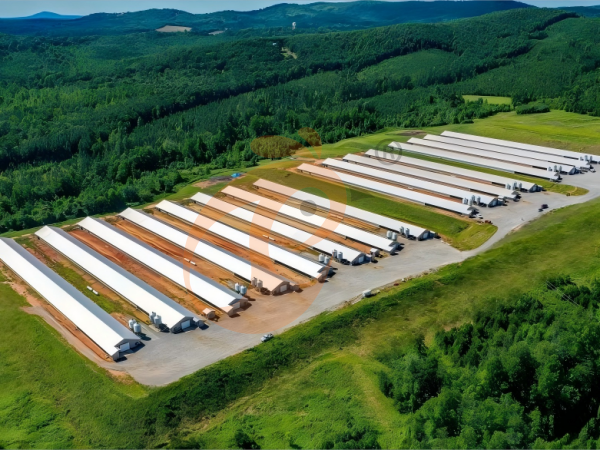
China Hebei Best Machinery And Equipment CO., LTD
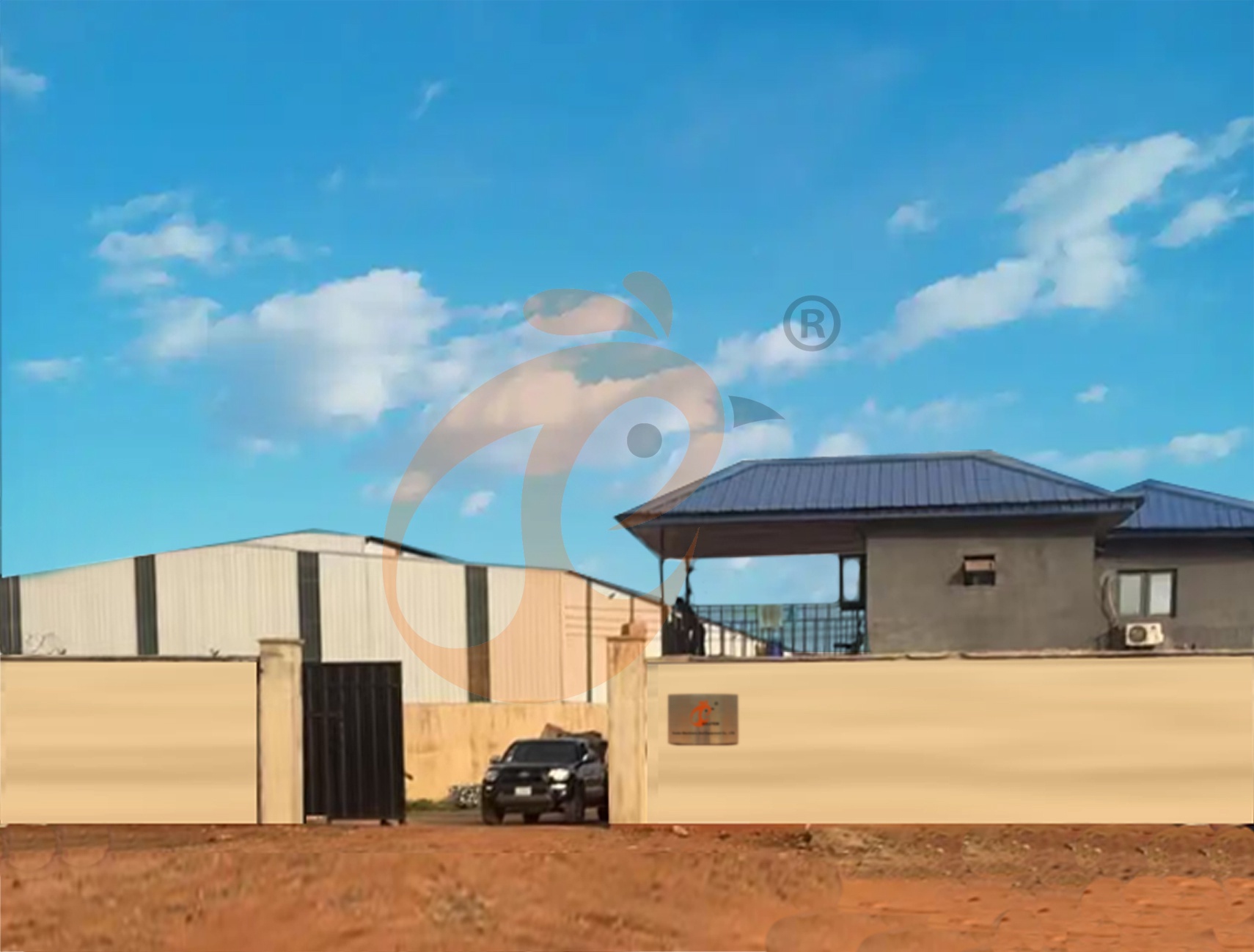
Nigeria Vanke Machinery And Equipment CO., LTD
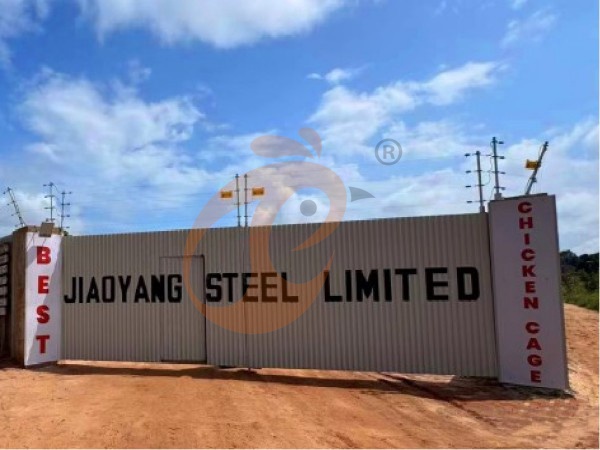
Tanzania Best Machinery And Equipment CO., LTD
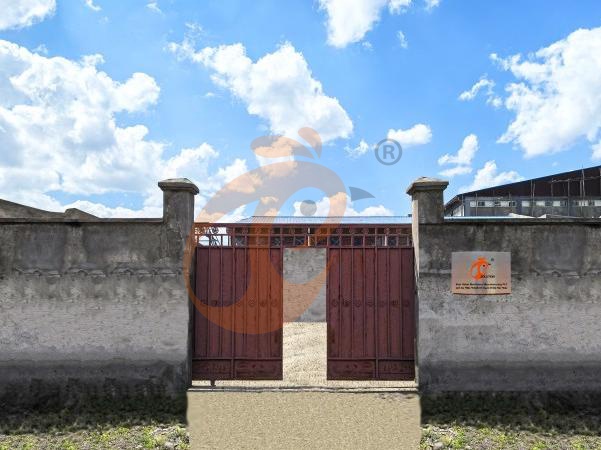
Ethiopia Best Hebei Machinery Manufacturing PLC




Reception /24 WhatsApp NO. : +8618830120193
FAQ
What Are The Main Equipment Components In Feed Mill And Feed Mixer Systems For Poultry Chicken Production?
Hammer mill units operate with rotor speeds of 2800–3600 rpm for efficient grain size reduction.
Twin-shaft mixers achieve batch capacities of 500–2000 kg per cycle for uniform poultry feed blending.
What Dust Control Requirements Are Needed In Feed Mill Operations For Poultry Chicken Farms?
Cyclone separators remove 85%–92% of airborne particles during grinding and conveying processes.
Negative pressure systems maintain airflow velocity between 0.8–1.2 m/s to prevent dust leakage.
What Temperature Parameters Are Used In Feed Mill Processing For Poultry Chicken Feed?
Conditioning temperature reaches 75–85°C to improve pellet durability and pathogen reduction.
Cooling stage reduces pellet temperature to within 5°C of ambient conditions for safe storage.
Message
Products recommended
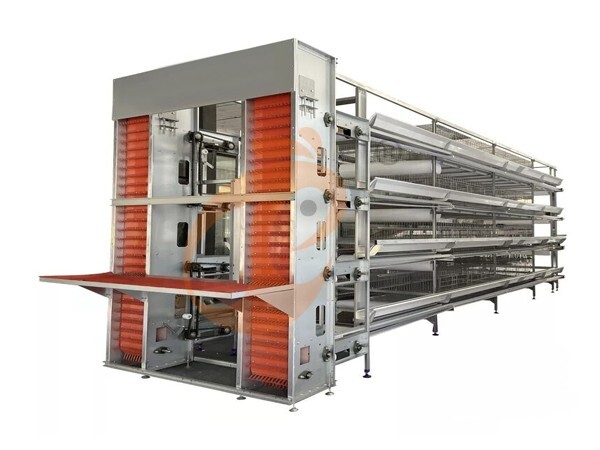
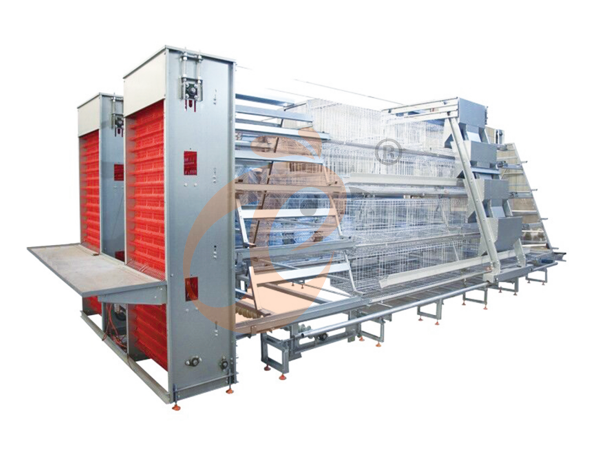
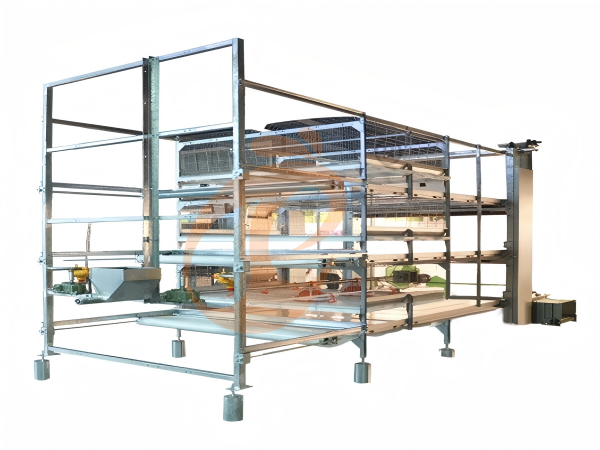
 >30,000 Pullets Automatic H Type Battery Cage1. More than 30,000 pullets a house, choose it.
2. It is designed to rearing older than 1 day old pullets to 12 to 16 weeks old chicken starting laying eggs.
3. Its lifespan is more than 25 years.
4. Its structure are Vcloud artificial intelligent fusion, electric control cabinet, automatic equipment of drinking, feeding, manure clean, manual harvesting.
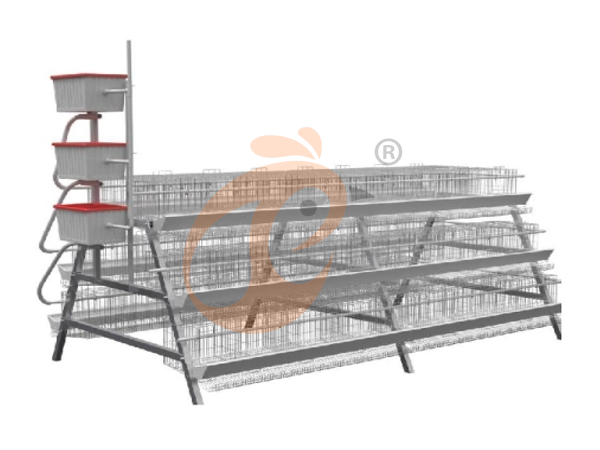
5. Our 24 hour online reception What’sApp NO. is +8618830120193 <30,000 Pullets Automatic A Type Battery Cage1. 10,000 to 30,000 pullets a house, choose it.
2. It is designed to rearing older than 1 day old pullets to 12 to 16 weeks old chicken starting laying eggs.
3. Its lifespan is more than 25 years.
4. Its structure are Vcloud artificial intelligent fusion, electric control cabinet, automatic equipment of drinking, feeding, manure clean, manual harvesting.
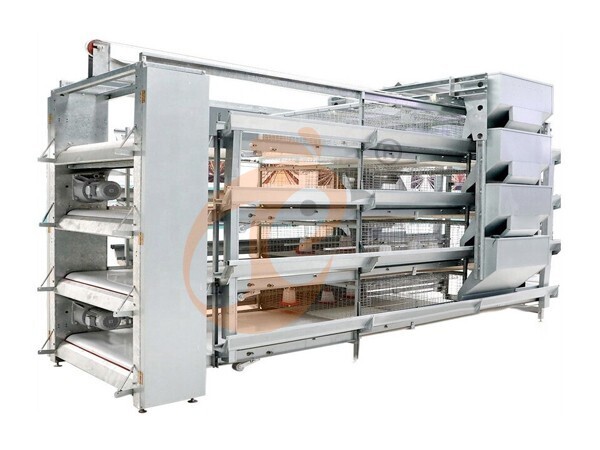
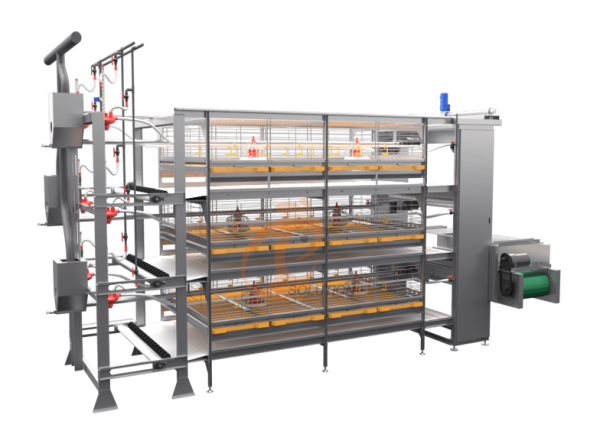
5. Our 24 hour online reception What’sApp NO. is +86 18830120193. >30,000 Broilers Semi-Automatic Harvest H Type Battery Cage1. More than 30,000 broilers a house, choose it.
2. It is designed to rearing 1 to 45 day old adult broiler ready for market.
3. Its lifespan is more than 20 years.
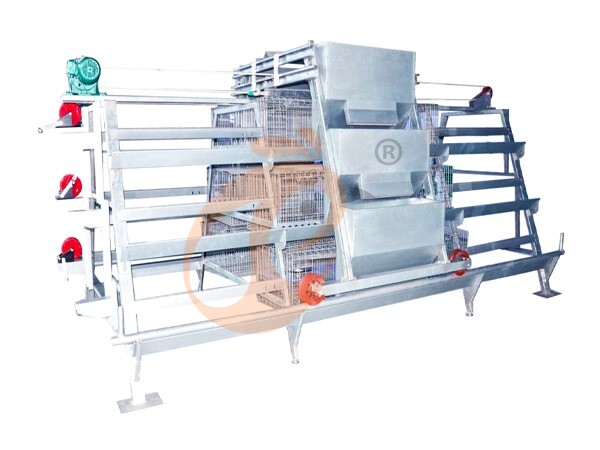
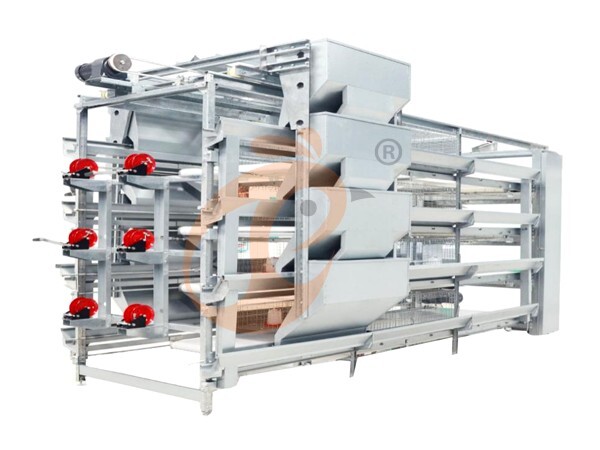
4. Our 24 hour online reception What’sApp NO. is +8618830120193, +234 8111199996. >30,000 Broilers Manual Harvest H Type Battery Cage1. More than 30,000 broilers a house, choose it.
2. It is designed to rearing 1 to 45 day old adult broiler ready for market.
3. Its lifespan is more than 20 years.
4. Its structure are Vcloud artificial intelligent fusion, electric control cabinet, automatic equipment of drinking, feeding and manure clean, manual harvesting.
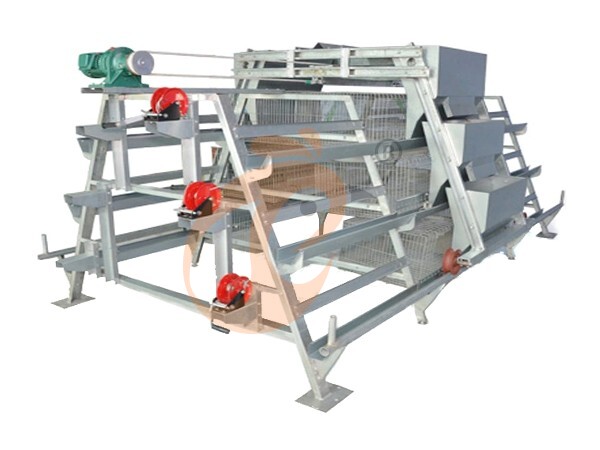
5. Our 24 hour online reception What’sApp NO. is +8618830120193, +234 8111199996. <30,000 Broilers Manual Harvest A Type Battery Cage1. Less 30,000 broilers a house, choose it.
2. It is designed to rearing 1 to 45 day old adult broiler ready for market.
3. Its lifespan is more than 20 years.
4. Its structure are Vcloud artificial intelligent fusion, electric control cabinet, automatic equipment of drinking, feeding and manure clean, manual harvesting.
5. Our 24 hour online reception What’sApp NO. is +8618830120193, +234 8111199996. HK Headquarter Offers EU-standard Poultry Farm Solutions, Manufacture Poultry Farm Equipment1. Continuous communication with the EU and the US
2. China, Nigeria, Ethiopia, Tanzania branch companies and factories
3. The products’ quality is customized for local poultry farms
4. Poultry cage and poultry farm equipment stock for sale
5. 24 online reception Whatsapp NO. : +8618830120193,contact us to get full information China Branch Offer Poultry Farm Business Plan, Manufacture Poultry Farm Equipment1. Address: Flat/RM 2416, 24/F, Runxing Building, Youyi Nan Street, Shijiazhuang City, Hebei Province, China
2. Poultry cage and poultry farm equipment factory and stock for sale
3. Customized for local poultry farms
4. Quality and design are based on Euro
5. 24 online reception Whatsapp NO. : +8618830120193 Nigeria Branch Offer Poultry Farm Business Plan, Manufacture Poultry Farm Equipment1. Address: After Sinoma Office, 200 Meters Near Danco Filling Station, Lagos/Ibadan Expressway, Lagos State, Nigeria
2. Poultry cage and poultry farm equipment factory and stock for sale
3. Customized for Nigerian poultry farms
4. Quality and design are based on Euro
5. 24 online reception Whatsapp NO. : +8618830120193 Ethiopia Branch Offer Poultry Farm Business Plan, Manufacture Poultry Farm Equipment1. Address: WR93+FQ2, Addis Ababa, Ethiopia
2. Poultry cage and poultry farm equipment stock for sale
3. Customized for Ethiopian poultry farms
4. Quality and design are based on Euro
5. 24 online reception Whatsapp NO. : +8618830120193, contact us to get price list Tanzania Branch Offer Poultry Farm Business Plan, Manufacture Poultry Farm Equipment1. Address: No.8, Sova Road, Msufini, Mlandizi, Kibaha, Pwani, Tanzania
2. Poultry cage and poultry farm equipment factory and stock for sale
3. Customized for Tanzanian poultry farms
4. Quality and design are based on Euro
5. 24 online reception Whatsapp NO. : +8618830120193


Contact
By clicking 'Allow All', you agree to the storage of cookies on your device to enhance site navigation, analyze site usage and assist with our marketing efforts.