


Blog
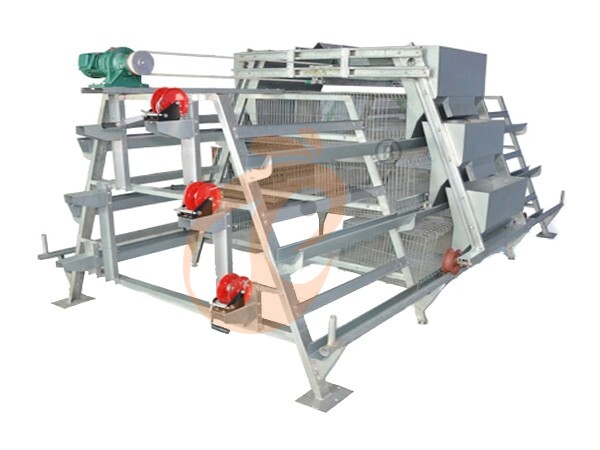
H type chicken cage systems combine intensive housing, automated feeding, and practical poultry-house engineering for commercial layer production
Automatic chicken feeding systems improve feed delivery consistency while reducing repetitive handling across multi-tier cage structures and long house layouts
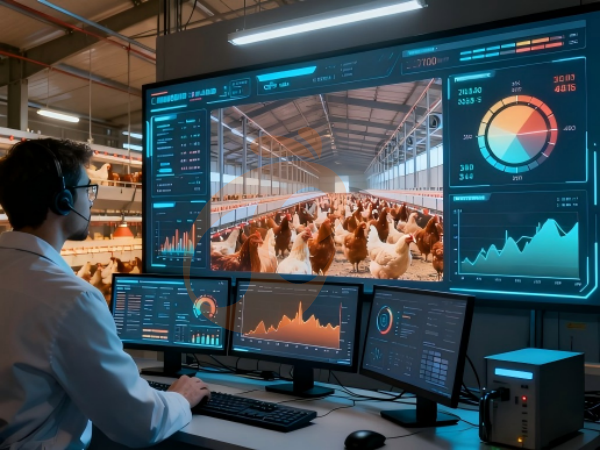
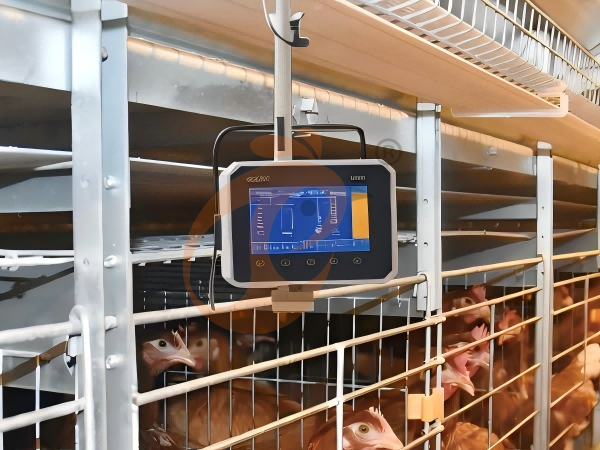
Poultry feeding equipment supports scalable farm planning through coordinated conveyors, drive units, troughs, sensors, and control systems
Integrated cage solutions connect feeding with drinking, manure removal, egg collection, ventilation, and environmental management for efficient daily operation
Engineering-based equipment selection helps commercial farms balance capacity, reliability, maintenance access, automation requirements, and long-term production efficiency
Get professional poultry farm construction guidance, equipment selection solutions, and the latest price lists, whatsApp to +8618830120193, click to learn more:
Feeding Efficiency At A Glance
Data is for reference only.Swipe horizontally to view full table.
Automatic chicken feeding systems can deliver feed through centralized routes while maintaining scheduled operation across multiple cage rows.
Commercial poultry feeding equipment can also support different feed formulations, with operating schedules configured around flock management requirements.
Consistent Feed Distribution Creates A More Stable Flock
Feed Flow Principle
Feed availability remains a critical management factor for commercial layer production.
Automatic chicken feeding systems provide repeatable delivery instead of depending on individual workers for manual distribution.
A chain system can operate at 12–18 m/min, while chain pitch can be engineered around 31–35 mm for continuous conveying.
Such mechanical coordination supports predictable feeding rhythms across different cage levels and helps standardize daily flock management.
Less Labor, More Farm Productivity
Data is for reference only.Swipe horizontally to view full table.
Poultry feeding equipment replaces repeated feed carrying with motorized conveying and centralized control.
A dedicated drive unit can serve a substantial feeding circuit, allowing personnel to focus on flock observation, equipment inspection, and production records.
Automatic chicken feeding systems therefore become a core component of labor-oriented H type cage engineering.
Designed For Multi-Tier H Type Cage Structures
Engineering Fit
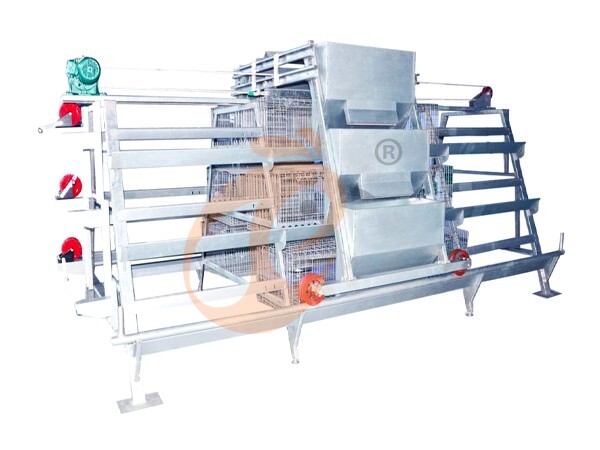
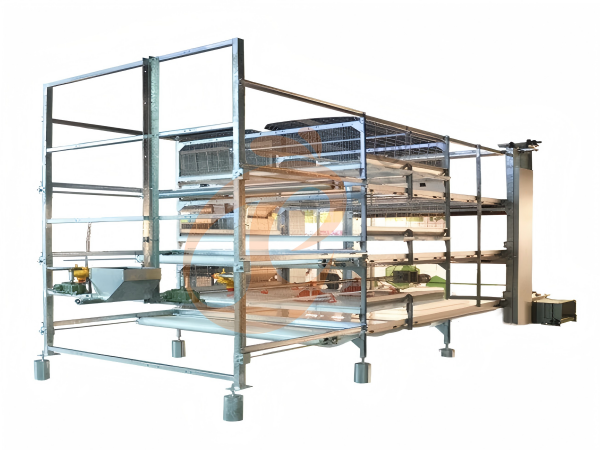
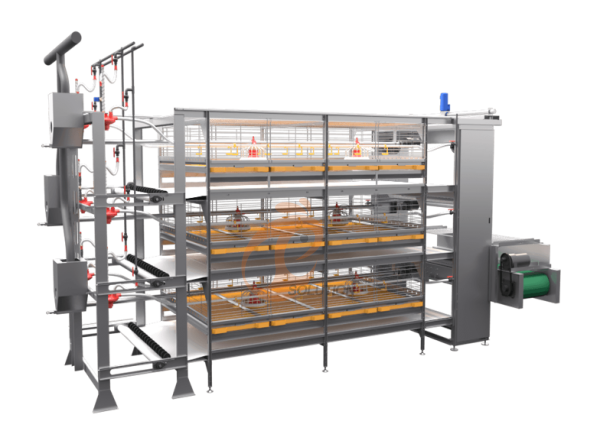
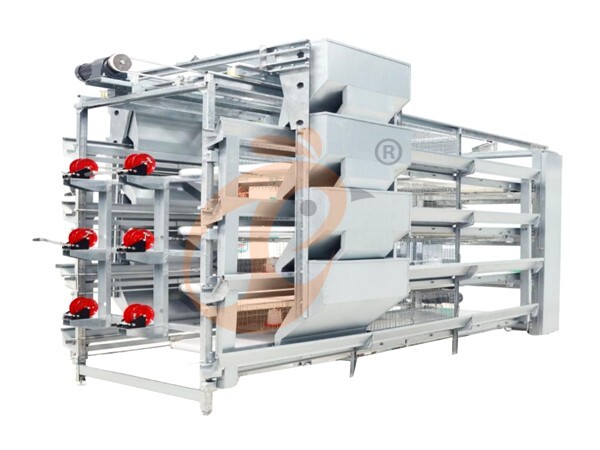
H type chicken cage systems place several production levels within a vertical structure, requiring feeding equipment to match cage geometry and working height.
Typical cage sections may use dimensions of 600 × 450 × 410 mm, while commercial models can accommodate 90–160 birds per unit depending on configuration.
Automatic chicken feeding systems can be engineered around cage rows, tier quantities, building dimensions, and feed-delivery routes.
Professional poultry feeding equipment should therefore be selected together with cage specifications rather than treated as an independent machine.
Reducing Feed Waste Through Better Control
Data is for reference only.Swipe horizontally to view full table.
Controlled poultry feeding equipment can reduce irregular trough filling and unnecessary feed accumulation.
Different automatic chicken feeding systems can use auger or chain mechanisms according to building layout and feed-management requirements.
Feed movement control becomes particularly important when multiple cage rows operate simultaneously throughout the production day.
A More Efficient Workflow Inside The Poultry House
Feed enters storage, moves through the conveying route, reaches the feeder, and distributes along H type chicken cage rows.
A trolley configuration can operate at approximately 8.67 m/min, while traction equipment may use a 14 mm PP rope.
Such workflow changes daily feeding from repeated manual transportation into a controlled mechanical process.
Integrated poultry feeding equipment allows cage structures, feed routes, and farm supervision to operate as one coordinated production system.
Automation Supports Larger Farm Capacity
Data is for reference only.Swipe horizontally to view full table.
H type chicken cage projects can use different feeding configurations according to flock capacity, building dimensions, and expansion requirements.
Automatic chicken feeding systems provide a scalable mechanical foundation when additional cage rows are incorporated into commercial poultry houses.
Modular poultry feeding equipment also simplifies project planning because conveying routes can be matched with individual house layouts.
Reliability Matters More Than Automation Alone
Reliability Checklist
Automation creates production value only when mechanical components remain stable during repeated operating cycles.
Professional poultry feeding equipment can incorporate sealed bearing assemblies and automatic or manual chain-tension mechanisms for practical servicing.
Drive protection, component matching, maintenance access, and correct installation remain essential parts of H type chicken cage engineering.
A reliable automatic chicken feeding system should combine controlled operation with durable mechanical construction and accessible maintenance points.
Integrating Feeding With A Complete Poultry Equipment System
Data is for reference only.Swipe horizontally to view full table.
An integrated poultry equipment package can combine automatic feeding with drinking, manure removal, egg collection, ventilation, and lighting.
H type chicken cage systems become more efficient when individual equipment modules share a coordinated project design.
Automatic chicken feeding systems can consequently form one operating layer within a complete commercial poultry-house solution.
Choosing The Right Automatic Feeding Configuration
Selection Logic
The correct poultry feeding equipment configuration should consider cage capacity, house dimensions, feed characteristics, power conditions, and automation architecture.
An auger configuration may use an outer tube diameter of 110 mm and an auger diameter of 90 mm, while a feed-transfer system can reach approximately 73 kg/min under a specified configuration.
Different automatic chicken feeding systems should be matched with actual project requirements instead of being selected from a universal specification.
Engineering recommendations should connect equipment dimensions with flock capacity, house structure, installation routes, and future expansion plans.
From H Type Cages To A Smarter Poultry House
Data is for reference only.Swipe horizontally to view full table.
Automatic feeding enhances H type chicken cage performance by connecting cage structure with controlled feed delivery.
Poultry feeding equipment supports standardized routines, mechanical conveying, scalable house layouts, and integrated production management.
Commercial farms can combine automatic chicken feeding systems with drinking, manure removal, egg collection, ventilation, and environmental-control equipment.
Frequently Asked Questions
Q1: What makes automatic feeding suitable for H type chicken cages?
Automatic chicken feeding systems match multi-tier cage layouts through centralized conveying and scheduled distribution.
Typical systems can serve several cage levels while maintaining controlled feed movement across extended house routes.
Q2: How should poultry feeding equipment be selected?
Poultry feeding equipment should match cage tiers, house length, flock capacity, feed type, electrical conditions, and planned automation level.
Project-specific engineering can prevent mismatched conveying capacity and unnecessary equipment investment.
Q3: Can automatic feeding be integrated with other poultry equipment?
Yes, automatic chicken feeding systems can be coordinated with drinking, manure removal, egg collection, ventilation, and lighting systems.
Integrated engineering improves equipment compatibility and creates a clearer operating structure for commercial poultry houses.
Taiyu (HK) Group - One Of China Largest H Type Chicken Cage Manufacturer
H type chicken cage systems integrate multi-tier housing with automatic feeding routes for intensive layer production
Global factory-direct supply covers poultry equipment manufacturing, technical configuration, component matching, and project-oriented delivery
Turn-key engineering connects cage systems with feeding, drinking, manure removal, egg collection, ventilation, and environmental equipment
Commercial projects receive equipment planning based on building dimensions, flock capacity, automation requirements, installation routes, and operating conditions
Export-oriented project execution supports poultry farms requiring coordinated equipment packages, technical documentation, installation assistance, and production-focused engineering
Contact Us To Received Your Customized Poultry Farm Plan
Headquarters And Branchs
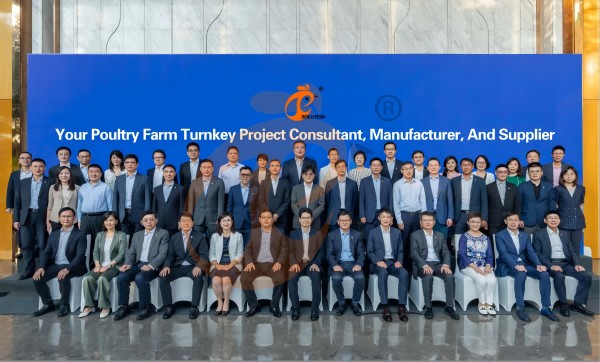
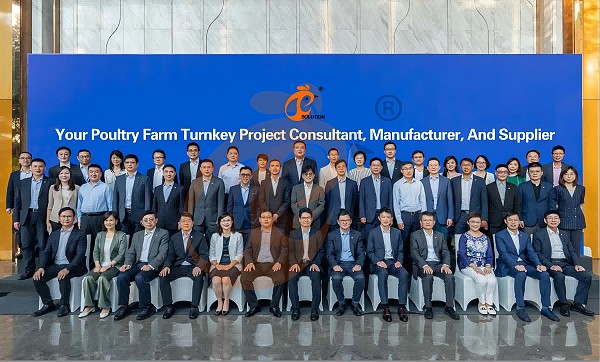
Hong Kong Headquarter Management Team
Hong Kong Headquarter Taiyu Industrial Group CO., LTD
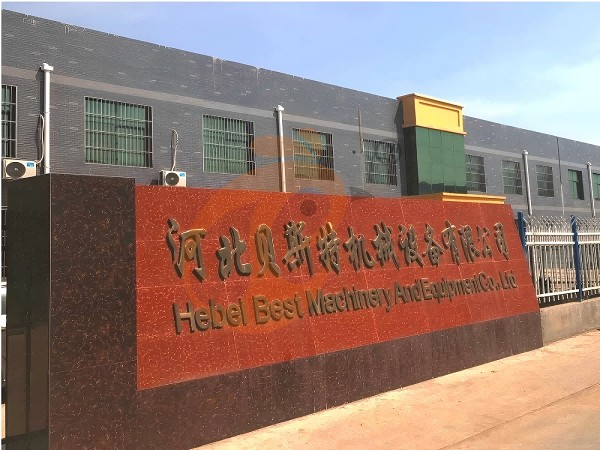
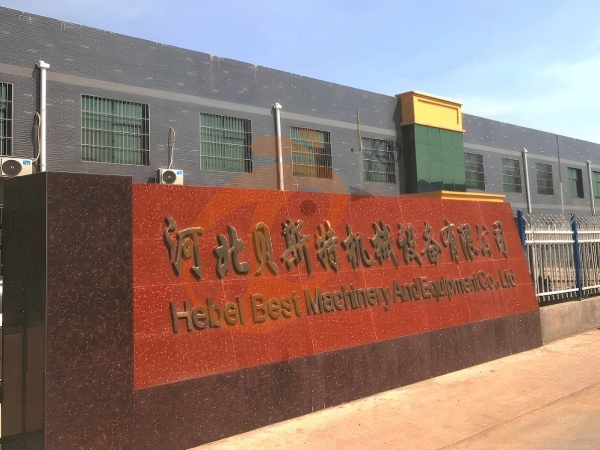
China Hebei Best Machinery And Equipment CO., LTD
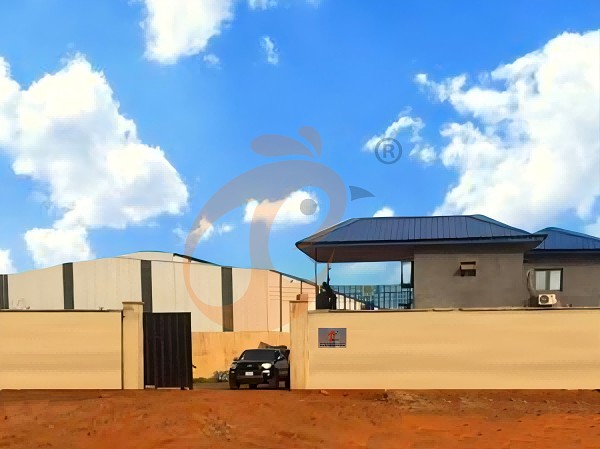
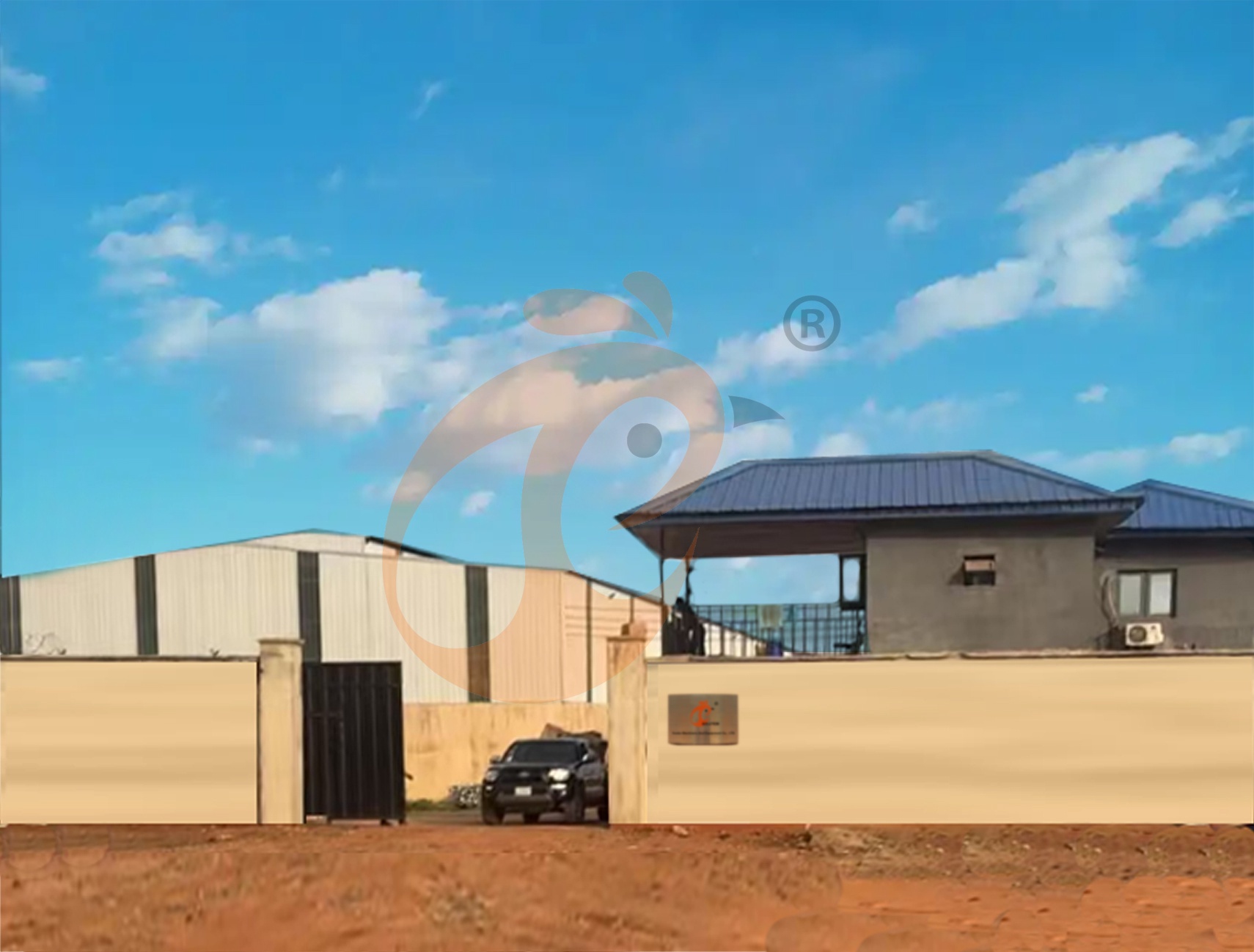
Nigeria Vanke Machinery And Equipment CO., LTD
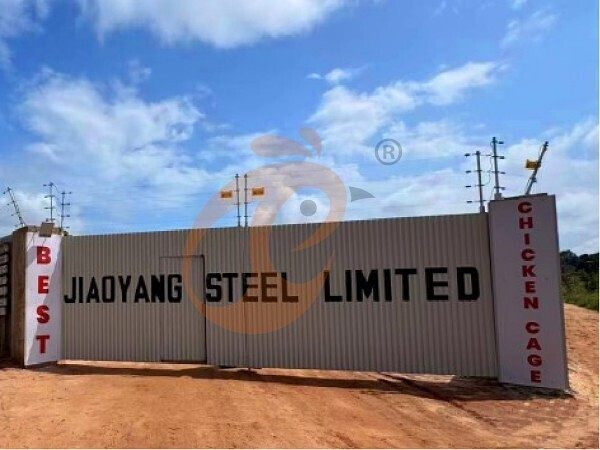
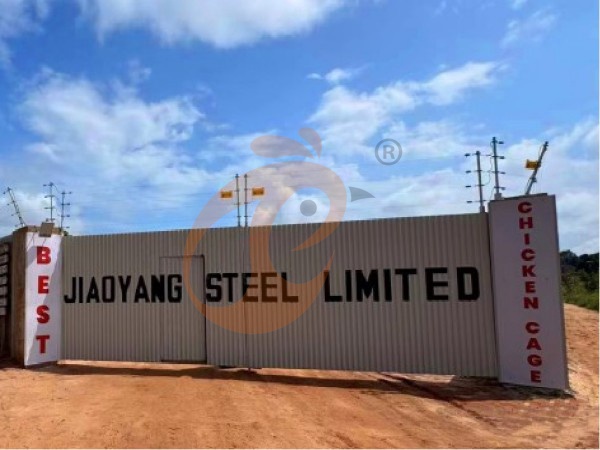
Tanzania Best Machinery And Equipment CO., LTD
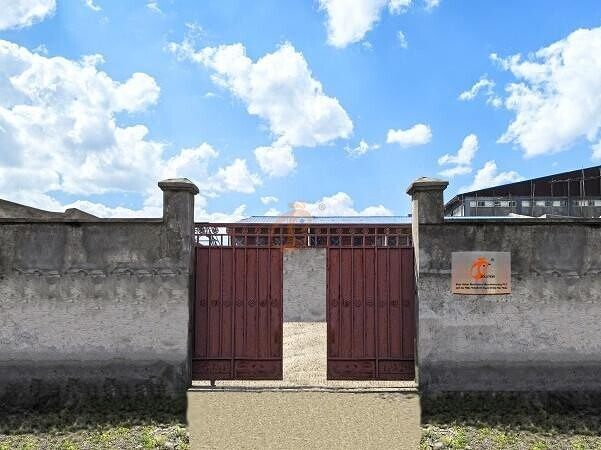
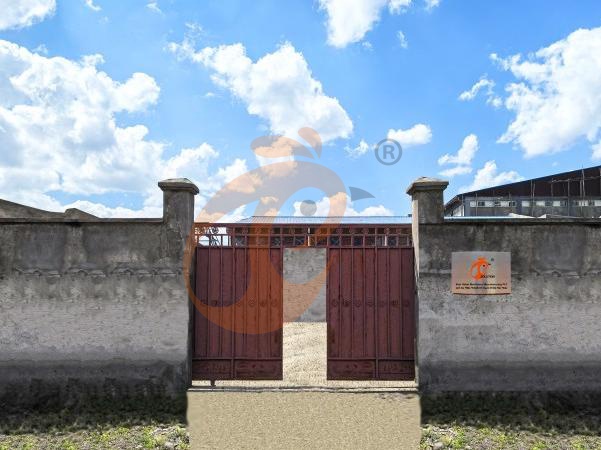
Ethiopia Best Hebei Machinery Manufacturing PLC
Reception /24 WhatsApp NO. : +8618830120193
FAQ
How To Manage Lighting Programs In H-Type Layer Cage Houses?
Ensure even light distribution
Promotes laying rhythm
Egg production rate: 90-98%
FCR 1.9–2.1
What Are The Cleaning Procedures For H-Type Battery Cage System?
Use environmentally safe disinfectants
Clean manure troughs
Reduce pathogen spread
Egg production rate: 90-98%
How To Expand H-Type Chicken Cage Farm Without Reducing Efficiency?
Maintain automated feeding and drinking systems
Ensure uniform ventilation and lighting
Farm capacity per house: 30,000 - 100,000+0 birds
Labor savings: 70-90%
- poultry farm
- chicken cage
- poultry farms
- poultry house
- cage
- galvanized cage
- poultry farm construction
- chicken cage manufacturer
- chicken cage system
- poultry feeding equipment
- poultry equipment
- chicken cages
- h type chicken cage
- chickencage
- h type cage
- bestchickencage
- cage system
- h type
- cage systems
- h cage
- h type cages
- Nigeria
- automatic chicken feeding system
- chicken feeding system
- cage manufacturer
- poultry farm plan
- poultry feed
- chicken feed
- Ethiopia
Message
Products recommended
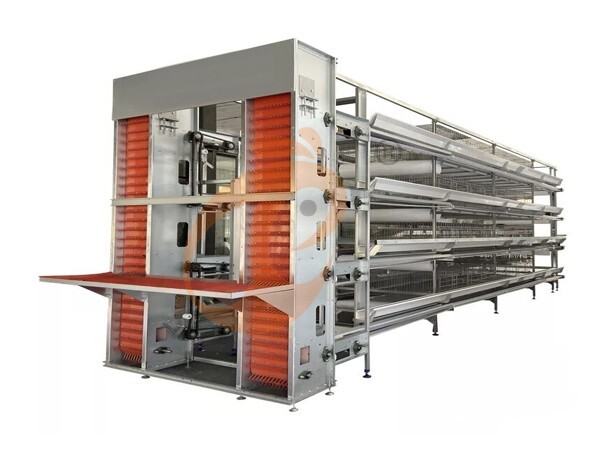
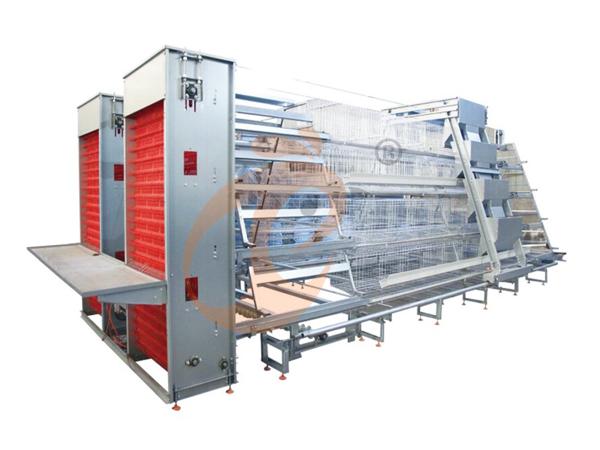
 >30,000 Pullets Automatic H Type Battery Cage1. More than 30,000 pullets a house, choose it.
2. It is designed to rearing older than 1 day old pullets to 12 to 16 weeks old chicken starting laying eggs.
3. Its lifespan is more than 25 years.
4. Its structure are Vcloud artificial intelligent fusion, electric control cabinet, automatic equipment of drinking, feeding, manure clean, manual harvesting.
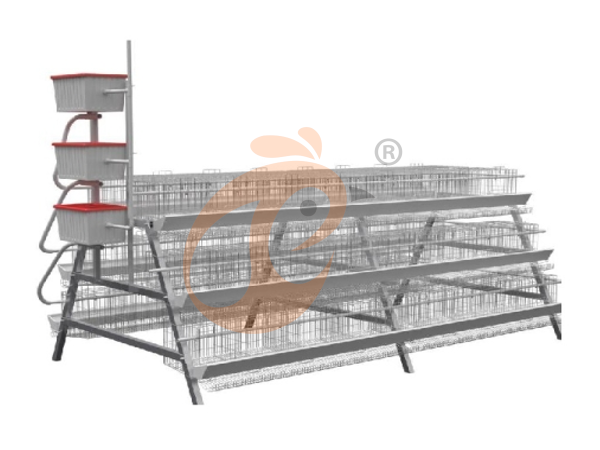
5. Our 24 hour online reception What’sApp NO. is +8618830120193 <30,000 Pullets Automatic A Type Battery Cage1. 10,000 to 30,000 pullets a house, choose it.
2. It is designed to rearing older than 1 day old pullets to 12 to 16 weeks old chicken starting laying eggs.
3. Its lifespan is more than 25 years.
4. Its structure are Vcloud artificial intelligent fusion, electric control cabinet, automatic equipment of drinking, feeding, manure clean, manual harvesting.
5. Our 24 hour online reception What’sApp NO. is +86 18830120193. >30,000 Broilers Semi-Automatic Harvest H Type Battery Cage1. More than 30,000 broilers a house, choose it.
2. It is designed to rearing 1 to 45 day old adult broiler ready for market.
3. Its lifespan is more than 20 years.
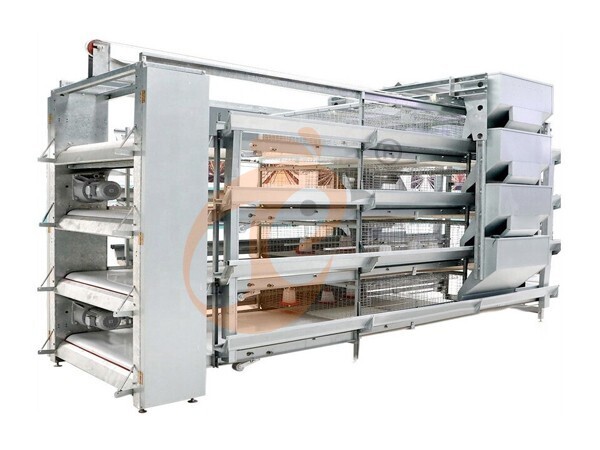
4. Our 24 hour online reception What’sApp NO. is +8618830120193, +234 8111199996. >30,000 Broilers Manual Harvest H Type Battery Cage1. More than 30,000 broilers a house, choose it.
2. It is designed to rearing 1 to 45 day old adult broiler ready for market.
3. Its lifespan is more than 20 years.
4. Its structure are Vcloud artificial intelligent fusion, electric control cabinet, automatic equipment of drinking, feeding and manure clean, manual harvesting.
5. Our 24 hour online reception What’sApp NO. is +8618830120193, +234 8111199996. <30,000 Broilers Manual Harvest A Type Battery Cage1. Less 30,000 broilers a house, choose it.
2. It is designed to rearing 1 to 45 day old adult broiler ready for market.
3. Its lifespan is more than 20 years.
4. Its structure are Vcloud artificial intelligent fusion, electric control cabinet, automatic equipment of drinking, feeding and manure clean, manual harvesting.
5. Our 24 hour online reception What’sApp NO. is +8618830120193, +234 8111199996. HK Headquarter Offers EU-standard Poultry Farm Solutions, Manufacture Poultry Farm Equipment1. Continuous communication with the EU and the US
2. China, Nigeria, Ethiopia, Tanzania branch companies and factories
3. The products’ quality is customized for local poultry farms
4. Poultry cage and poultry farm equipment stock for sale
5. 24 online reception Whatsapp NO. : +8618830120193,contact us to get full information China Branch Offer Poultry Farm Business Plan, Manufacture Poultry Farm Equipment1. Address: Flat/RM 2416, 24/F, Runxing Building, Youyi Nan Street, Shijiazhuang City, Hebei Province, China
2. Poultry cage and poultry farm equipment factory and stock for sale
3. Customized for local poultry farms
4. Quality and design are based on Euro
5. 24 online reception Whatsapp NO. : +8618830120193 Nigeria Branch Offer Poultry Farm Business Plan, Manufacture Poultry Farm Equipment1. Address: After Sinoma Office, 200 Meters Near Danco Filling Station, Lagos/Ibadan Expressway, Lagos State, Nigeria
2. Poultry cage and poultry farm equipment factory and stock for sale
3. Customized for Nigerian poultry farms
4. Quality and design are based on Euro
5. 24 online reception Whatsapp NO. : +8618830120193 Ethiopia Branch Offer Poultry Farm Business Plan, Manufacture Poultry Farm Equipment1. Address: Gelan Gura, Akaki-kaliti Sub City, Addis Ababa, Ethiopia
2. Poultry cage and poultry farm equipment stock for sale
3. Customized for Ethiopian poultry farms
4. Quality and design are based on Euro
5. 24 online reception Whatsapp NO. : +8618830120193, contact us to get price list Tanzania Branch Offer Poultry Farm Business Plan, Manufacture Poultry Farm Equipment1. Address: No.8, Sova Road, Msufini, Mlandizi, Kibaha, Pwani, Tanzania
2. Poultry cage and poultry farm equipment factory and stock for sale
3. Customized for Tanzanian poultry farms
4. Quality and design are based on Euro
5. 24 online reception Whatsapp NO. : +8618830120193


Contact