


Blog
Modern poultry production requires structured operator capability across automated systems.
Poultry facilities depend on controlled feeding, ventilation balance, incubation precision, and sanitation stability.
Operational consistency improves machinery lifespan and reduces unplanned downtime events.
Training frameworks integrate measured performance indicators across multi-stage equipment handling processes.
Environmental stability and flock output efficiency rely on standardized poultry equipment operation methods.
Get professional poultry farm construction guidance, equipment selection solutions, and the latest price lists, whatsApp to +8618830120193, click to learn more:
Importance Of Structured Training
High dependency on automated systems increases sensitivity of poultry equipment performance outcomes.
Misalignment between operator actions and system parameters generates measurable production inefficiencies.
Data is for reference only.Swipe horizontally to view full table.
Stabilized operation improves system predictability across poultry equipment modules.
Step One Quantitative Skill Benchmarking
Operator capability must be defined using measurable baseline indicators prior to system access.
Benchmarking establishes standardized expectations for poultry equipment handling accuracy and response speed.
Data is for reference only.Swipe horizontally to view full table.
Structured baseline data improves training alignment across poultry equipment environments.
Step Two Technical Orientation Of Equipment Systems
System orientation defines operational boundaries of each poultry equipment module through technical parameters.
Each subsystem requires mapping of power input, cycle duration, and capacity thresholds.
Data is for reference only.Swipe horizontally to view full table.
Technical clarity enhances operator control accuracy in poultry equipment systems.
Step Three Controlled Practical Simulation
Simulation training converts theoretical exposure into repeatable operational behavior patterns.
Each training phase builds progressive interaction competence with poultry equipment systems.
Data is for reference only.Swipe horizontally to view full table.
Repeated execution improves precision in poultry equipment handling cycles.
Step Four Operational Safety And Hygiene Compliance
Safety protocols ensure controlled interaction between operators and poultry equipment infrastructure
Hygiene consistency directly influences biological stability within production environments.
Data is for reference only.Swipe horizontally to view full table.
Compliance structure supports stable poultry equipment operating conditions.
Step Five Continuous Performance Monitoring
Long-term monitoring maintains consistent operational quality across poultry equipment lifecycle usage.
Data tracking enables early detection of performance deviation patterns.
Data is for reference only.Swipe horizontally to view full table.
Continuous monitoring strengthens long-term poultry equipment reliability.
Equipment Maintenance Training Standards
Poultry equipment maintenance training requires precise control of mechanical and electrical performance thresholds.
Structured monitoring ensures stable operation under continuous production environments.
Lubrication viscosity control
ISO VG 68 is maintained to support stable gearbox operation during 24-hour cycles.
Bearing thermal regulation
Operating temperature is controlled between 45–62°C to prevent structural fatigue.
Air filtration pressure balance
Differential pressure is kept within 180–220 Pa for consistent airflow distribution.
Electrical connectivity stability
Contact resistance is maintained below 0.5 Ω to ensure reliable signal transmission.
Common Training Failures
Training inconsistencies often originate from missing parameter tracking discipline rather than instruction absence.
Feed dispensing deviation shifts from 9 g/cycle to 27 g/cycle when daily calibration logs are not maintained.
Irregular calibration repetition affects poultry equipment output stability across production cycles.
Ventilation cycle delay increases from 6 seconds to 18 seconds after 72-hour calibration interruption.
Incomplete operational logging reduces traceability of system performance deviations.
Maintenance fault identification frequency drops from 4 cases/month to 12 cases/month when log completion rate falls below 80%.
Frequently Asked Questions
Q1: What is the ideal training duration for poultry equipment operators?
Standard onboarding cycle ranges from 18 to 26 working hours.
Extended systems with automated incubation modules may require up to 42 hours for full operational readiness.
Q2: How often should poultry equipment calibration be performed?
Calibration intervals typically follow a 72-hour operational cycle.
Deviation beyond 1.5 Mm in sensor alignment triggers immediate recalibration requirement.
Q3: What is the most critical skill in poultry equipment handling?
Precision in system parameter adjustment remains the most critical competency.
Even 3% deviation in feed or airflow settings affects production consistency significantly.
Taiyu (HK) Group - One Of China Toppest Poultry Equipment Manufacturer
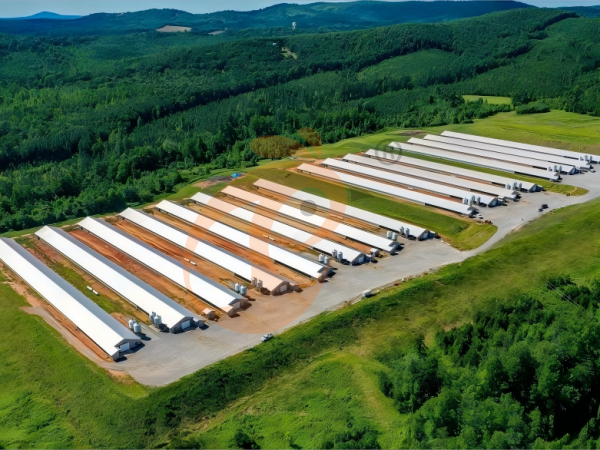
Poultry equipment integrated systems deployed in 12000 M² facility projects with 30000 bird capacity per cycle.
Global factory direct supply chain supports poultry equipment distribution across industrial farming projects.
Turn-key engineering delivery includes installation, calibration, and commissioning for automated poultry equipment systems.
OEM and ODM customization supported across ventilation, feeding, and incubation poultry equipment modules.
Export-oriented manufacturing structure ensures compliance with European union standard reference only.
Contact Us To Received Your Customized Poultry Farm Plan
Headquarters And Branchs
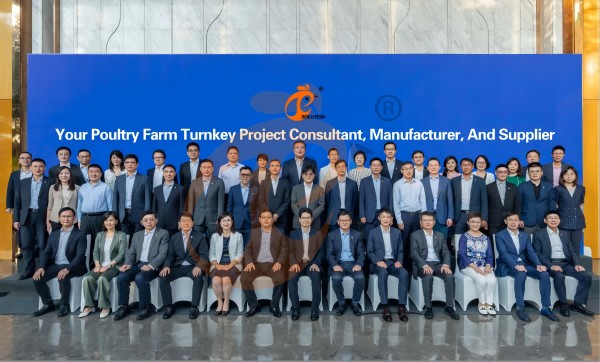
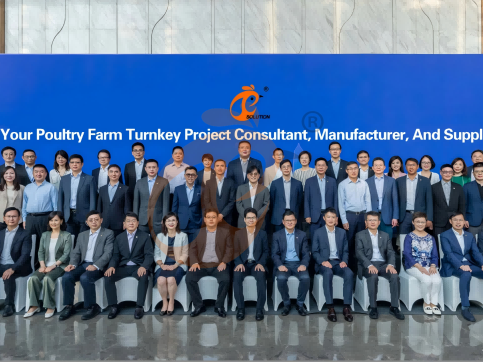
Hong Kong Headquarter Management Team
Hong Kong Headquarter Taiyu Industrial Group CO., LTD
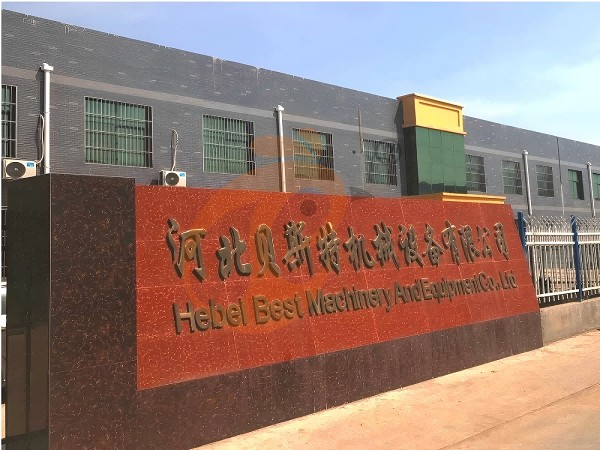
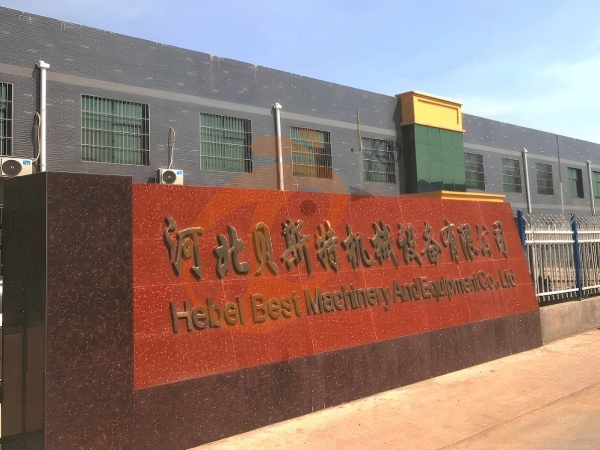
China Hebei Best Machinery And Equipment CO., LTD
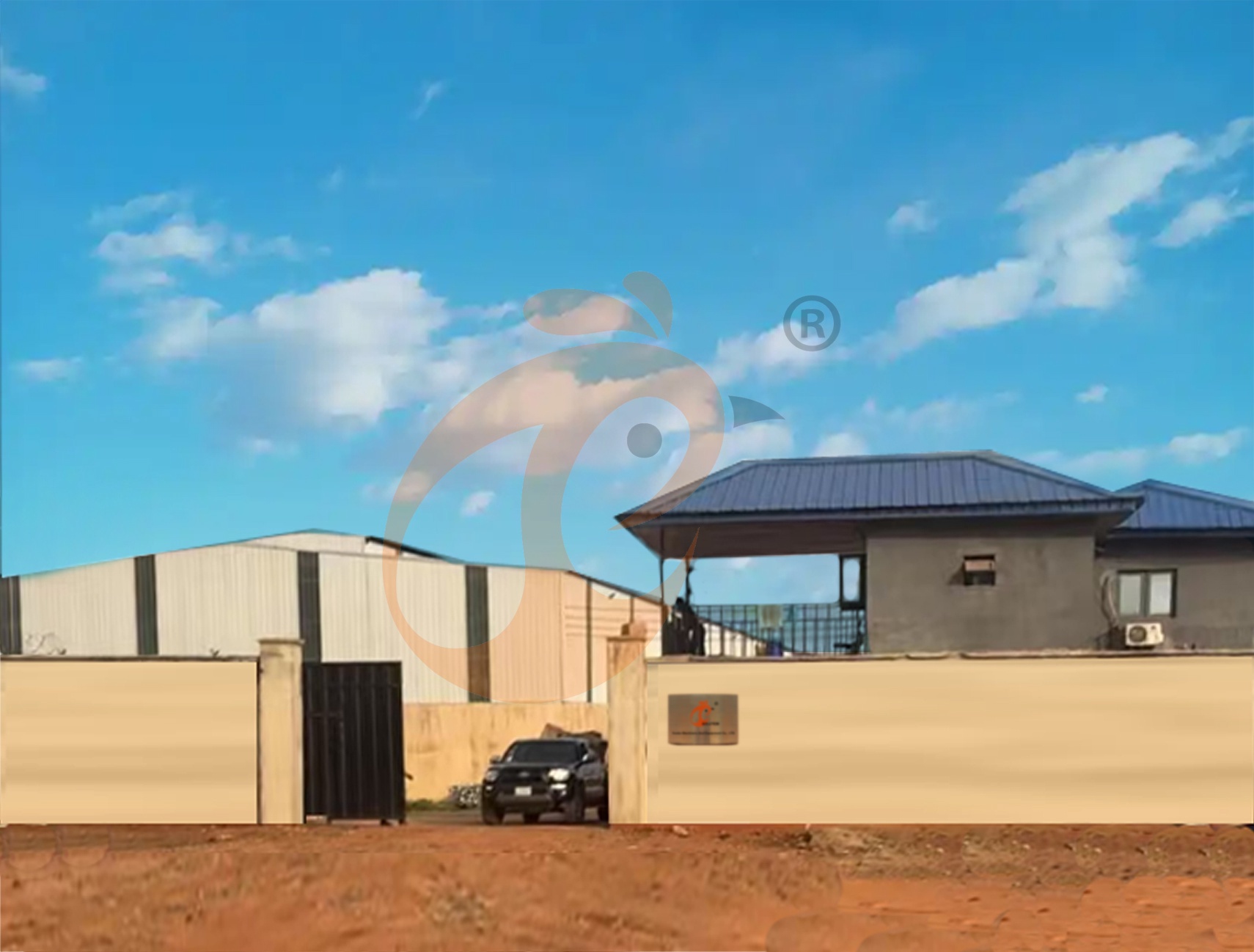
Nigeria Vanke Machinery And Equipment CO., LTD
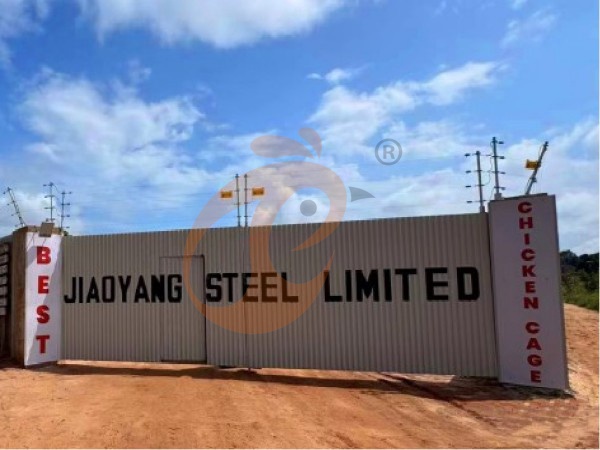
Tanzania Best Machinery And Equipment CO., LTD
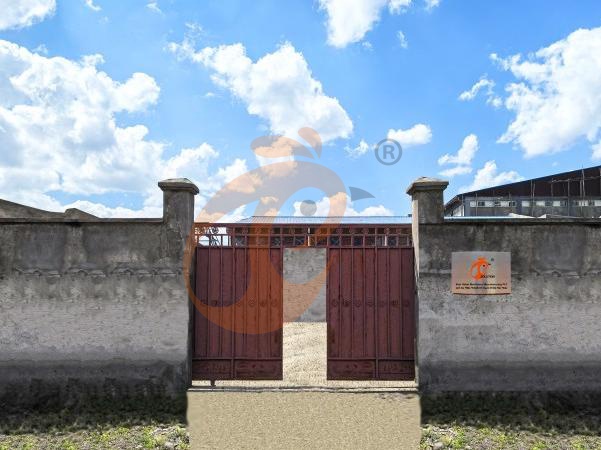
Ethiopia Best Hebei Machinery Manufacturing PLC
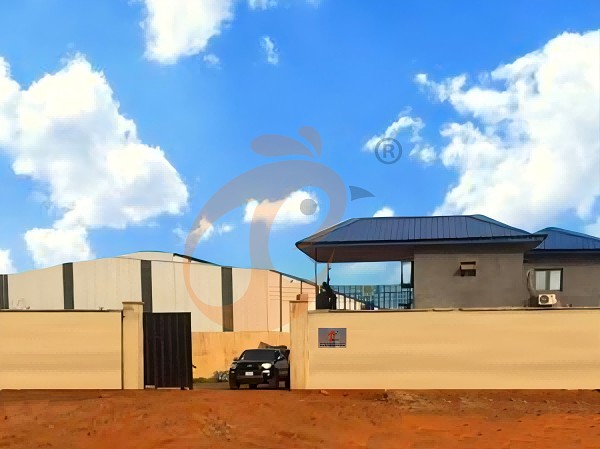
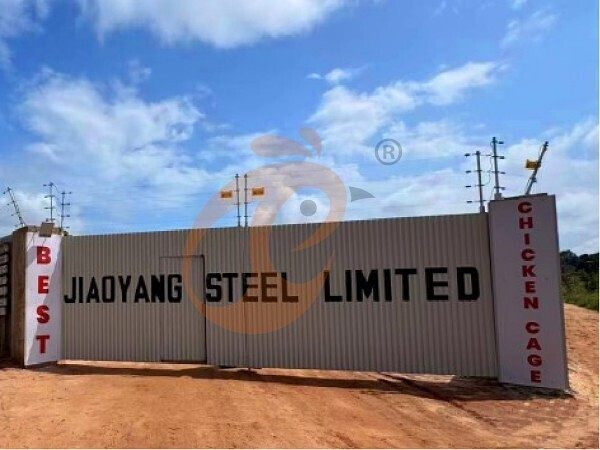
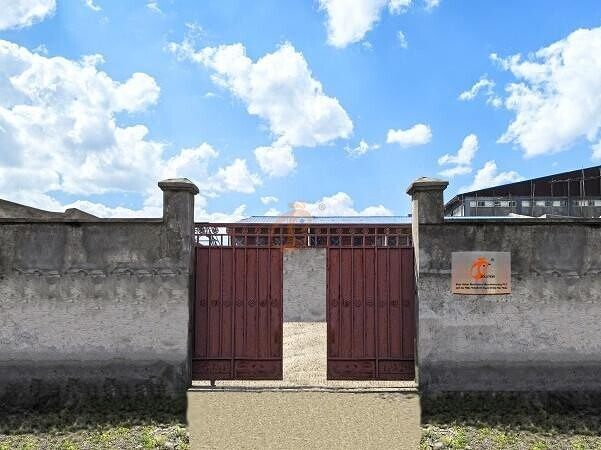
Reception /24 WhatsApp NO. : +8618830120193
FAQ
What Equipment Modules Are Included In Automatic Chicken Cage Poultry Equipment For Poultry Chicken Cage Systems?
Watering modules integrate pipelines rated for 16–20 mm diameter supporting stable distribution.
Manure belts utilize 1.0–1.2 mm thickness materials for continuous waste removal durability.
Which Structural Equipment Specifications Define Automatic Chicken Cage Poultry Equipment In Poultry Chicken Cage Systems?
Wire mesh spacing is maintained at 20–25 mm to support bird stability and waste separation.
Galvanization coating reaches 90–130 g/m² for corrosion resistance in high humidity environments.
What Drive System Equipment Parameters Are Used In Automatic Chicken Cage Poultry Equipment For Poultry Chicken Cage Farms?
Gear reducer ratio is configured between 1:20–1:40 for controlled mechanical output speed.
Transmission efficiency reaches 85%–92% minimizing energy loss during continuous operation.
Message
Products recommended
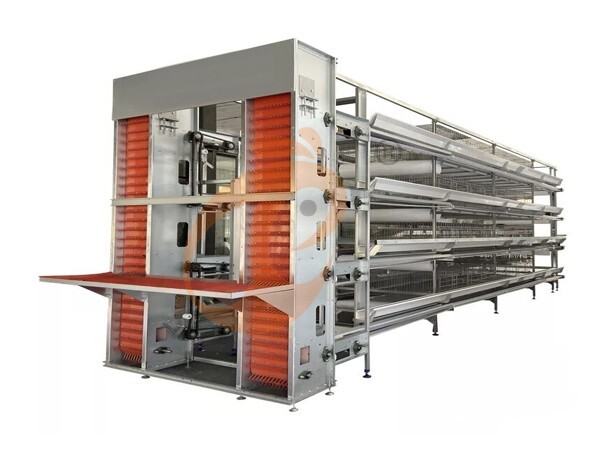
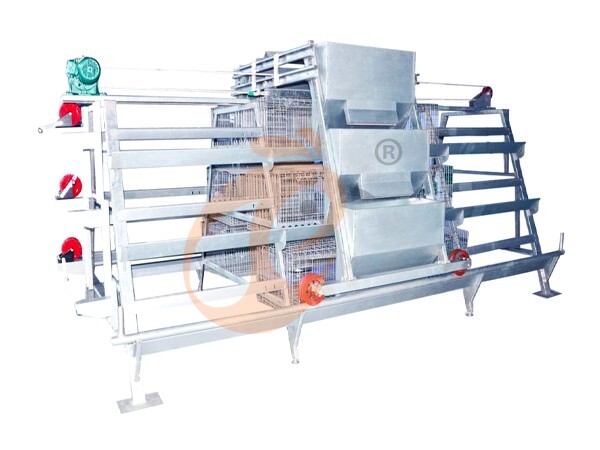
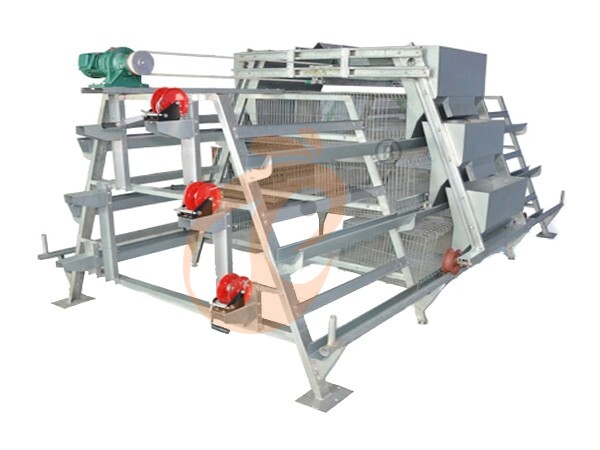
 >30,000 Pullets Automatic H Type Battery Cage1. More than 30,000 pullets a house, choose it.
2. It is designed to rearing older than 1 day old pullets to 12 to 16 weeks old chicken starting laying eggs.
3. Its lifespan is more than 25 years.
4. Its structure are Vcloud artificial intelligent fusion, electric control cabinet, automatic equipment of drinking, feeding, manure clean, manual harvesting.
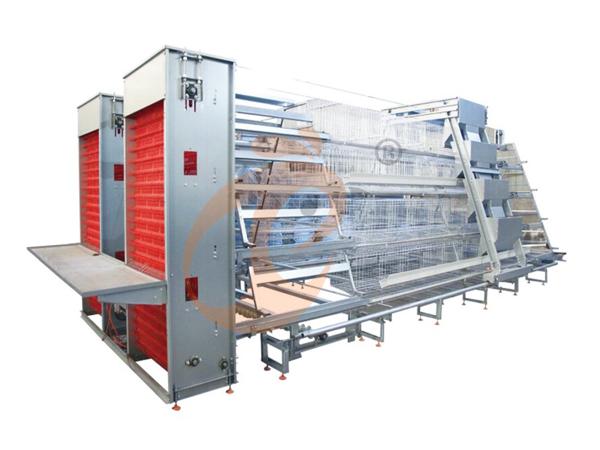
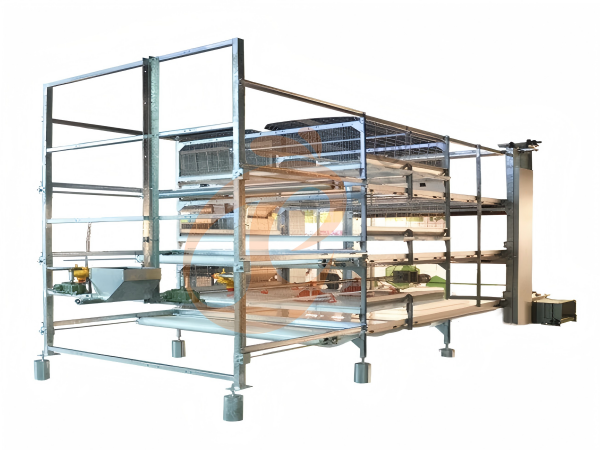
5. Our 24 hour online reception What’sApp NO. is +8618830120193 <30,000 Pullets Automatic A Type Battery Cage1. 10,000 to 30,000 pullets a house, choose it.
2. It is designed to rearing older than 1 day old pullets to 12 to 16 weeks old chicken starting laying eggs.
3. Its lifespan is more than 25 years.
4. Its structure are Vcloud artificial intelligent fusion, electric control cabinet, automatic equipment of drinking, feeding, manure clean, manual harvesting.
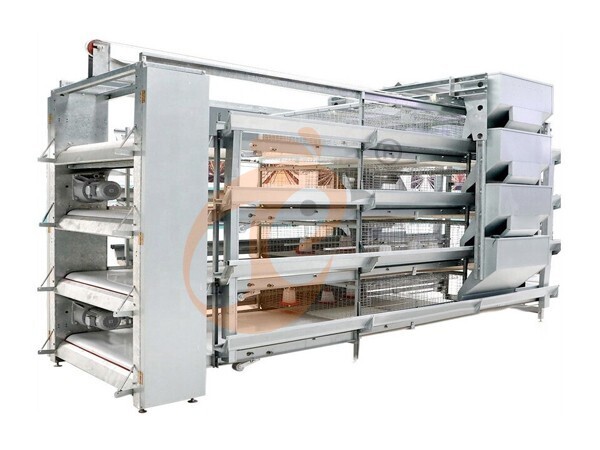
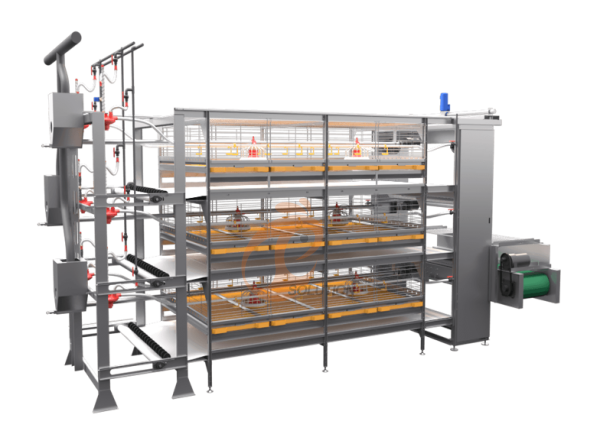
5. Our 24 hour online reception What’sApp NO. is +86 18830120193. >30,000 Broilers Semi-Automatic Harvest H Type Battery Cage1. More than 30,000 broilers a house, choose it.
2. It is designed to rearing 1 to 45 day old adult broiler ready for market.
3. Its lifespan is more than 20 years.
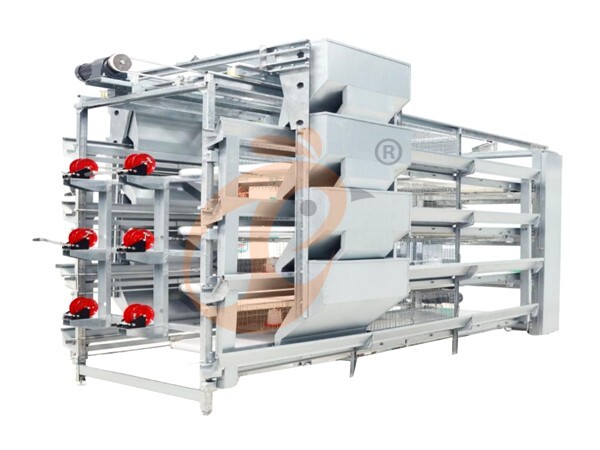
4. Our 24 hour online reception What’sApp NO. is +8618830120193, +234 8111199996. >30,000 Broilers Manual Harvest H Type Battery Cage1. More than 30,000 broilers a house, choose it.
2. It is designed to rearing 1 to 45 day old adult broiler ready for market.
3. Its lifespan is more than 20 years.
4. Its structure are Vcloud artificial intelligent fusion, electric control cabinet, automatic equipment of drinking, feeding and manure clean, manual harvesting.
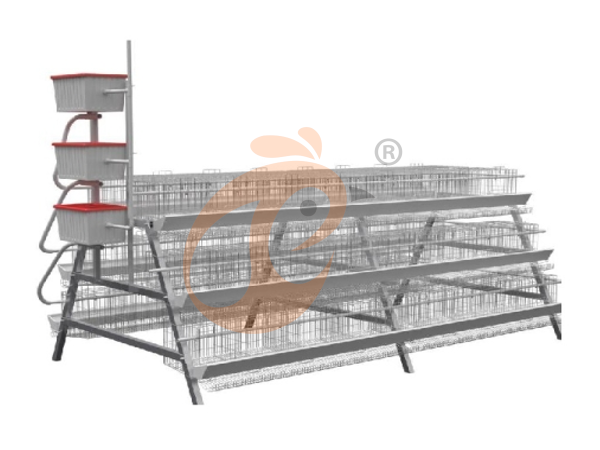
5. Our 24 hour online reception What’sApp NO. is +8618830120193, +234 8111199996. <30,000 Broilers Manual Harvest A Type Battery Cage1. Less 30,000 broilers a house, choose it.
2. It is designed to rearing 1 to 45 day old adult broiler ready for market.
3. Its lifespan is more than 20 years.
4. Its structure are Vcloud artificial intelligent fusion, electric control cabinet, automatic equipment of drinking, feeding and manure clean, manual harvesting.
5. Our 24 hour online reception What’sApp NO. is +8618830120193, +234 8111199996. HK Headquarter Offers EU-standard Poultry Farm Solutions, Manufacture Poultry Farm Equipment1. Continuous communication with the EU and the US
2. China, Nigeria, Ethiopia, Tanzania branch companies and factories
3. The products’ quality is customized for local poultry farms
4. Poultry cage and poultry farm equipment stock for sale
5. 24 online reception Whatsapp NO. : +8618830120193,contact us to get full information China Branch Offer Poultry Farm Business Plan, Manufacture Poultry Farm Equipment1. Address: Flat/RM 2416, 24/F, Runxing Building, Youyi Nan Street, Shijiazhuang City, Hebei Province, China
2. Poultry cage and poultry farm equipment factory and stock for sale
3. Customized for local poultry farms
4. Quality and design are based on Euro
5. 24 online reception Whatsapp NO. : +8618830120193 Nigeria Branch Offer Poultry Farm Business Plan, Manufacture Poultry Farm Equipment1. Address: After Sinoma Office, 200 Meters Near Danco Filling Station, Lagos/Ibadan Expressway, Lagos State, Nigeria
2. Poultry cage and poultry farm equipment factory and stock for sale
3. Customized for Nigerian poultry farms
4. Quality and design are based on Euro
5. 24 online reception Whatsapp NO. : +8618830120193 Ethiopia Branch Offer Poultry Farm Business Plan, Manufacture Poultry Farm Equipment1. Address: Gelan Gura, Akaki-kaliti Sub City, Addis Ababa, Ethiopia
2. Poultry cage and poultry farm equipment stock for sale
3. Customized for Ethiopian poultry farms
4. Quality and design are based on Euro
5. 24 online reception Whatsapp NO. : +8618830120193, contact us to get price list Tanzania Branch Offer Poultry Farm Business Plan, Manufacture Poultry Farm Equipment1. Address: No.8, Sova Road, Msufini, Mlandizi, Kibaha, Pwani, Tanzania
2. Poultry cage and poultry farm equipment factory and stock for sale
3. Customized for Tanzanian poultry farms
4. Quality and design are based on Euro
5. 24 online reception Whatsapp NO. : +8618830120193


Contact