


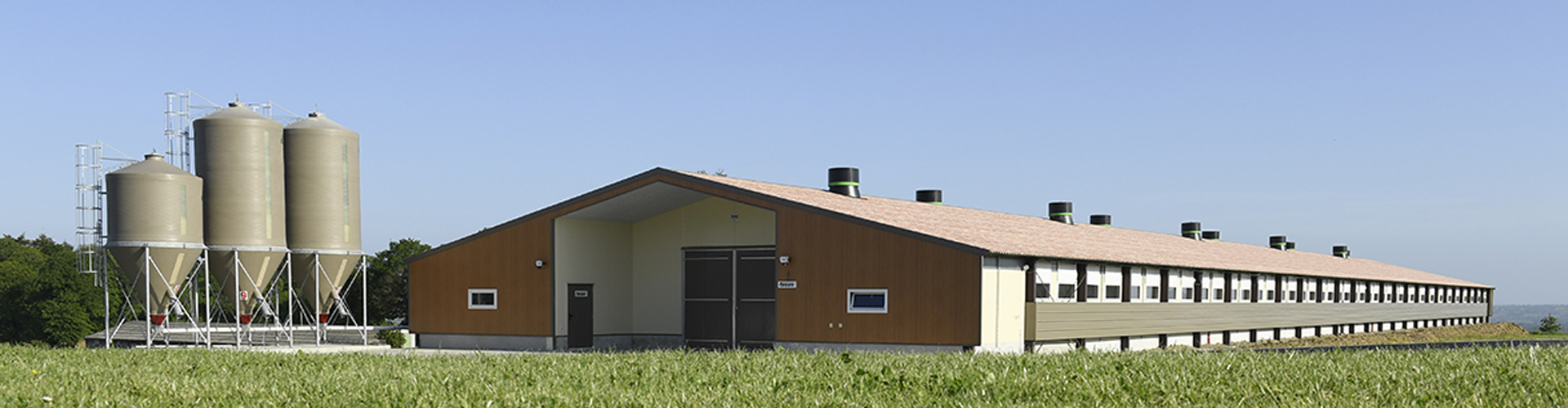
Blog
Ethiopia egg production efficiency is the central focus of this guide
Local feed, labor, and climate challenges are addressed for farms
Cost-effective methods are discussed to optimize layer performance
Egg collection, sanitation, and health management improvements explained
Step-by-step approach ensures maximum profitability and sustainability
Local examples from Addis Ababa, Oromia, and Amhara are included
Farmers can enhance income and production while minimizing risks
Get professional poultry farm construction guidance, equipment selection solutions, and the latest price lists, whatsApp to +8618830120193, click to learn more:

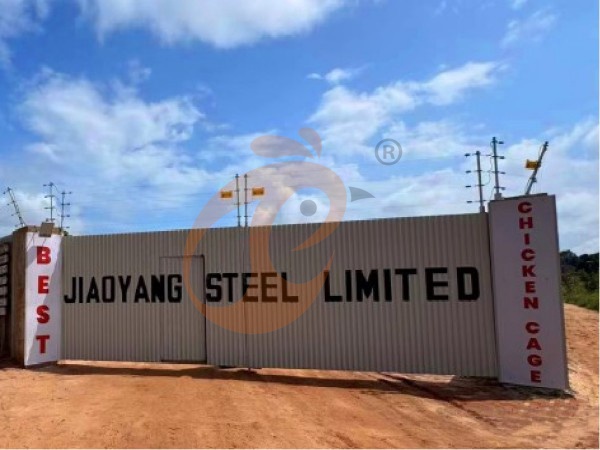
Ethiopia Branch Office And Factory Of Poultry Farm Equipment
Assessing Current Farm Conditions And Objectives
Transitioning from traditional floor or free-range systems requires an assessment of current flock size, mortality, feed conversion, and egg production.
Identifying gaps ensures effective implementation.
Data is for reference only. Swipe horizontally to view full table.
This data helps farmers plan A-type chicken cage system Ethiopia upgrades and calculate potential benefits.
Choosing An Appropriate A-Type Chicken Cage Design
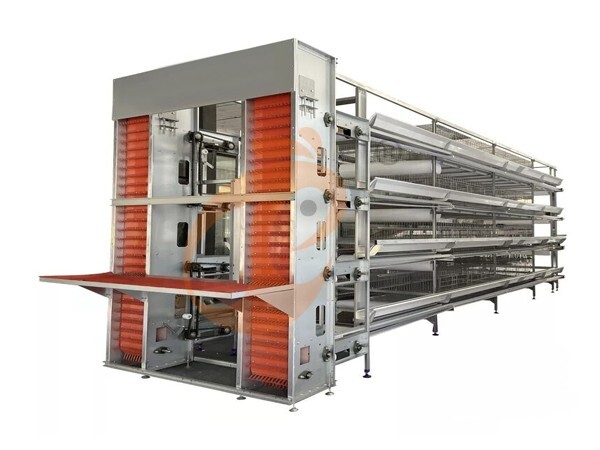
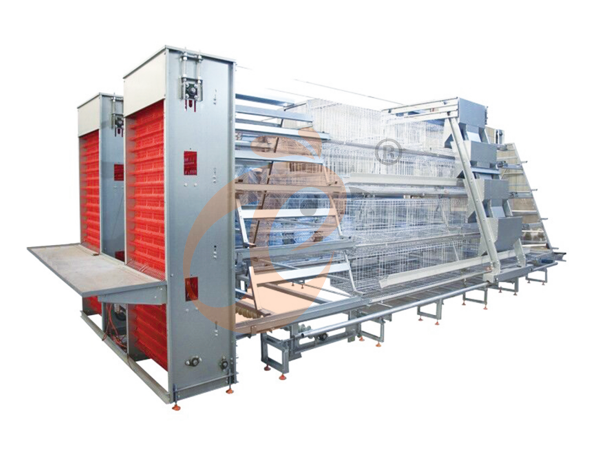
A-type chicken cages maximize space and simplify management.
Selection depends on building height, local material availability, and flock size.
Data is for reference only. Swipe horizontally to view full table.
Choosing proper design reduces labor and increases egg yield.
Local Ethiopian workshops can fabricate cages to lower poultry cage cost Ethiopia.
Farm Layout Climate And Ventilation Solutions
Maintaining temperature and airflow is crucial in Ethiopian highlands and lowlands.
Proper ventilation reduces heat stress and improves laying performance.
Data is for reference only. Swipe horizontally to view full table.
Natural ventilation, shade nets, and perforated sidewalls suit areas like Dire Dawa and Harar.
Improving Ethiopia egg production efficiency.
Feeding Strategies And Cost Control
Feed is the largest cost for Ethiopian layer farms.
Balanced diets optimize egg output while reducing expenses.
Data is for reference only. Swipe horizontally to view full table.
Substituting local oilseed cakes reduces reliance on imported soybean meal.
Lowers poultry cage cost Ethiopia.
Keeping production sustainable.
Watering Egg Collection And Sanitation Efficiency
Automatic systems in A-type cages reduce labor and improve hygiene.
Nipple drinkers, sloped egg belts, and wire floors enhance farm management.
Data is for reference only. Swipe horizontally to view full table.
These improvements directly impact worker productivity and egg quality.
Particularly in Ethiopian rural regions.
Animal Health Vaccination And Training
Proper biosecurity and vaccination schedules prevent disease outbreaks
Staff training ensures sustainable operation
Data is for reference only. Swipe horizontally to view full table.
Cooperation with local livestock extension services reduces mortality.
Improves Ethiopia egg production efficiency.
Optimizing Production Through Monitoring And Data Analysis
Implementing an A-type chicken cage system in Ethiopia is not only about housing.
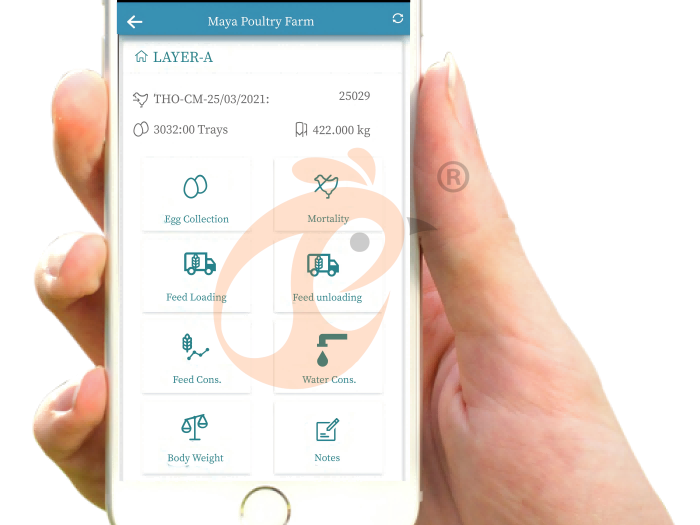
Consistent monitoring of feed intake, egg production, and environmental parameters significantly boosts profitability.
Farms that record daily egg counts and adjust feed accordingly report a 10–15% increase in production efficiency.
Temperature and humidity sensors prevent heat stress in highland and lowland regions.
Combining data-driven management with cage upgrades allows farmers to detect disease early.
Optimize labor allocation.Make informed decisions.
Creating a resilient and high-performing egg production operation.
Enhancing Egg Quality Through Nutrition And Light Management
In Ethiopian layer farms, egg quality can be significantly improved by combining precise nutrition with controlled lighting in A-type chicken cages.
Studies show that hens receiving 17–19% protein diets and 14–16 hours of daily light maintain stronger shells and higher yolk color uniformity.
Incorporating locally available vitamins and minerals reduces supplement costs by 10–15%.
Proper light schedules also stabilize laying cycles.
Allowing farmers to plan egg sales efficiently.
Maximize revenue while maintaining hen health and productivity.
Local Economic Analysis And Cost Benefit
Investing in A-type cages increases capital costs but improves profitability over time.
Data is for reference only. Swipe horizontally to view full table.
European union standard reference only.
Farmers can recover investment within 2–3 years while maintaining sustainability.
Case Study Oromia Region Layer Farm Upgrade
A cooperative in Oromia expanded from 600 floor-raised hens to 1,200 in A-type cages.
Results after 12 months
- Mortality decreased by 65%.
- Egg production increased by 40%.
- Labor hours reduced by 45%.
Success relied on local cage fabrication and government extension support.
Frequently Asked Questions
Q1: Is A-type chicken cage suitable for Ethiopian climate conditions?
A1: Yes.
With proper ventilation and shade nets, the A-type chicken cage performs well in both highlands and tropical regions.
Reducing heat stress and improving laying efficiency.
Q2: Will feed cost increases affect profitability in Ethiopia?
A2: Using local ingredients such as sesame and wheat bran balances nutrition and reduces feed cost.
Making A-type chicken cage systems economically feasible.
Q3: How does cage system reduce labor and improve egg quality in Ethiopia?
A3: Automatic waterers, sloped egg belts, and feces drop-through wire floors lower manual labor by 50–70%.
Maintain hygiene.Resulting in higher quality eggs.
Ethiopia Best Hebei Machinery Manufacturing Plc - One Of Ethiopia Largest Poultry Cage Manufacturer
HB BEST provides global factory direct sales and high-quality poultry farm equipment
The company offers complete turn-key engineering solutions for poultry farms
It supplies A-type chicken cages with durable, corrosion-resistant materials
HB BEST supports local farms with training, installation, and maintenance services
All products and solutions are optimized for Ethiopian climate and production efficiency
Contact Us To Received Your Customized Poultry Farm Plan
Headquarters And Branchs

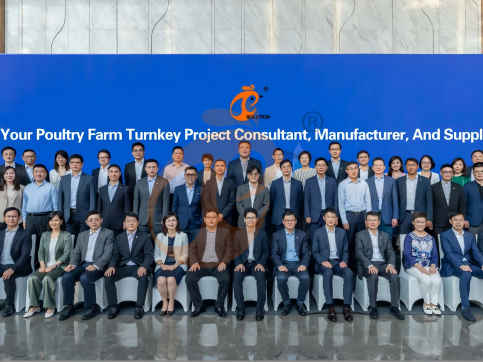
Hong Kong Headquarter Management Team
Hong Kong Headquarter Taiyu Industrial Group CO., LTD
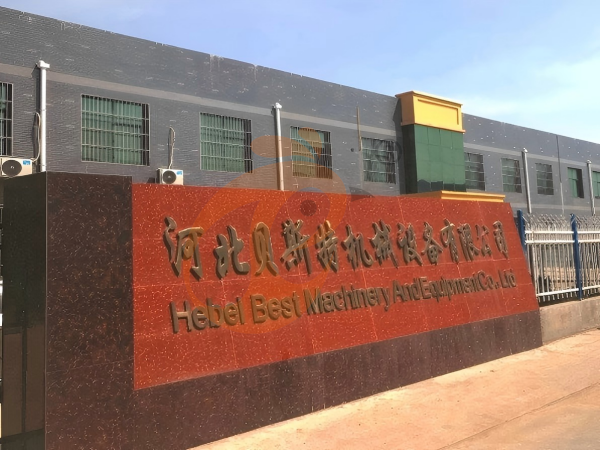
China Hebei Best Machinery And Equipment CO., LTD
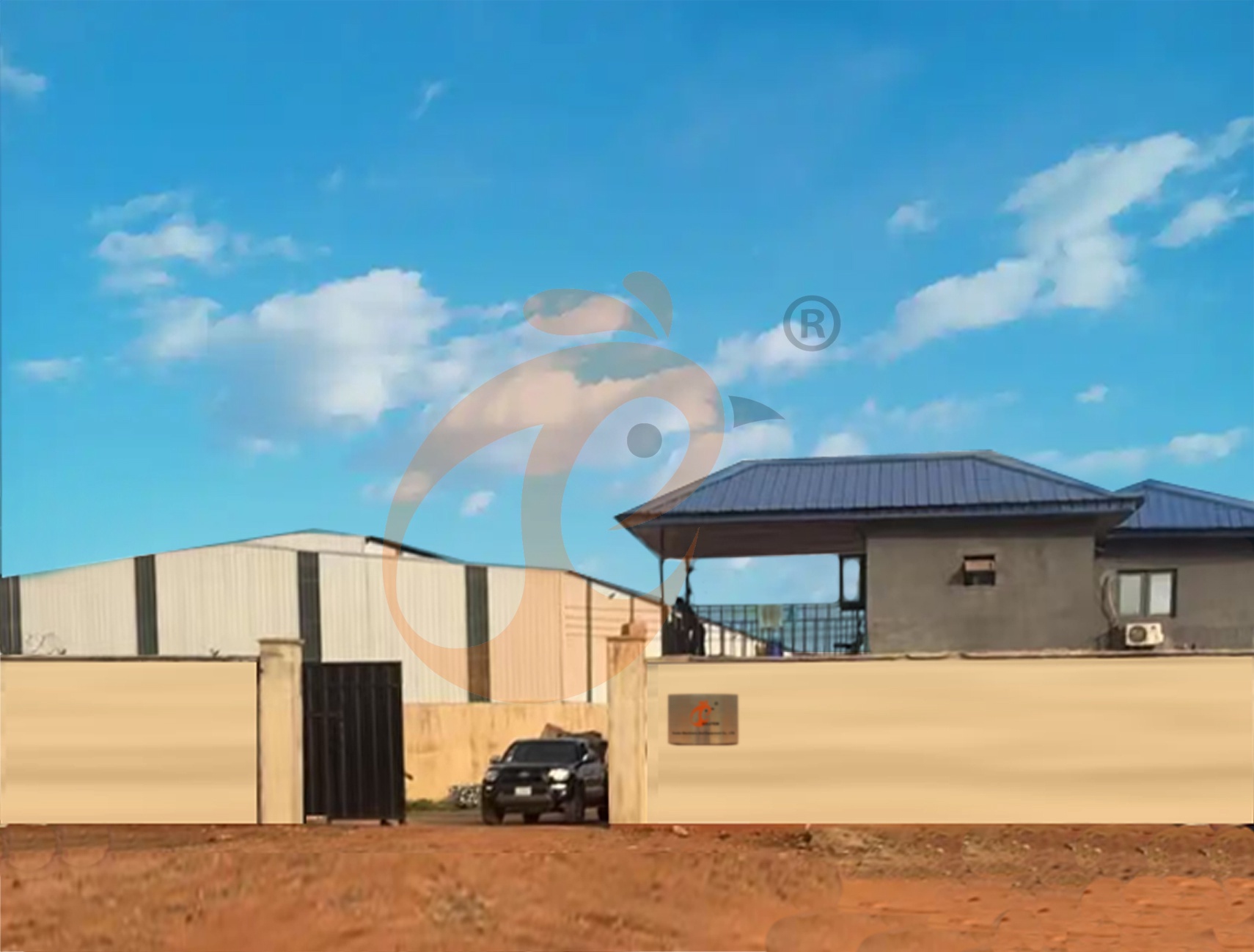
Nigeria Vanke Machinery And Equipment CO., LTD
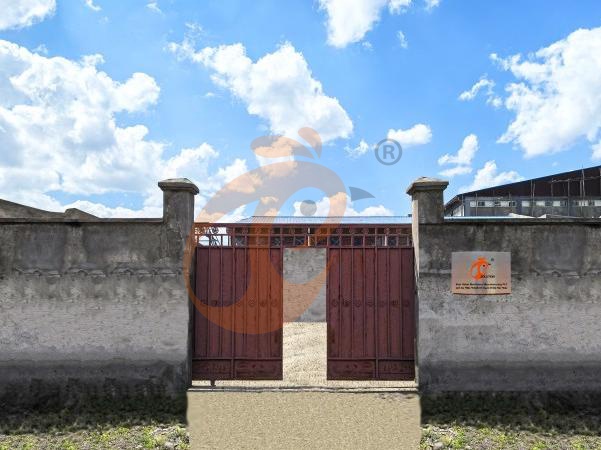
Tanzania Best Machinery And Equipment CO., LTD
Ethiopia Best Hebei Machinery Manufacturing PLC




Reception /24 WhatsApp NO. : +8618830120193
FAQ
What Are The Advantages Of A-Type Poultry Cage For Medium-Sized Farms?
Farm capacity per house: 10,000–50,000 birds
Egg production rate: 90–96%
FCR: 1.9–2.2
Labor savings: 50–70%
How To Reduce Egg Breakage Rate In A-Type Layer Cage Farms?
Control conveyor speed
Egg breakage rate <1%
Daily egg yield: 900–960 eggs/1,000 birds
Egg production rate: 90–96%
How To Improve Egg Production Stability In A-Type Layer Cage System?
Scheduled feeding and drinking
Temperature 20–25°C, humidity 50–60%
Egg production rate: 90–96%
FCR: 1.9–2.2
- poultry farm
- chicken cage
- poultry farms
- poultry cage
- cage
- poultry farm equipment
- poultry farm construction
- poultry cage manufacturer
- poultry cage cost
- chicken cage design
- chicken cage system
- chicken cages
- chickencage
- bestchickencage
- cage system
- cage systems
- h cage
- Nigeria
- layer farm
- cage design
- cage manufacturer
- poultry farm plan
- Ethiopia
Message
Products recommended
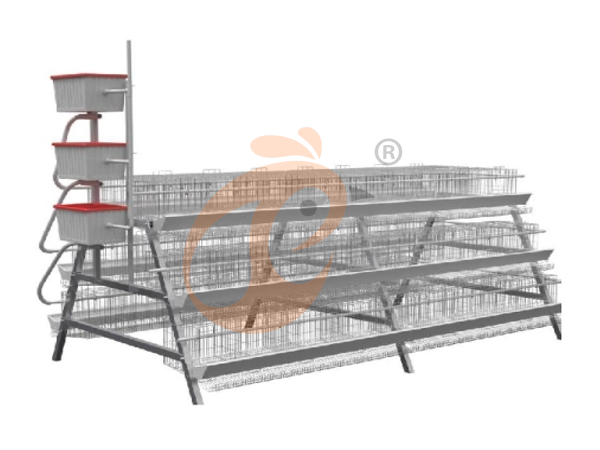
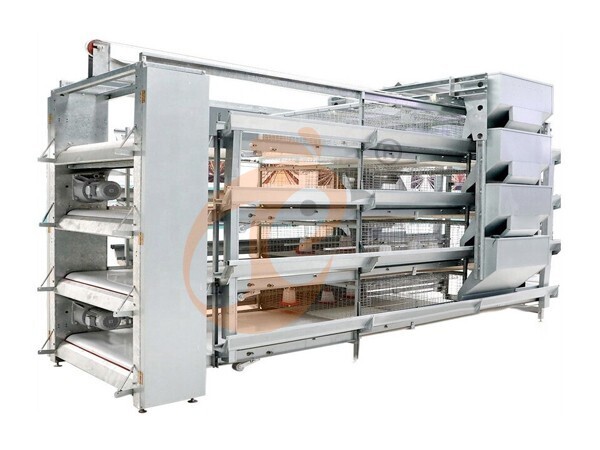
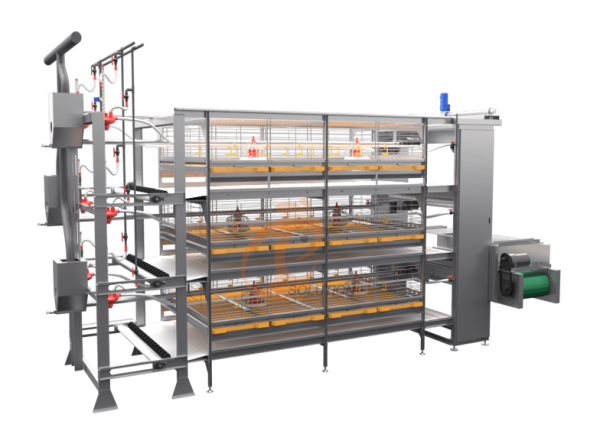
 >30,000 Pullets Automatic H Type Battery Cage1. More than 30,000 pullets a house, choose it.
2. It is designed to rearing older than 1 day old pullets to 12 to 16 weeks old chicken starting laying eggs.
3. Its lifespan is more than 25 years.
4. Its structure are Vcloud artificial intelligent fusion, electric control cabinet, automatic equipment of drinking, feeding, manure clean, manual harvesting.
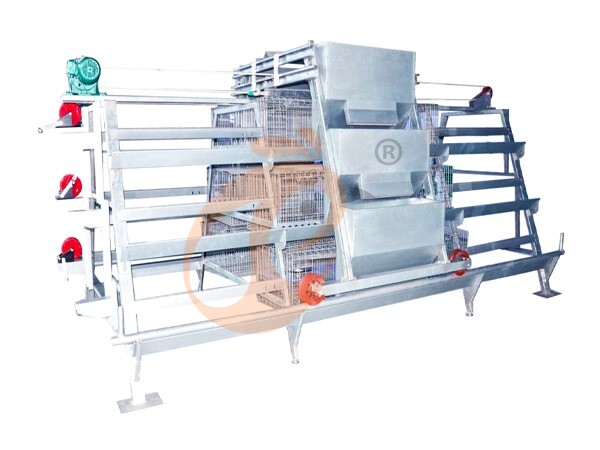
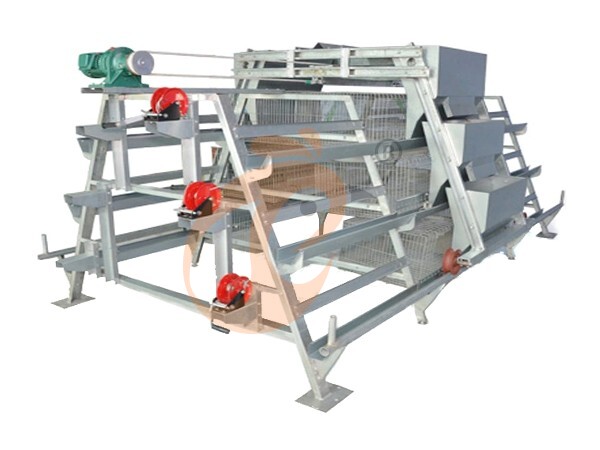
5. Our 24 hour online reception What’sApp NO. is +8618830120193 <30,000 Pullets Automatic A Type Battery Cage1. 10,000 to 30,000 pullets a house, choose it.
2. It is designed to rearing older than 1 day old pullets to 12 to 16 weeks old chicken starting laying eggs.
3. Its lifespan is more than 25 years.
4. Its structure are Vcloud artificial intelligent fusion, electric control cabinet, automatic equipment of drinking, feeding, manure clean, manual harvesting.
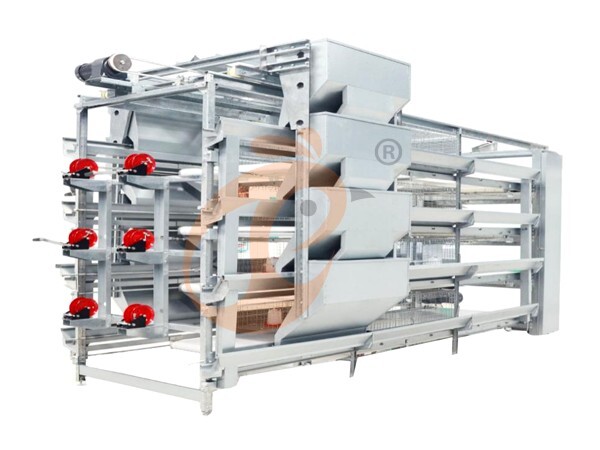
5. Our 24 hour online reception What’sApp NO. is +86 18830120193. >30,000 Broilers Semi-Automatic Harvest H Type Battery Cage1. More than 30,000 broilers a house, choose it.
2. It is designed to rearing 1 to 45 day old adult broiler ready for market.
3. Its lifespan is more than 20 years.
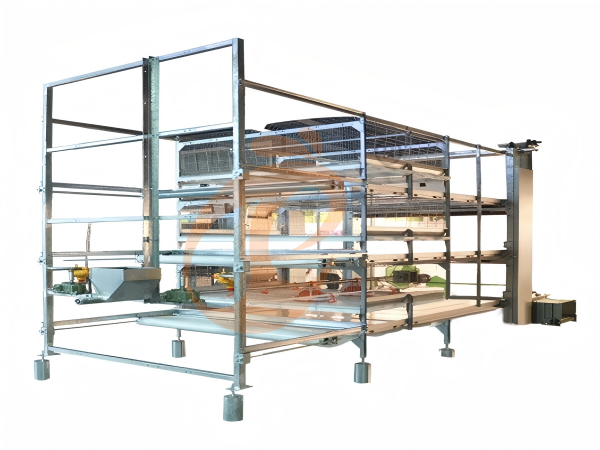
4. Our 24 hour online reception What’sApp NO. is +8618830120193, +234 8111199996. >30,000 Broilers Manual Harvest H Type Battery Cage1. More than 30,000 broilers a house, choose it.
2. It is designed to rearing 1 to 45 day old adult broiler ready for market.
3. Its lifespan is more than 20 years.
4. Its structure are Vcloud artificial intelligent fusion, electric control cabinet, automatic equipment of drinking, feeding and manure clean, manual harvesting.
5. Our 24 hour online reception What’sApp NO. is +8618830120193, +234 8111199996. <30,000 Broilers Manual Harvest A Type Battery Cage1. Less 30,000 broilers a house, choose it.
2. It is designed to rearing 1 to 45 day old adult broiler ready for market.
3. Its lifespan is more than 20 years.
4. Its structure are Vcloud artificial intelligent fusion, electric control cabinet, automatic equipment of drinking, feeding and manure clean, manual harvesting.
5. Our 24 hour online reception What’sApp NO. is +8618830120193, +234 8111199996. HK Headquarter Offers EU-standard Poultry Farm Solutions, Manufacture Poultry Farm Equipment1. Continuous communication with the EU and the US
2. China, Nigeria, Ethiopia, Tanzania branch companies and factories
3. The products’ quality is customized for local poultry farms
4. Poultry cage and poultry farm equipment stock for sale
5. 24 online reception Whatsapp NO. : +8618830120193,contact us to get full information China Branch Offer Poultry Farm Business Plan, Manufacture Poultry Farm Equipment1. Address: Flat/RM 2416, 24/F, Runxing Building, Youyi Nan Street, Shijiazhuang City, Hebei Province, China
2. Poultry cage and poultry farm equipment factory and stock for sale
3. Customized for local poultry farms
4. Quality and design are based on Euro
5. 24 online reception Whatsapp NO. : +8618830120193 Nigeria Branch Offer Poultry Farm Business Plan, Manufacture Poultry Farm Equipment1. Address: After Sinoma Office, 200 Meters Near Danco Filling Station, Lagos/Ibadan Expressway, Lagos State, Nigeria
2. Poultry cage and poultry farm equipment factory and stock for sale
3. Customized for Nigerian poultry farms
4. Quality and design are based on Euro
5. 24 online reception Whatsapp NO. : +8618830120193 Ethiopia Branch Offer Poultry Farm Business Plan, Manufacture Poultry Farm Equipment1. Address: WR93+FQ2, Addis Ababa, Ethiopia
2. Poultry cage and poultry farm equipment stock for sale
3. Customized for Ethiopian poultry farms
4. Quality and design are based on Euro
5. 24 online reception Whatsapp NO. : +8618830120193, contact us to get price list Tanzania Branch Offer Poultry Farm Business Plan, Manufacture Poultry Farm Equipment1. Address: No.8, Sova Road, Msufini, Mlandizi, Kibaha, Pwani, Tanzania
2. Poultry cage and poultry farm equipment factory and stock for sale
3. Customized for Tanzanian poultry farms
4. Quality and design are based on Euro
5. 24 online reception Whatsapp NO. : +8618830120193



Contact
By clicking 'Allow All', you agree to the storage of cookies on your device to enhance site navigation, analyze site usage and assist with our marketing efforts.