


Blog
- Broiler chicken cages require measurable engineering specifications, with automatic broiler cage systems supporting capacities of 18–30 birds per section for commercial production.
Automatic feeding systems can reduce routine labor requirements while conveying approximately 300–600 kg/h across properly engineered poultry houses.
Poultry manure removal systems support cleaner production areas through controlled mechanical handling, with belt speeds commonly configured around 4–12 m/min.
Imported and local broiler chicken cage manufacturers should therefore be compared through steel construction, automation integration, engineering support, and lifecycle service rather than origin alone.
- Complete poultry equipment projects can combine cages, feeding, drinking, manure handling, ventilation, cooling, and environmental controls around specific farm dimensions and production targets.
Get professional poultry farm construction guidance, equipment selection solutions, and the latest price lists, whatsApp to +8618830120193, click to learn more:
Reliability Starts With The Equipment Specification
When comparing imported and local broiler chicken cage manufacturers, buyers should move beyond country of origin and examine measurable engineering specifications.
A reliable broiler chicken cage system should be designed around actual farm capacity, bird size, climate, labor availability, and automation requirements, while automatic broiler cage systems may use 2.5–3.0 mm structural wire according to selected production configurations.
The key question is whether the manufacturer can consistently deliver required specifications for broiler chicken cages, automatic feeding systems, and complete poultry equipment with project documentation prepared at 220–380 V.
Imported Vs Local Manufacturer: Engineering Data Comparison
Data is for reference only.Swipe horizontally to view full table.
These specifications show that local manufacturing does not automatically mean basic broiler chicken cages.
A properly engineered automatic broiler cage system can be configured for 8–12 cage rows per house, while integrated poultry equipment may support up to 16
ventilation outputs.
Cage Construction: The Numbers Reveal The Difference
Data is for reference only.Swipe horizontally to view full table.
Structural design determines how broiler chicken cages behave after repeated washing, feeding, bird movement, and manure exposure.
A professionally engineered broiler chicken cage floor can use a 6–9° slope, while automatic broiler cage doors can be positioned around 350–500 mm above the
service platform according to cage configuration.
Feeding Equipment: Efficiency Is Designed Into The Line
Data is for reference only.Swipe horizontally to view full table.
Automatic feeding is one of the most visible differences between manually managed poultry houses and modern broiler chicken cages.
A properly configured automatic feeding system can deliver approximately 300–600 kg/h, while feed sensors can activate or stop conveying within 1–5 seconds
after hopper conditions change.
A professional broiler chicken cage manufacturer should calculate feeding requirements according to flock size instead of adding equipment without checking
conveying demand.
Manure Removal: Turn Waste Management Into A Mechanical Process
Data is for reference only.Swipe horizontally to view full table.
Manure handling has a direct relationship with labor requirements and house cleanliness around broiler chicken cages.
Automatic poultry manure removal systems allow waste to move from cage areas without requiring workers to repeatedly enter production zones, while a transfer
conveyor can operate at angles of 30° or less.
A complete broiler chicken cage project should therefore treat manure removal as an integrated mechanical process rather than an optional accessory.
Ventilation And Cooling: Reliability Under Climate Pressure
Data is for reference only.Swipe horizontally to view full table.
Broiler chicken cages cannot be evaluated separately from environmental control because cage density, house dimensions, outside temperature, humidity, and
ventilation capacity influence equipment selection.
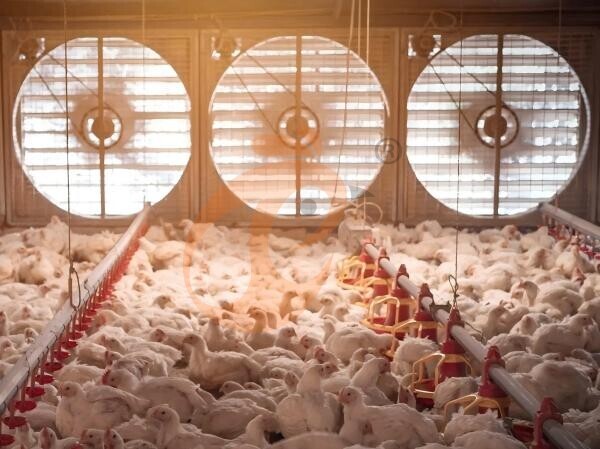
A tunnel-ventilated broiler chicken cage house may use an air velocity of 2.0–3.0 m/s, while cooling equipment can circulate 4–8 L/min/m through compatible
cooling pads.
Engineering experience becomes valuable when fan quantity, air inlet area, cooling-pad dimensions, and control logic must be coordinated with poultry equipment installation.
Environmental Control: Automation With Measurable Targets
Data is for reference only.Swipe horizontally to view full table.
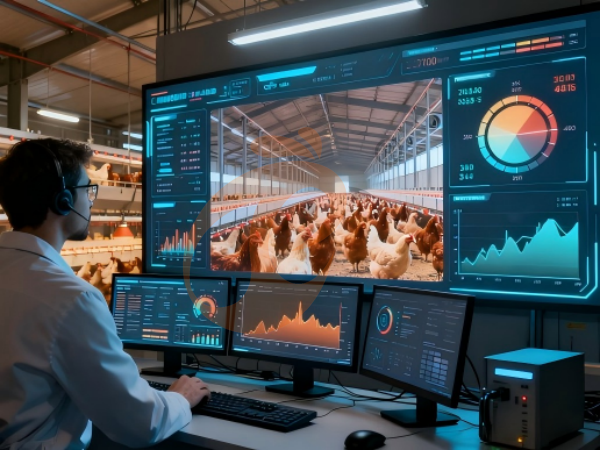
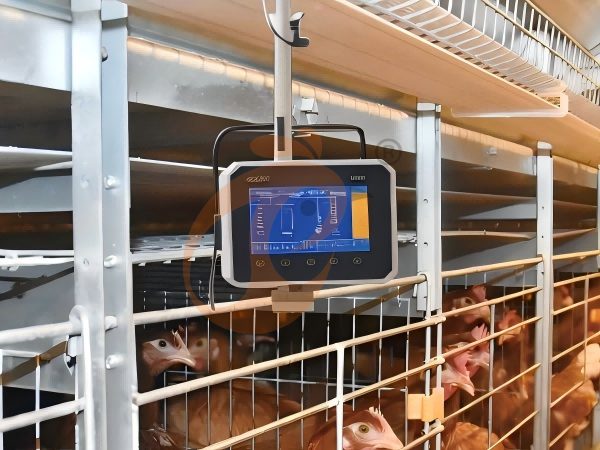
Automation becomes meaningful when broiler chicken cages operate within repeatable environmental conditions rather than simply receiving additional electronic components.
A controller with ±0.5°C temperature accuracy can provide consistent monitoring, while an IP54 control cabinet provides protection for poultry equipment against dust and water splashes.
A complete broiler chicken cage manufacturer should integrate environmental control with ventilation, cooling, lighting, and alarm systems.
Choose The Manufacturer By Total Engineering Capability
Data is for reference only.Swipe horizontally to view full table.
The imported-versus-local debate becomes clearer when broiler chicken cages are evaluated through engineering rather than geography.
A reliable broiler chicken cage manufacturer should provide complete automatic broiler cage systems, feeding, drinking, manure removal, ventilation, cooling,
lighting, and environmental control.
The strongest poultry equipment supplier is the manufacturer capable of converting house dimensions and production targets into a measurable, maintainable
broiler chicken cage system.
For commercial farms, evaluation should follow the complete chain of equipment specification, system integration, installation, commissioning, spare parts, and
technical support.
When every stage is supported by engineering data, imported and local broiler chicken cages can be compared through measurable performance rather than country of origin.
Frequently Asked Questions
Q1: What makes broiler chicken cages reliable?
Reliable broiler chicken cages combine structural engineering, corrosion protection, feeding integration, and maintainable components, with commercial systems commonly designed around 3–4 cage tiers.
Q2: Are local broiler chicken cage manufacturers suitable for large farms?
Qualified local broiler chicken cage manufacturers can support large poultry projects when engineering documentation, automation integration, commissioning, and spare-parts planning are provided, including projects exceeding 50,000 birds.
Q3: What should buyers check before ordering poultry equipment?
Buyers should verify cage specifications, feeding capacity, environmental-control architecture, installation drawings, warranty terms, and spare-parts planning before purchasing, with complete projects commonly using 220/380 V electrical systems.
Taiyu (HK) Group - One Of China Toppest Broiler Chicken Cages Manufacturer
Broiler chicken cages use engineered galvanized structures with configurable 3–4 tier layouts, integrated feeding and drinking interfaces, and project-specific dimensions for commercial poultry production
Global factory-direct supply covers complete poultry equipment, including automatic feeding, nipple drinking, manure removal, ventilation, cooling, lighting, and environmental control systems
Turn-key engineering converts confirmed house dimensions, bird capacity, climate conditions, and automation requirements into coordinated equipment layouts, production specifications, installation drawings, and commissioning plans
International project support combines factory manufacturing, quality inspection, export coordination, technical documentation, remote commissioning, and spare-parts planning for commercial poultry facilities
Direct engineering coordination supports equipment selection from individual broiler chicken cages through complete automated poultry-house systems, maintaining consistent interfaces across mechanical and electrical components
Contact Us To Received Your Customized Poultry Farm Plan
Headquarters And Branchs

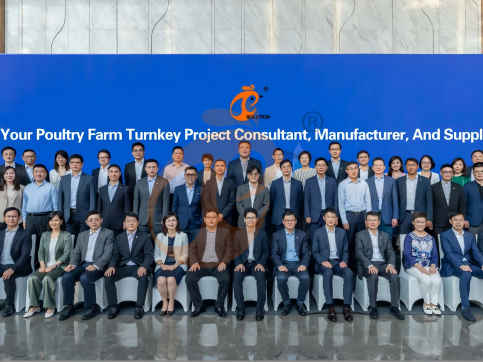
Hong Kong Headquarter Management Team
Hong Kong Headquarter Taiyu Industrial Group CO., LTD
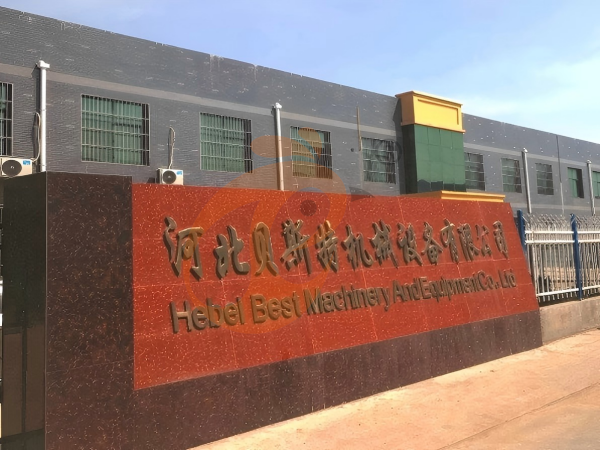
China Hebei Best Machinery And Equipment CO., LTD
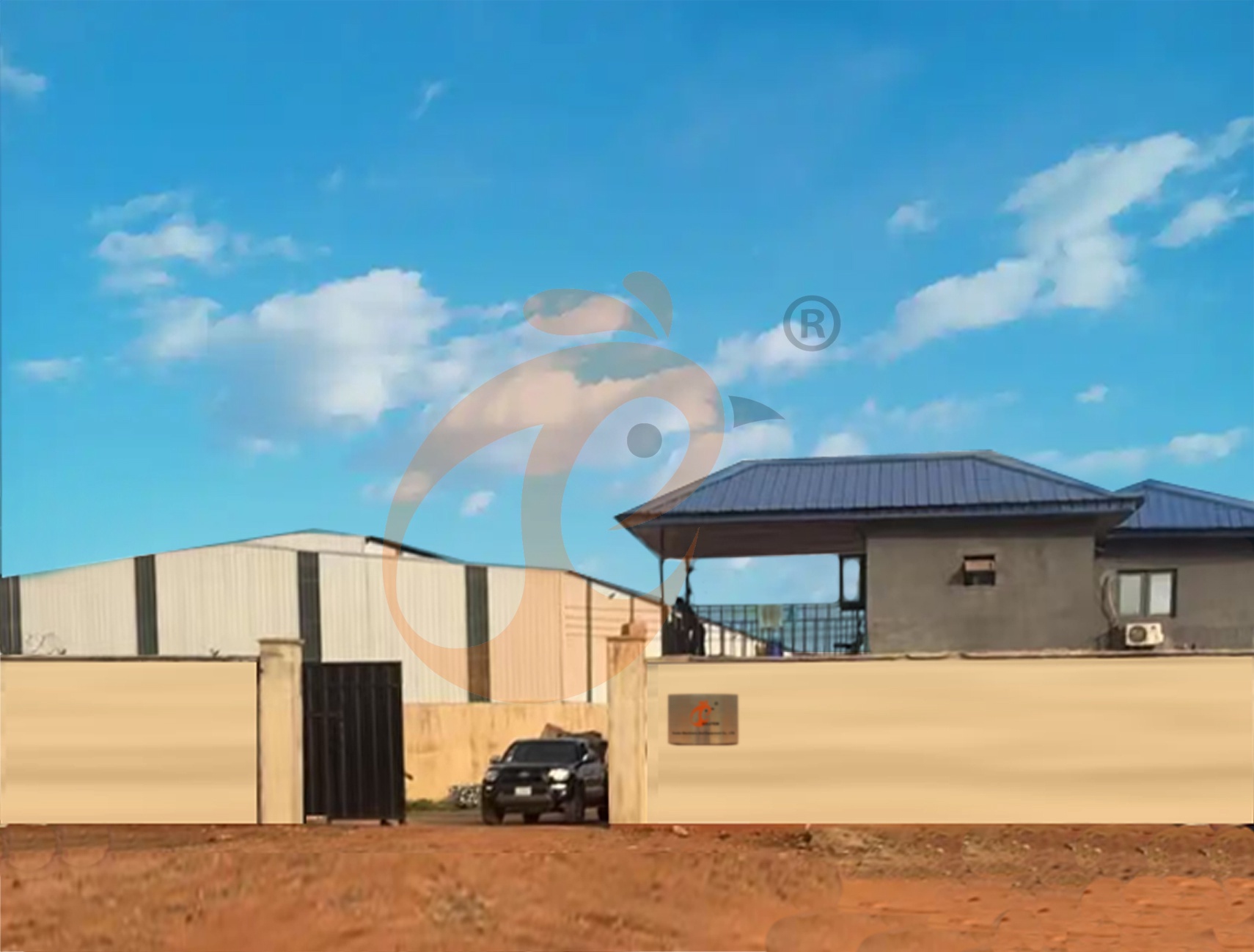
Nigeria Vanke Machinery And Equipment CO., LTD
Tanzania Best Machinery And Equipment CO., LTD
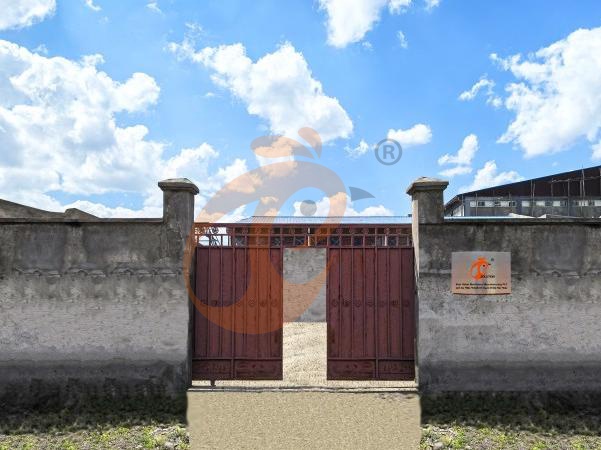
Ethiopia Best Hebei Machinery Manufacturing PLC




Reception /24 WhatsApp NO. : +8618830120193
FAQ
What Cage Structure Options Are Available For Broiler Chicken Cage Systems?
H-type cage systems are configured in 3–12 tiers accommodating 360–1440 birds per set for intensive farming operations.
Structural height ranges from 1.75–10.11 meters maximizing vertical space utilization and housing efficiency.
How Does Stocking Density Affect Broiler Chicken Cage Performance?
H-type systems maintain 500 cm² allocation per bird optimizing housing density and production output.
Bird distribution is balanced at 8 birds per compartment in partitioned cage configurations reducing competition.
Which Cage Dimensions Are Commonly Used In Broiler Chicken Cage Systems?
H-type cage modules measure 3.3 × 1.82 meters providing larger continuous housing sections.
Internal compartment height varies from 40–55 cm ensuring adequate bird activity and ventilation circulation.
- poultry farm
- chicken cage
- broiler cage
- poultry house
- cage
- poultry farm construction
- broiler cage system
- chicken cage manufacturer
- chicken cage system
- chicken cage supplier
- chicken cage house
- automatic feeding system
- poultry equipment
- manure removal system
- poultry manure removal system
- automatic poultry manure removal system
- chicken cages
- broiler chicken cage
- chickencage
- automatic broiler cage
- bestchickencage
- broiler chicken cages
- cage system
- cage systems
- broiler chicken cage system
- automatic broiler cage system
- Nigeria
- poultry equipment supplier
- automatic poultry manure removal
- cage manufacturer
- cage supplier
- poultry manure removal
- poultry farm plan
- Ethiopia
Message
Products recommended
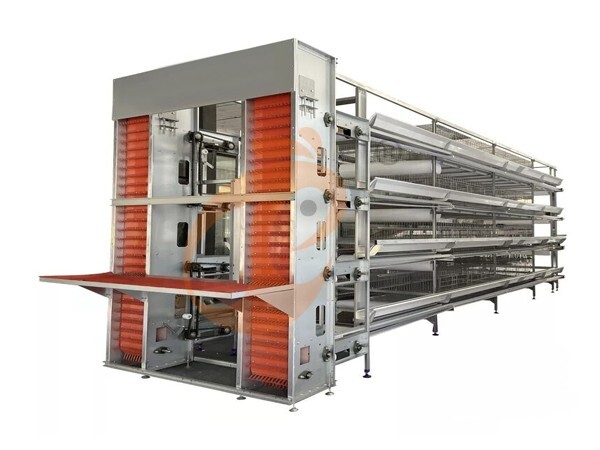
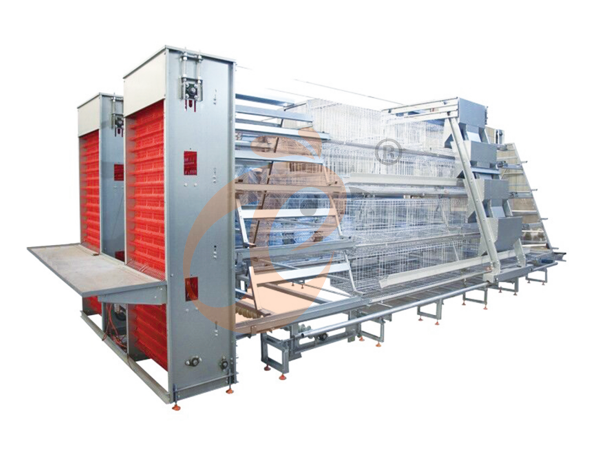
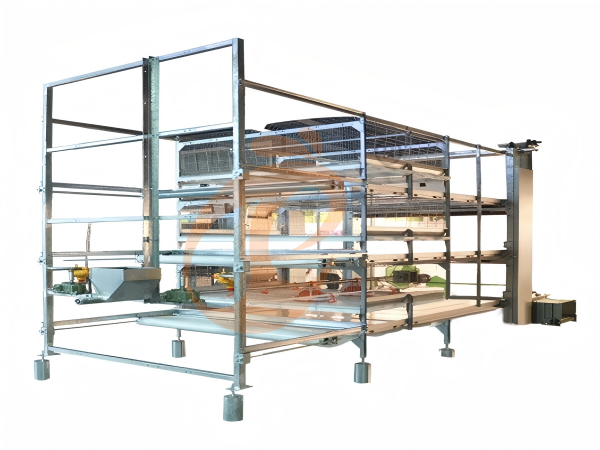
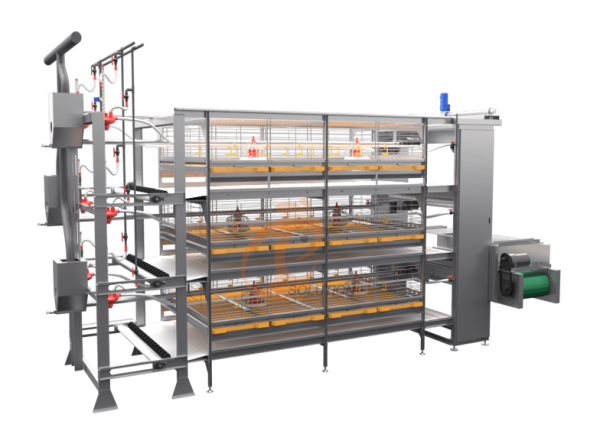
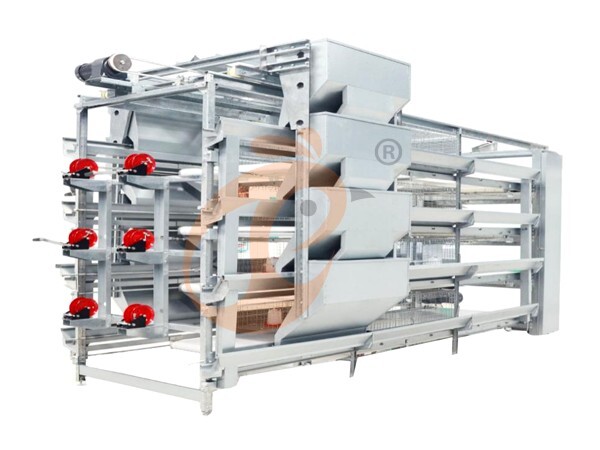
 >30,000 Pullets Automatic H Type Battery Cage1. More than 30,000 pullets a house, choose it.
2. It is designed to rearing older than 1 day old pullets to 12 to 16 weeks old chicken starting laying eggs.
3. Its lifespan is more than 25 years.
4. Its structure are Vcloud artificial intelligent fusion, electric control cabinet, automatic equipment of drinking, feeding, manure clean, manual harvesting.
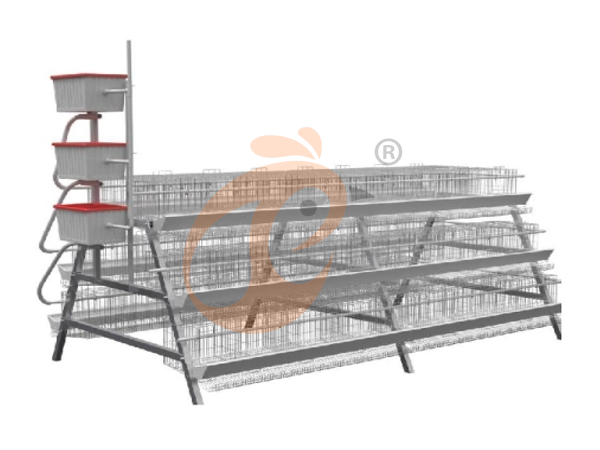
5. Our 24 hour online reception What’sApp NO. is +8618830120193 <30,000 Pullets Automatic A Type Battery Cage1. 10,000 to 30,000 pullets a house, choose it.
2. It is designed to rearing older than 1 day old pullets to 12 to 16 weeks old chicken starting laying eggs.
3. Its lifespan is more than 25 years.
4. Its structure are Vcloud artificial intelligent fusion, electric control cabinet, automatic equipment of drinking, feeding, manure clean, manual harvesting.
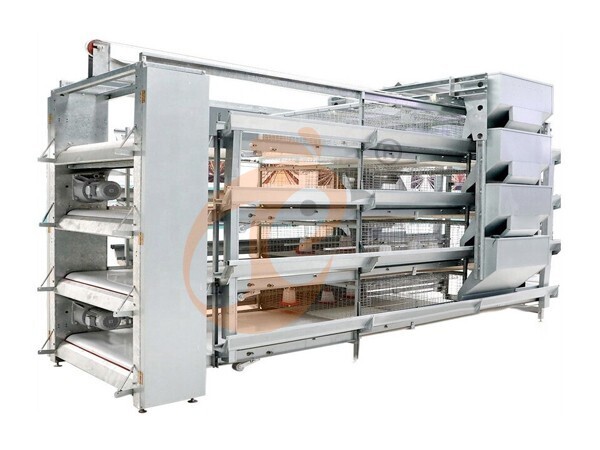
5. Our 24 hour online reception What’sApp NO. is +86 18830120193. >30,000 Broilers Semi-Automatic Harvest H Type Battery Cage1. More than 30,000 broilers a house, choose it.
2. It is designed to rearing 1 to 45 day old adult broiler ready for market.
3. Its lifespan is more than 20 years.
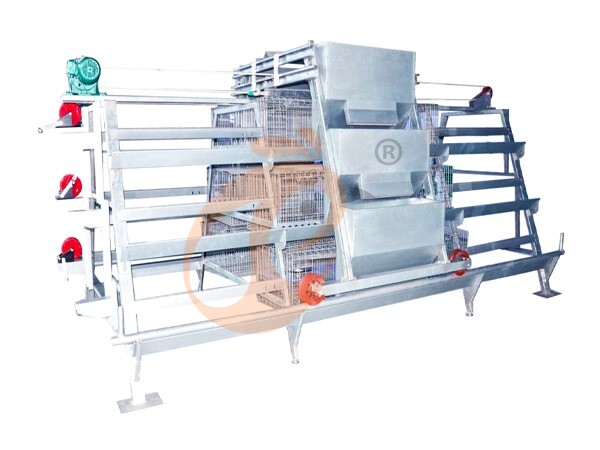
4. Our 24 hour online reception What’sApp NO. is +8618830120193, +234 8111199996. >30,000 Broilers Manual Harvest H Type Battery Cage1. More than 30,000 broilers a house, choose it.
2. It is designed to rearing 1 to 45 day old adult broiler ready for market.
3. Its lifespan is more than 20 years.
4. Its structure are Vcloud artificial intelligent fusion, electric control cabinet, automatic equipment of drinking, feeding and manure clean, manual harvesting.
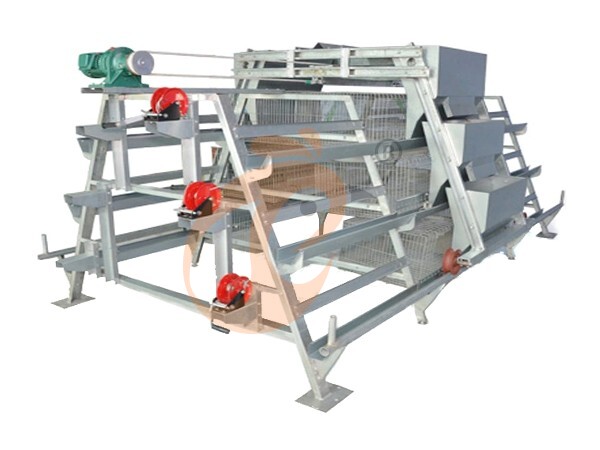
5. Our 24 hour online reception What’sApp NO. is +8618830120193, +234 8111199996. <30,000 Broilers Manual Harvest A Type Battery Cage1. Less 30,000 broilers a house, choose it.
2. It is designed to rearing 1 to 45 day old adult broiler ready for market.
3. Its lifespan is more than 20 years.
4. Its structure are Vcloud artificial intelligent fusion, electric control cabinet, automatic equipment of drinking, feeding and manure clean, manual harvesting.
5. Our 24 hour online reception What’sApp NO. is +8618830120193, +234 8111199996. HK Headquarter Offers EU-standard Poultry Farm Solutions, Manufacture Poultry Farm Equipment1. Continuous communication with the EU and the US
2. China, Nigeria, Ethiopia, Tanzania branch companies and factories
3. The products’ quality is customized for local poultry farms
4. Poultry cage and poultry farm equipment stock for sale
5. 24 online reception Whatsapp NO. : +8618830120193,contact us to get full information China Branch Offer Poultry Farm Business Plan, Manufacture Poultry Farm Equipment1. Address: Flat/RM 2416, 24/F, Runxing Building, Youyi Nan Street, Shijiazhuang City, Hebei Province, China
2. Poultry cage and poultry farm equipment factory and stock for sale
3. Customized for local poultry farms
4. Quality and design are based on Euro
5. 24 online reception Whatsapp NO. : +8618830120193 Nigeria Branch Offer Poultry Farm Business Plan, Manufacture Poultry Farm Equipment1. Address: After Sinoma Office, 200 Meters Near Danco Filling Station, Lagos/Ibadan Expressway, Lagos State, Nigeria
2. Poultry cage and poultry farm equipment factory and stock for sale
3. Customized for Nigerian poultry farms
4. Quality and design are based on Euro
5. 24 online reception Whatsapp NO. : +8618830120193 Ethiopia Branch Offer Poultry Farm Business Plan, Manufacture Poultry Farm Equipment1. Address: Gelan Gura, Akaki-kaliti Sub City, Addis Ababa, Ethiopia
2. Poultry cage and poultry farm equipment stock for sale
3. Customized for Ethiopian poultry farms
4. Quality and design are based on Euro
5. 24 online reception Whatsapp NO. : +8618830120193, contact us to get price list Tanzania Branch Offer Poultry Farm Business Plan, Manufacture Poultry Farm Equipment1. Address: No.8, Sova Road, Msufini, Mlandizi, Kibaha, Pwani, Tanzania
2. Poultry cage and poultry farm equipment factory and stock for sale
3. Customized for Tanzanian poultry farms
4. Quality and design are based on Euro
5. 24 online reception Whatsapp NO. : +8618830120193

Contact