


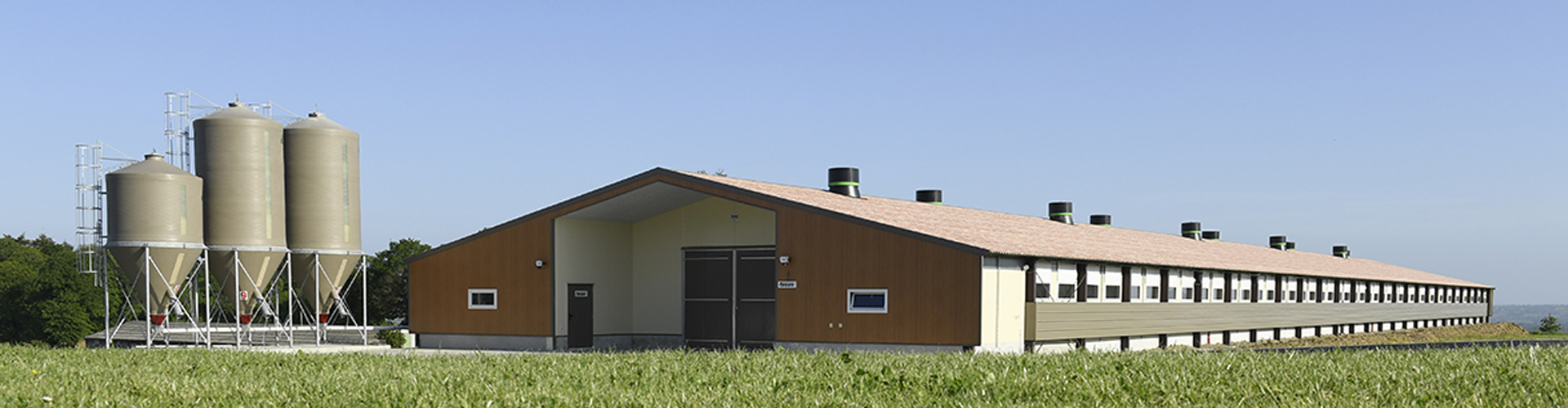
Blog
Feed mill investment directly influences poultry farm profitability, feed conversion efficiency, and operational sustainability.
Modern poultry feed mill systems reduce raw material losses, stabilize pellet quality, and improve nutrient consistency during continuous production cycles.
Commercial broiler farms and layer farms increasingly adopt automatic feed mill equipment to reduce long-term feed purchasing expenses.
Integrated poultry feed processing lines improve production scheduling, lower transportation dependence, and optimize daily flock feeding management.
Advanced feed manufacturing systems support poultry farm expansion through controlled feed formulation, stable output capacity, and measurable operational return performance.
Get professional poultry farm construction guidance, equipment selection solutions, and the latest price lists, whatsApp to +8618830120193, click to learn more:
Core Equipment Inside A Poultry Feed Mill
A modern poultry feed mill contains multiple interconnected machines responsible for grinding, mixing, pelleting, cooling, screening, and packaging feed materials.
Efficient feed processing equipment improves pellet durability, stabilizes feed particle size, and reduces nutritional segregation during storage and transportation.
Commercial poultry feed production lines increasingly use automatic batching systems and PLC control cabinets to improve formula precision and reduce manual operating errors.
Data is for reference only.Swipe horizontally to view full table.
Automatic poultry feed machine systems support continuous production scheduling and reduce downtime during large-scale poultry farm operations.
Why Poultry Farms Build Independent Feed Mills
Commercial poultry farms consume large feed volumes every month, creating substantial transportation expenses and distributor-related operating costs.
Independent feed mill installation allows poultry farms to purchase corn, soybean meal, wheat bran, fish meal, and premixes directly from raw material suppliers.
Feed production independence also improves emergency inventory control during seasonal market fluctuations and transportation interruptions.
Feed pellet machine technology additionally improves feed texture consistency and stabilizes nutrient density inside poultry rations.
Data is for reference only.Swipe horizontally to view full table.
EU standard reference only.
Feed manufacturing systems become increasingly profitable when poultry farm scale exceeds 50,000 broilers or 30,000 laying hens.
Feed Quality Directly Influences Poultry Performance
Feed consistency strongly affects broiler growth speed, egg production stability, mortality rates, and flock uniformity.
Modern feed mill plants improve ingredient mixing precision and reduce nutritional fluctuations caused by uneven raw material distribution.
Controlled grinding systems maintain stable particle sizes between 600 and 900 microns, supporting improved digestion performance during broiler growing phases.
Scientific poultry nutrition research demonstrates that pellet durability directly affects feed wastage and daily feed intake efficiency.
Data is for reference only.Swipe horizontally to view full table.
Stable feed structure improves poultry digestive absorption and reduces nutrient separation inside automatic feeding systems.
Raw Material Storage Creates Financial Advantages
Raw material storage capacity significantly influences annual poultry production costs.
Corn prices and soybean meal prices frequently fluctuate according to international grain market conditions, harvest seasons, and logistics availability.
Large poultry farms increasingly install steel silos ranging from 500 tons to 5,000 tons to support long-term feed ingredient storage.
Integrated feed mill engineering projects often include raw material receiving pits, bucket elevators, conveyor systems, and automatic weighing units.
Data is for reference only.Swipe horizontally to view full table.
EU standard reference only.
Large-scale feed storage systems improve purchasing flexibility and reduce supply instability during high-demand agricultural periods.
Electricity Consumption And Energy Efficiency
Feed mill energy consumption mainly depends on hammer mill operation, pellet machine compression load, and cooling system running duration.
High-efficiency feed production equipment reduces electricity consumption per ton while maintaining stable feed output quality.
Variable frequency motors and automatic load balancing systems increasingly appear in modern poultry feed processing factories.
Energy-saving technologies reduce unnecessary electrical losses during continuous industrial operation cycles.
Data is for reference only.Swipe horizontally to view full table.
EU standard reference only.
Larger poultry feed mill systems commonly achieve lower electricity cost per ton because of improved mechanical efficiency ratios.
Scientific Explanation About Pellet Feed Efficiency
Pellet feed processing changes starch structure and improves nutrient digestibility through steam conditioning and mechanical compression.
Conditioned feed particles absorb moisture more effectively and increase digestive enzyme interaction inside poultry intestinal systems.
Commercial broiler production research indicates improved daily weight gain performance when pellet feed replaces traditional mash feed formulas.
Lower feed dust concentration additionally improves poultry house air quality and reduces respiratory stress inside intensive farming environments.
Data is for reference only.Swipe horizontally to view full table.
Feed pellet machine systems therefore contribute directly to improved flock performance and reduced production losses.
Labor Savings Through Automation
Automatic poultry feed mill plants substantially reduce manual labor requirements during daily production operation.
Automatic batching systems perform ingredient weighing, mixing, conveying, pelleting, cooling, and packaging using centralized control software.
Reduced labor dependence improves production consistency and lowers long-term payroll expenses inside commercial poultry farming enterprises.
Modern feed mill automation additionally minimizes operational interruptions caused by labor shortages or inconsistent manual procedures.
Data is for reference only.Swipe horizontally to view full table.
EU standard reference only.
Automated feed production systems improve management efficiency and reduce contamination risks caused by repeated manual material handling.
Feed Mill Capacity Planning For Poultry Farms
Feed mill capacity selection determines long-term equipment utilization rates and future farm expansion flexibility.
Undersized feed production lines restrict production scheduling during peak consumption periods, while oversized systems increase unnecessary depreciation costs.
Commercial poultry operations usually design feed mills with additional reserve capacity to support future broiler house or layer house expansion projects.
Feed mill planning also considers storage capacity, delivery scheduling, electrical infrastructure, and raw material transportation logistics.
Data is for reference only.Swipe horizontally to view full table.
Correct capacity planning improves feed supply stability and supports long-term poultry business expansion strategies.
Maintenance Costs And Equipment Lifespan
Preventive maintenance strongly influences feed mill operating reliability and machine lifespan.
Hammer blades, pellet dies, bearings, conveyor chains, and mixer paddles require scheduled inspection to maintain stable feed processing efficiency.
Poor maintenance management increases mechanical vibration, reduces pellet quality, and creates production interruptions during intensive operating schedules.
Commercial feed factories usually allocate annual maintenance budgets equal to 3%–6% of total equipment investment value.
Data is for reference only.Swipe horizontally to view full table.
EU standard reference only.
Professional maintenance scheduling allows poultry feed mill systems to operate continuously for more than 25 years.
Transportation Efficiency And Internal Logistics
Internal feed transportation efficiency directly affects labor productivity, fuel consumption, and feeding schedule management.
Integrated poultry farm engineering projects increasingly use auger conveyor systems and pneumatic delivery pipelines to improve material movement efficiency.
Centralized feed mill positioning reduces truck transportation distance between poultry houses and feed storage facilities.
Automatic transportation systems additionally reduce feed contamination risks caused by repeated manual loading and unloading procedures.
Data is for reference only.Swipe horizontally to view full table.
Efficient feed logistics improve poultry house feeding consistency and reduce operational pressure during large-scale production cycles.
Environmental Benefits Of Modern Feed Mills
Modern poultry feed mill engineering projects increasingly focus on dust reduction, waste control, and workshop environmental stability.
Cyclone dust collectors and pulse dust removal systems reduce airborne particle concentration during grinding and pelleting operations.
Improved feed pellet durability additionally lowers feed losses inside poultry houses and decreases organic waste accumulation around feeders.
Reduced ammonia concentration inside poultry facilities improves poultry welfare and supports healthier production environments.
Data is for reference only.Swipe horizontally to view full table.
Modern poultry feed production facilities therefore improve both environmental compliance performance and operational efficiency.
Real Investment Return Example From A Broiler Farm
A commercial broiler farm operating 120,000 birds installed a 10 tons/hour automatic poultry feed mill equipped with pellet machine systems, cooling equipment, automatic batching units, and steel silo storage.
The complete engineering project included machinery installation, electrical systems, steel workshop construction, conveyor systems, and commissioning services.
Before independent feed production, the poultry farm purchased all feed from external regional suppliers.
After automatic feed mill installation, feed production costs declined substantially while broiler growth performance improved during production cycles.
Data is for reference only.Swipe horizontally to view full table.
EU standard reference only.
The poultry feed mill project achieved investment recovery within approximately 2.3 years under stable operating conditions.
FAQ
What Feed Mill Capacity Matches A 100,000 Bird Poultry Farm?
A poultry farm operating 100,000 broilers generally requires feed mill capacity between 8 and 10 tons/hour depending on feeding schedules, storage capacity, and production turnover frequency.
Integrated feed storage systems between 600 and 1,000 tons additionally improve raw material purchasing flexibility and operational continuity.
How Much Feed Cost Reduction Can Independent Feed Production Achieve?
Commercial poultry farms commonly reduce total feed cost between $45 and $85 per ton after independent feed production installation.
EU standard reference only.
Final savings depend on raw material purchasing strategy, transportation distance, pellet production efficiency, and electricity consumption performance.
Which Feed Mill Equipment Most Directly Influences ROI Performance?
Pellet machine systems, automatic batching equipment, and hammer mills most strongly influence feed quality consistency and long-term operating efficiency.
High-performance feed pellet machine systems reduce feed waste, improve pellet durability, and stabilize flock growth performance throughout production cycles.
Taiyu (HK) Group - One Of China Largest Feed Mill Manufacturer
Professional poultry feed mill systems support broiler farms, layer farms, and integrated livestock feed processing projects worldwide with stable production efficiency.
Global factory direct supply includes feed pellet machine systems, hammer mills, mixers, coolers, silos, and automatic packaging equipment solutions.
Complete poultry equipment production lines include poultry cage systems, automatic feeding systems, drinking systems, and ventilation engineering projects.
Professional Turn-key poultry farm engineering services include equipment installation, electrical configuration, steel structure construction, and technical commissioning support.
International export experience supports agricultural customers across Africa, Southeast Asia, Middle East, and South America with customized industrial solutions.
Contact Us To Received Your Customized Poultry Farm Plan
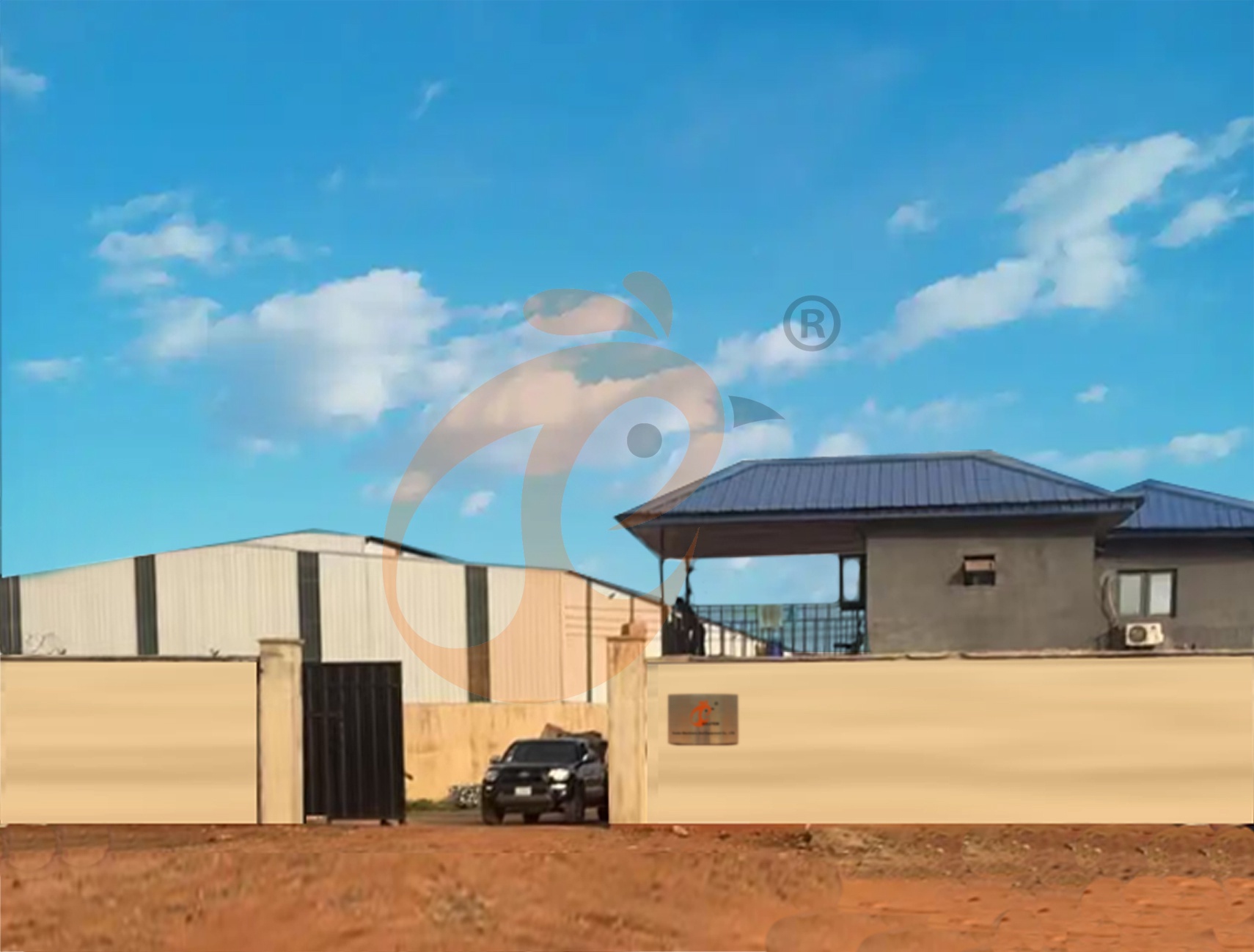
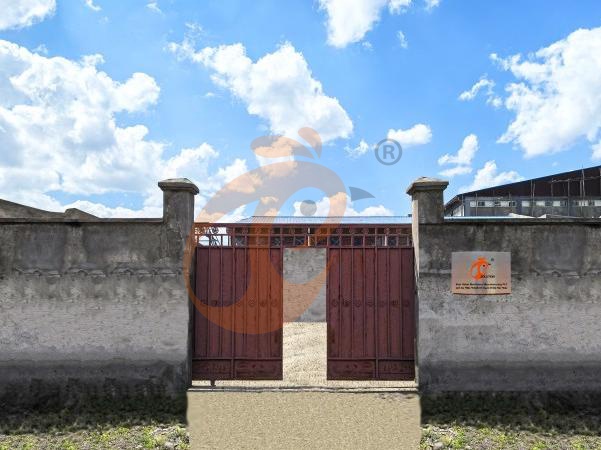
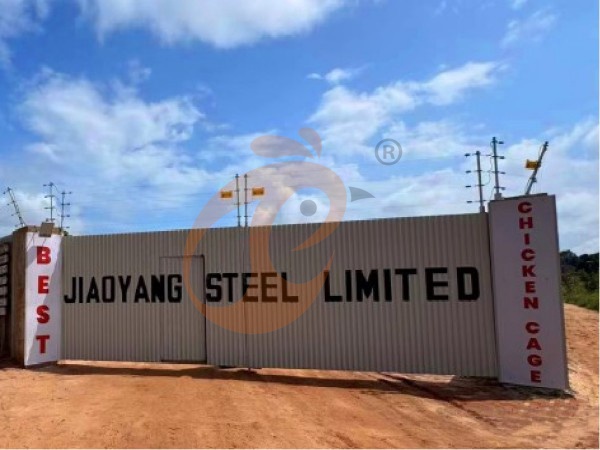
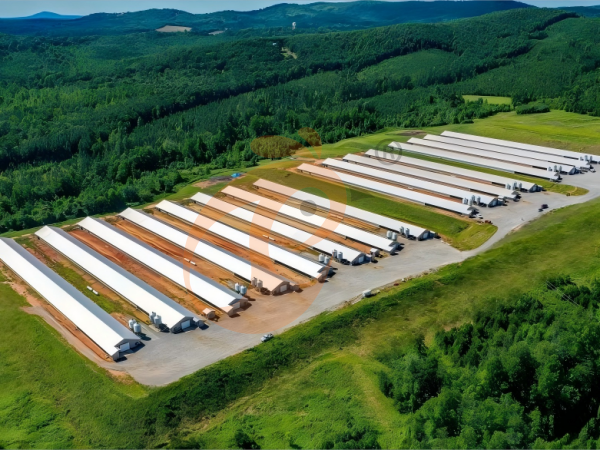
Headquarters And Branchs

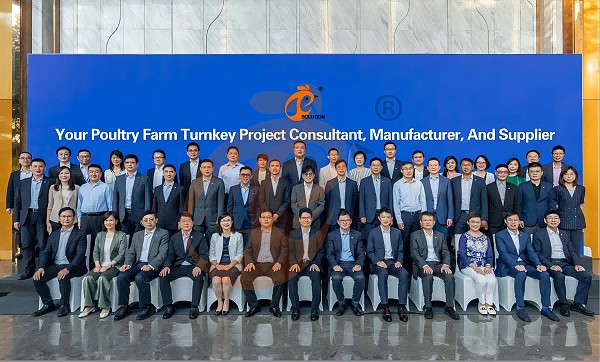
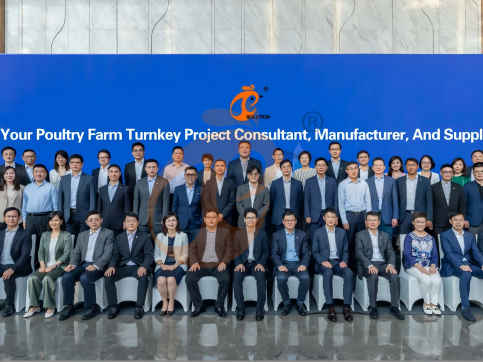
Hong Kong Headquarter Management Team
Hong Kong Headquarter Taiyu Industrial Group CO., LTD
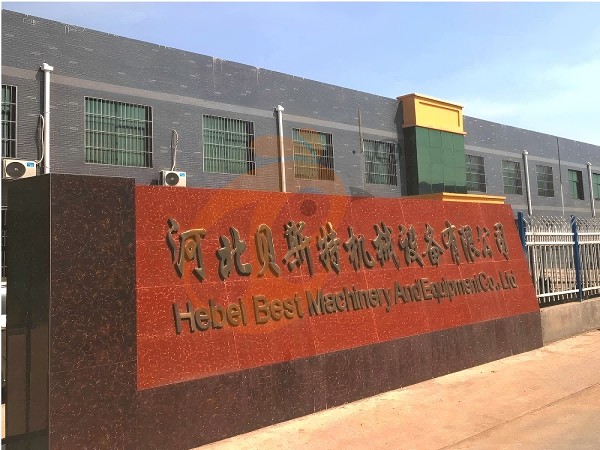
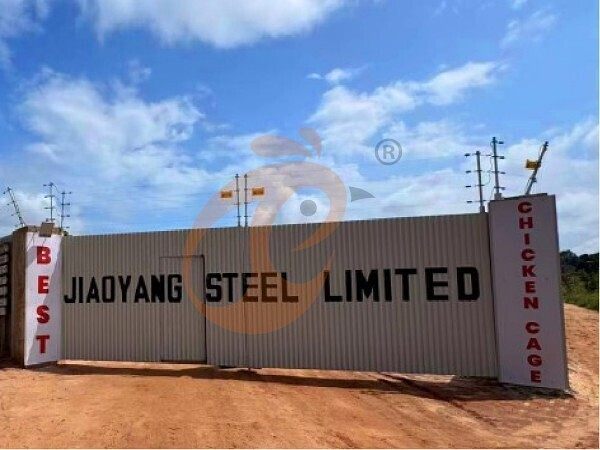
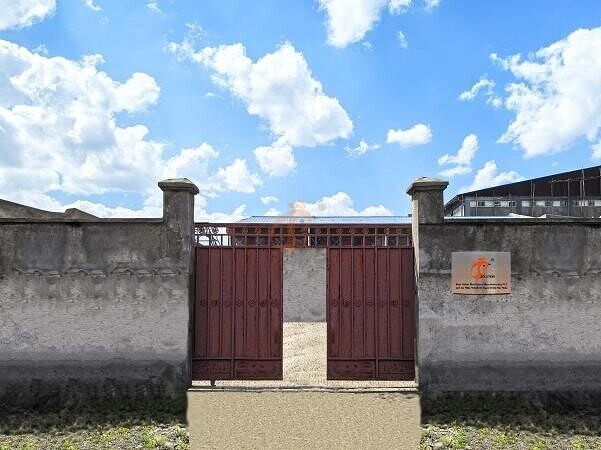
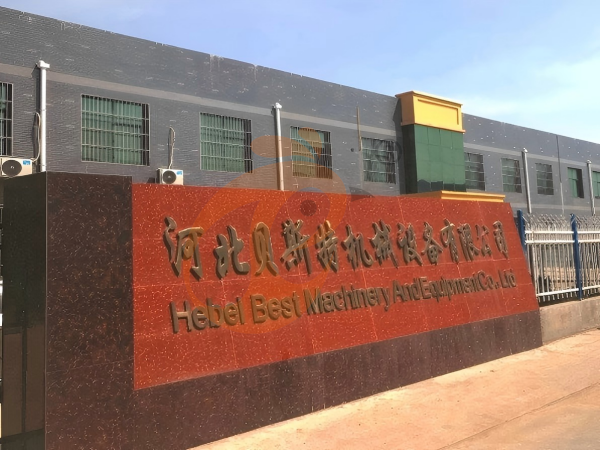
China Hebei Best Machinery And Equipment CO., LTD
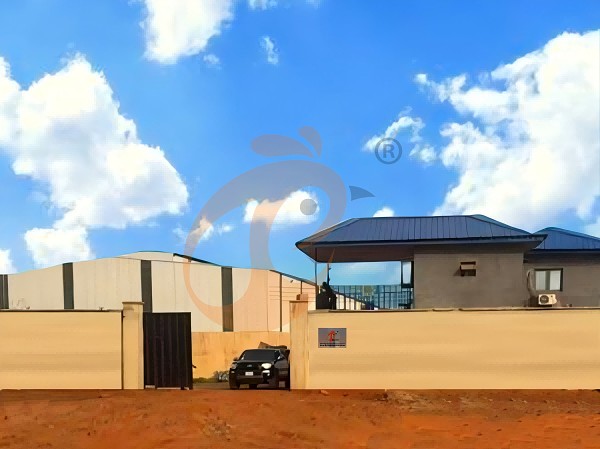
Nigeria Vanke Machinery And Equipment CO., LTD
Tanzania Best Machinery And Equipment CO., LTD
Ethiopia Best Hebei Machinery Manufacturing PLC
Reception /24 WhatsApp NO. : +8618830120193
FAQ
What Moisture Control Standards Are Required In Feed Milling For Poultry Chicken Feed?
Conditioning moisture increases to 16–18% before pelleting for optimal starch gelatinization.
Final feed moisture is controlled at 11–13% to ensure long-term storage stability.
What Energy Consumption Levels Are Standard In Feed Mixer And Feed Mill Operations For Poultry Chicken Farms?
Mixing systems require 3–8 kWh per batch depending on mixer volume and load ratio.
Pelletizing units operate at 60–90 kWh per ton for high-density poultry feed production.
What Raw Material Ratios Are Commonly Processed In Poultry Chicken Feed Mills?
Soybean meal accounts for 18–25% as main protein contributor for growth performance.
Premix addition remains at 2–5% ensuring vitamins and mineral balance stability.
- poultry farm
- poultry farms
- pellet machine
- poultry house
- poultry cage
- cage
- poultry farm construction
- poultry cage system
- automatic feeding system
- poultry equipment
- chickencage
- bestchickencage
- cage system
- cage systems
- Nigeria
- layer farm
- broiler farm
- commercial poultry farms
- large poultry farms
- poultry farming
- poultry cage systems
- poultry feed machine
- automatic poultry feed machine
- poultry feed mill
- poultry feed processing
- poultry farm ROI
- poultry house air quality
- poultry farm plan
- poultry farm profit
- poultry farm profitability
- poultry feed
- poultry feed production
- Ethiopia
Message
Products recommended
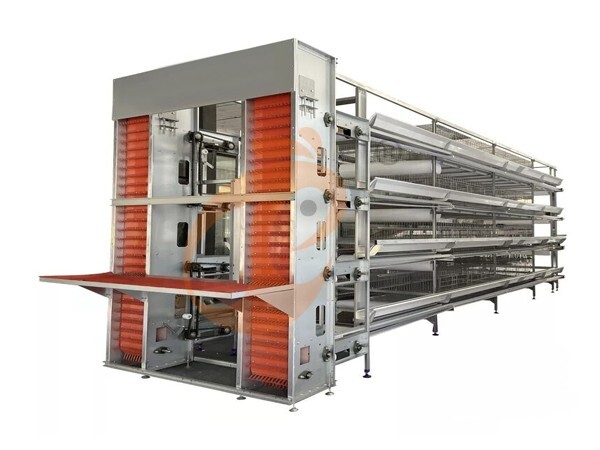
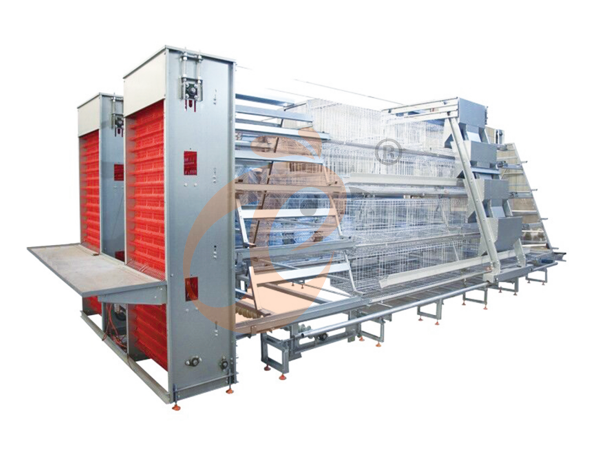
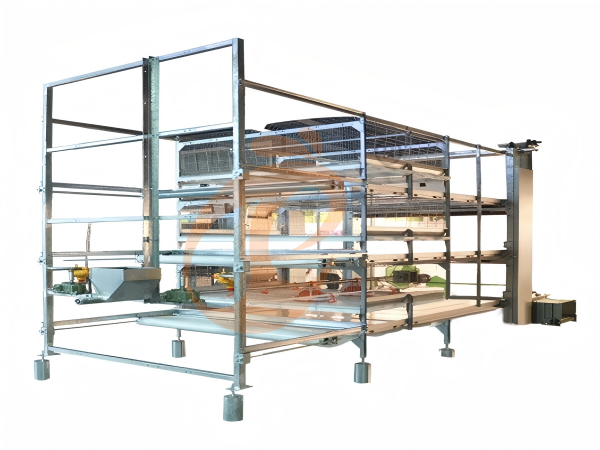
 >30,000 Pullets Automatic H Type Battery Cage1. More than 30,000 pullets a house, choose it.
2. It is designed to rearing older than 1 day old pullets to 12 to 16 weeks old chicken starting laying eggs.
3. Its lifespan is more than 25 years.
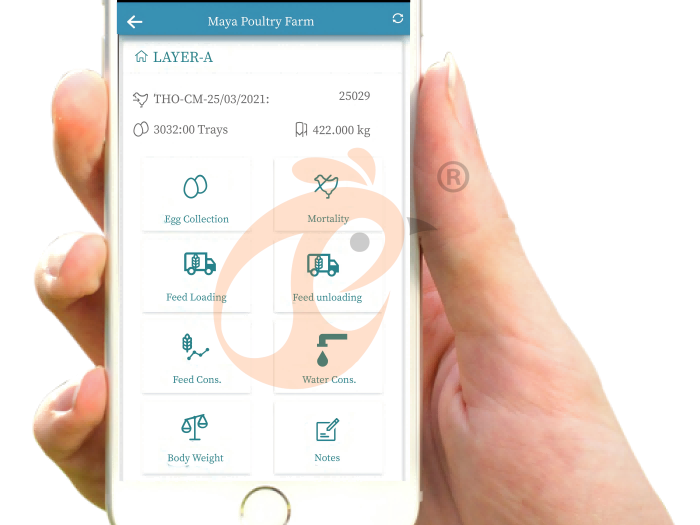
4. Its structure are Vcloud artificial intelligent fusion, electric control cabinet, automatic equipment of drinking, feeding, manure clean, manual harvesting.
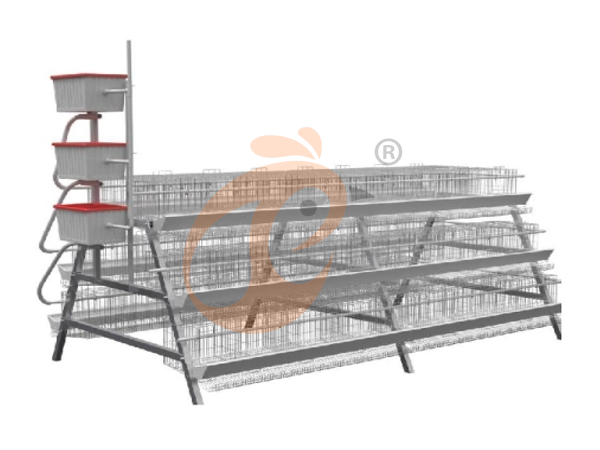
5. Our 24 hour online reception What’sApp NO. is +8618830120193 <30,000 Pullets Automatic A Type Battery Cage1. 10,000 to 30,000 pullets a house, choose it.
2. It is designed to rearing older than 1 day old pullets to 12 to 16 weeks old chicken starting laying eggs.
3. Its lifespan is more than 25 years.
4. Its structure are Vcloud artificial intelligent fusion, electric control cabinet, automatic equipment of drinking, feeding, manure clean, manual harvesting.
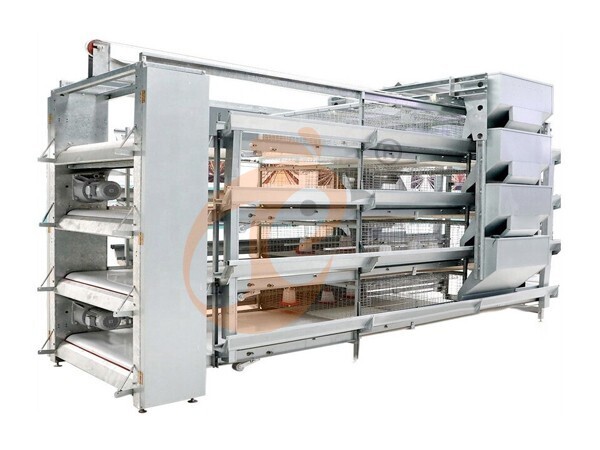
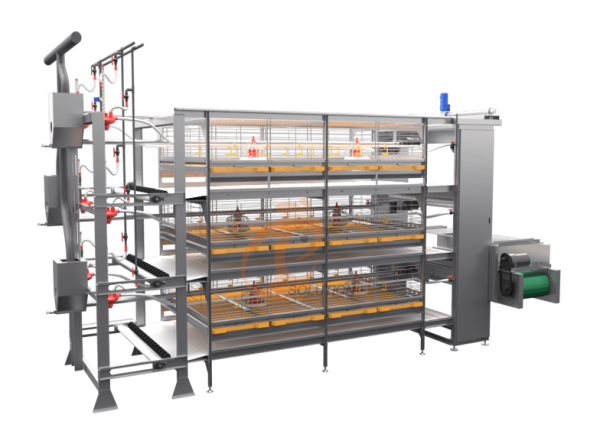
5. Our 24 hour online reception What’sApp NO. is +86 18830120193. >30,000 Broilers Semi-Automatic Harvest H Type Battery Cage1. More than 30,000 broilers a house, choose it.
2. It is designed to rearing 1 to 45 day old adult broiler ready for market.
3. Its lifespan is more than 20 years.
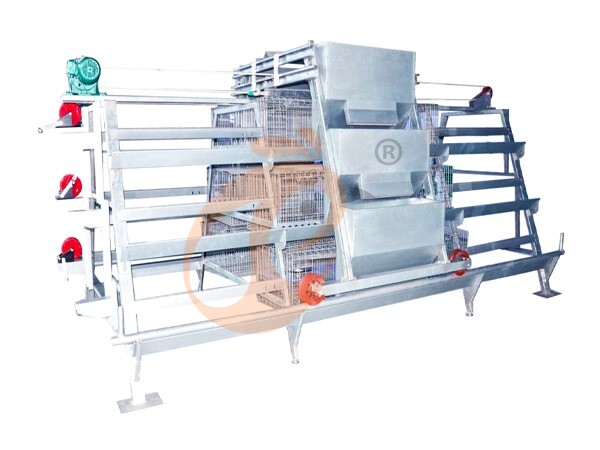
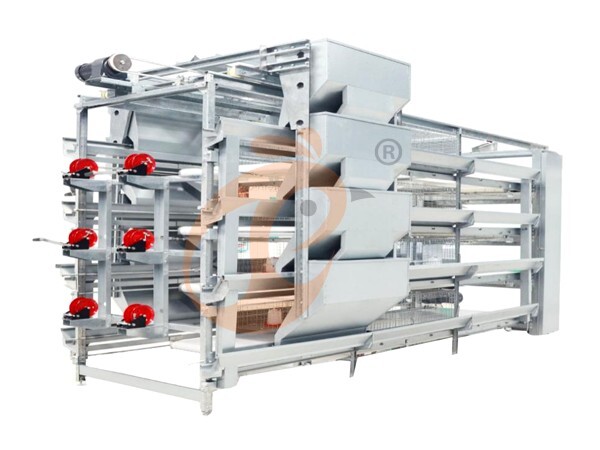
4. Our 24 hour online reception What’sApp NO. is +8618830120193, +234 8111199996. >30,000 Broilers Manual Harvest H Type Battery Cage1. More than 30,000 broilers a house, choose it.
2. It is designed to rearing 1 to 45 day old adult broiler ready for market.
3. Its lifespan is more than 20 years.
4. Its structure are Vcloud artificial intelligent fusion, electric control cabinet, automatic equipment of drinking, feeding and manure clean, manual harvesting.
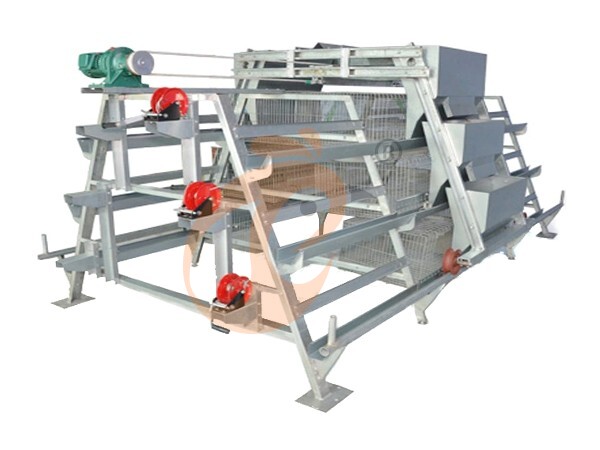
5. Our 24 hour online reception What’sApp NO. is +8618830120193, +234 8111199996. <30,000 Broilers Manual Harvest A Type Battery Cage1. Less 30,000 broilers a house, choose it.
2. It is designed to rearing 1 to 45 day old adult broiler ready for market.
3. Its lifespan is more than 20 years.
4. Its structure are Vcloud artificial intelligent fusion, electric control cabinet, automatic equipment of drinking, feeding and manure clean, manual harvesting.
5. Our 24 hour online reception What’sApp NO. is +8618830120193, +234 8111199996. HK Headquarter Offers EU-standard Poultry Farm Solutions, Manufacture Poultry Farm Equipment1. Continuous communication with the EU and the US
2. China, Nigeria, Ethiopia, Tanzania branch companies and factories
3. The products’ quality is customized for local poultry farms
4. Poultry cage and poultry farm equipment stock for sale
5. 24 online reception Whatsapp NO. : +8618830120193,contact us to get full information China Branch Offer Poultry Farm Business Plan, Manufacture Poultry Farm Equipment1. Address: Flat/RM 2416, 24/F, Runxing Building, Youyi Nan Street, Shijiazhuang City, Hebei Province, China
2. Poultry cage and poultry farm equipment factory and stock for sale
3. Customized for local poultry farms
4. Quality and design are based on Euro
5. 24 online reception Whatsapp NO. : +8618830120193 Nigeria Branch Offer Poultry Farm Business Plan, Manufacture Poultry Farm Equipment1. Address: After Sinoma Office, 200 Meters Near Danco Filling Station, Lagos/Ibadan Expressway, Lagos State, Nigeria
2. Poultry cage and poultry farm equipment factory and stock for sale
3. Customized for Nigerian poultry farms
4. Quality and design are based on Euro
5. 24 online reception Whatsapp NO. : +8618830120193 Ethiopia Branch Offer Poultry Farm Business Plan, Manufacture Poultry Farm Equipment1. Address: WR93+FQ2, Addis Ababa, Ethiopia
2. Poultry cage and poultry farm equipment stock for sale
3. Customized for Ethiopian poultry farms
4. Quality and design are based on Euro
5. 24 online reception Whatsapp NO. : +8618830120193, contact us to get price list Tanzania Branch Offer Poultry Farm Business Plan, Manufacture Poultry Farm Equipment1. Address: No.8, Sova Road, Msufini, Mlandizi, Kibaha, Pwani, Tanzania
2. Poultry cage and poultry farm equipment factory and stock for sale
3. Customized for Tanzanian poultry farms
4. Quality and design are based on Euro
5. 24 online reception Whatsapp NO. : +8618830120193


Contact
By clicking 'Allow All', you agree to the storage of cookies on your device to enhance site navigation, analyze site usage and assist with our marketing efforts.