


Blog
Cost-effective feed mixers are widely used in dairy, beef, poultry, and swine farms to ensure uniform nutrient distribution across total mixed rations.
Feed mixer agricultural machinery improves digestion efficiency, stabilizes daily weight gain curves, and reduces selective feeding behavior in herds.
Modern livestock operations rely on precise ration blending systems for predictable production output and feed utilization control.
Total Mixed Ration systems combine forage, grains, minerals, and additives into one homogeneous feed batch for consistent intake.
Feed engineering research confirms uniform mixing improves feed conversion efficiency and reduces nutritional imbalance risks in large-scale farming systems.
Get professional poultry farm construction guidance, equipment selection solutions, and the latest price lists, whatsApp to +8618830120193, click to learn more:
Scientific Principle Behind Feed Mixing
Feed mixing operates through mechanical convection, diffusion, and particle shear interaction inside enclosed chambers.
Auger rotation, paddle movement, and gravity cycles repeatedly redistribute particles until uniform composition is achieved.
Vertical systems depend on upward lifting and gravitational fall cycles, while horizontal systems use continuous lateral shear forces.
Coefficient of variation reduction is the primary performance indicator used in evaluating feed uniformity consistency in livestock nutrition systems.
Particle redistribution dynamics directly influence nutrient dispersion quality in compound feed formulations.
Mechanical agitation intensity determines how quickly micro-ingredients integrate into bulk feed matrices.
Main Types Of Feed Mixers
Additional classification helps farms match equipment structure with production intensity and ration complexity levels.
Equipment classification directly influences batching strategy, feeding frequency, and formulation precision in farm systems.
Higher capacity configurations are typically selected for centralized feed preparation hubs in industrial livestock operations.
Vertical Feed Mixers: Structural Overview
Vertical feed mixers use a single or multi-auger system inside a conical or cylindrical chamber.
Feed ingredients are lifted upward by screw rotation and fall downward under gravitational force.
Operational parameters define suitability for low-to-medium throughput farms with simplified ration structures.
Energy demand remains relatively stable across moderate load variations in small-scale feeding environments.
Compact design supports farms with limited installation space and intermittent feeding schedules.
Mechanical simplicity reduces operator dependency during routine batch processing cycles.
Horizontal Feed Mixers: Structural Overview
Horizontal feed mixers operate using paddles or ribbon agitators inside elongated trough chambers.
Feed materials move in multiple directional paths through continuous shear and folding motion.
These systems are optimized for high-frequency batching and precision-controlled ration distribution environments.
Mixing uniformity improves significantly under multi-stage ingredient blending conditions.
Design architecture supports rapid turnover in commercial feed processing lines.
Higher mechanical complexity allows better handling of fibrous and multi-density ingredients.
Cost Structure Of Feed Mixer Investment
Cost evaluation includes acquisition, maintenance cycles, and energy demand distribution across lifecycle stages.
Capital planning must consider long-term replacement intervals and operational throughput requirements.
European union standard reference only.
Investment structure reflects different automation levels and production intensities across farm scales.
Higher specification units generally correlate with improved operational continuity and reduced feed variability losses.
Feed Efficiency Performance Comparison
Performance differences reflect structural design impact on particle homogeneity and nutrient dispersion accuracy.
More advanced mixing systems reduce stratification effects during high-density ingredient processing.
Lower variance values indicate improved ration uniformity and feeding stability.
Enhanced consistency directly supports more predictable livestock growth performance outcomes.
Farm Scale Suitability
Farm size directly determines equipment selection logic and operational capacity requirements.
Production scale alignment reduces underutilization or overload risks in feeding systems.
Capacity alignment ensures stable feeding cycles and reduces operational bottlenecks in production flow.
Industrial systems are typically integrated into centralized feed preparation infrastructure networks.
Operational Efficiency Factors
Operational efficiency depends on ingredient flexibility, additive handling capability, and system ergonomics.
System configuration affects daily workload distribution and processing stability.
Higher flexibility systems enable more complex ration formulations with reduced batching constraints.
Maintenance planning must consider cleaning cycles and operational downtime scheduling.
Hidden Costs And Long-Term Considerations
Long-term performance is influenced by mechanical wear patterns, energy stability, and precision feeding requirements.
Gearbox oil degradation typically occurs after 1,200–1,800 operating hours, reducing torque transmission stability under high-load batching cycles.
Bearing vibration amplitude can exceed 2.5 mm/s RMS when lubrication intervals are extended beyond maintenance schedules, affecting shaft alignment precision.
Electrical fluctuation tolerance is generally limited to ±8% voltage variation, beyond which motor winding temperature rise becomes significant.
Cutting knife wear may reach 0.3–0.6 mm per 1,000 tons of feed processed, gradually affecting particle uniformity in downstream mixing stages.
Infrastructure layout constraints also influence expansion feasibility in long-term farm planning.
Frequently Asked Questions
Q1: What determines feed mixer selection for farms?
Selection depends on herd size, ration complexity, and daily feed output requirements.
Medium-scale operations typically require 600–2000 Kg daily processing capacity.
Q2: Why does mixing uniformity matter in livestock feeding?
Uniform mixing ensures stable nutrient intake across all animals in a herd.
It reduces performance variation caused by ingredient separation during feeding cycles.
Q3: What is the expected lifespan of feed mixers?
Service life typically ranges from 6 to 12 years depending on usage intensity.
Maintenance quality and load consistency strongly influence equipment longevity.
Taiyu (HK) Group - One Of China Biggest Feed Mixer Manufacturer
Feed mixer systems are deployed in dairy cattle farms, poultry feeding lines, and integrated livestock production facilities.
Engineering design supports industrial scale mixing operations with stable output consistency under continuous working conditions.
Global factory direct supply chain enables standardized manufacturing for agricultural equipment distribution across multiple regions.
Poultry equipment integration allows system compatibility with automated feeding and storage infrastructure platforms.
Turn-key engineering solutions support full farm installation, commissioning, and production line optimization services.
Contact Us To Received Your Customized Poultry Farm Plan
Headquarters And Branchs
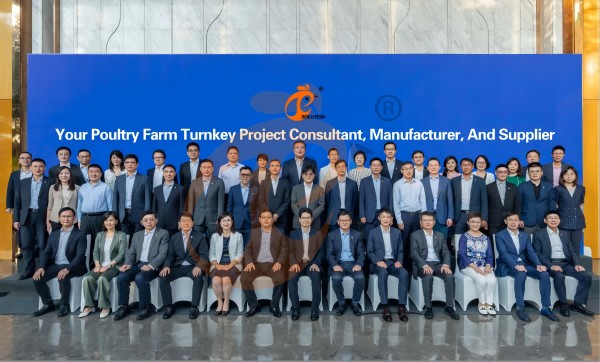
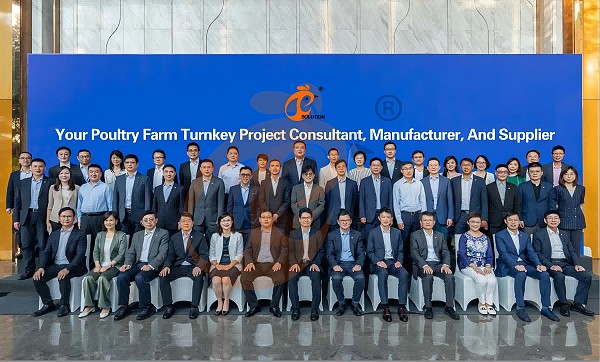
Hong Kong Headquarter Management Team
Hong Kong Headquarter Taiyu Industrial Group CO., LTD
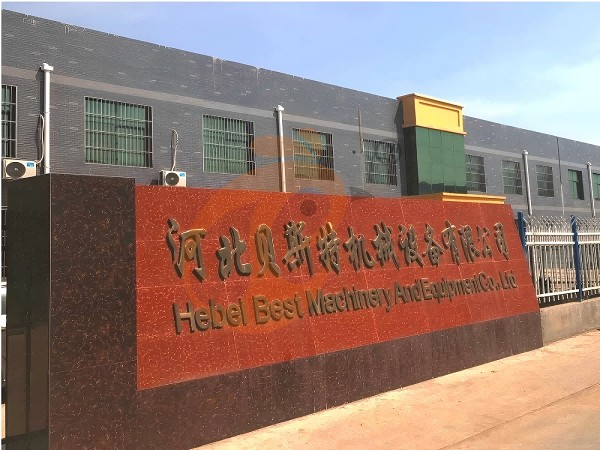
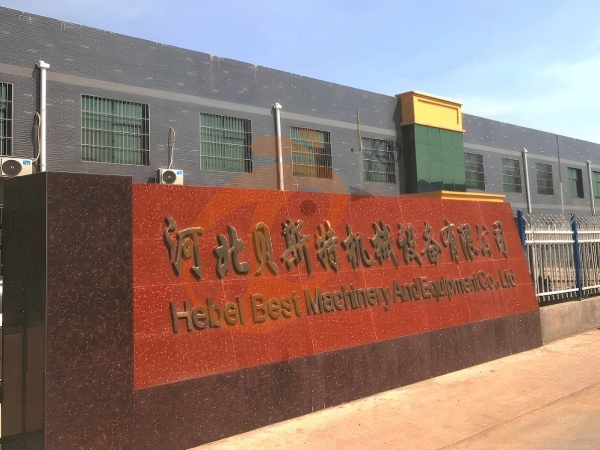
China Hebei Best Machinery And Equipment CO., LTD
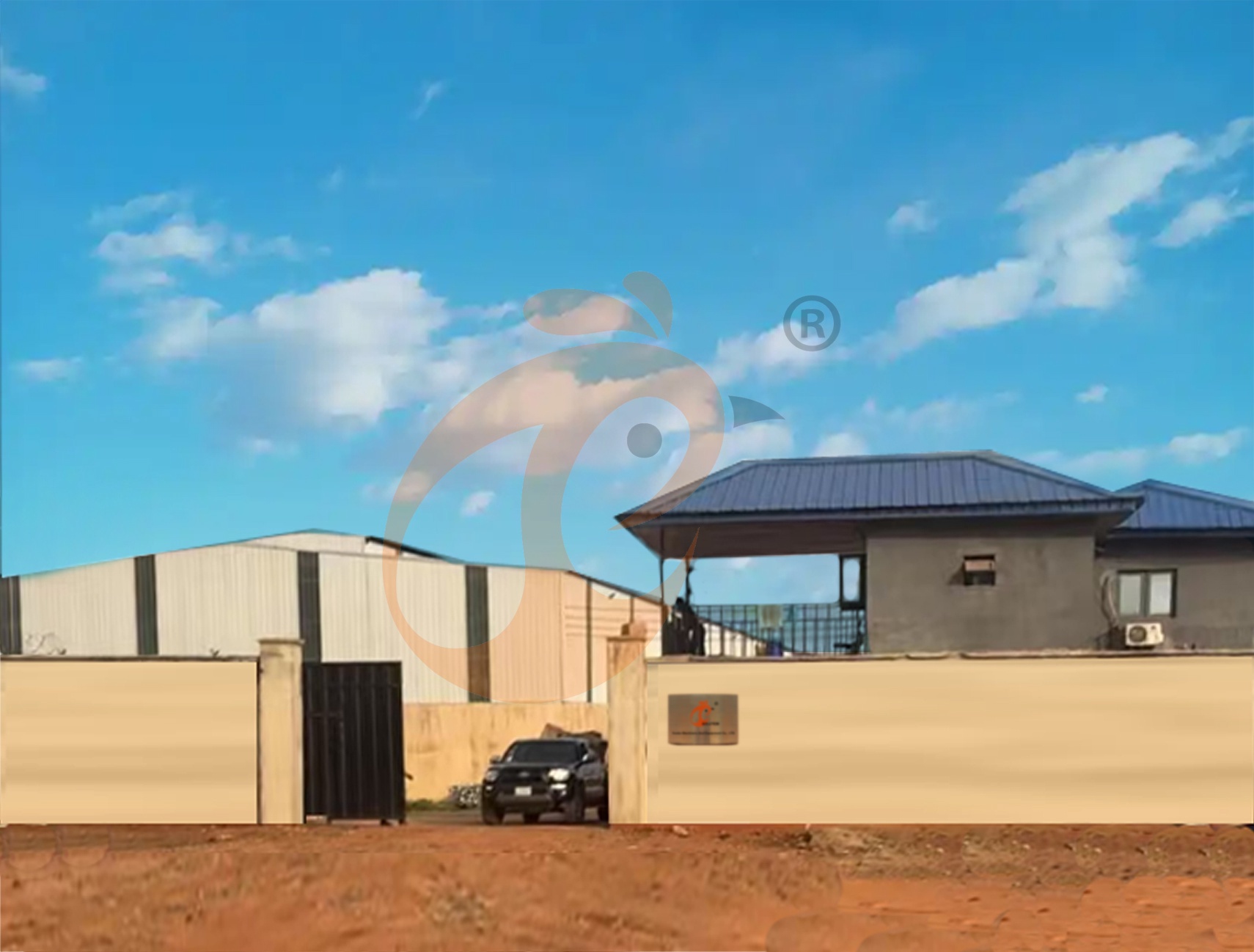
Nigeria Vanke Machinery And Equipment CO., LTD
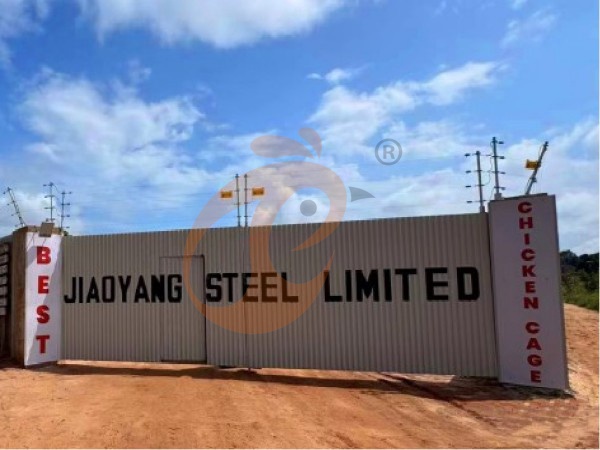
Tanzania Best Machinery And Equipment CO., LTD
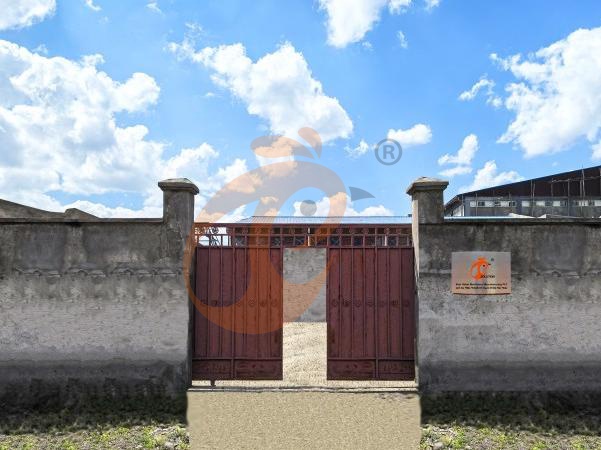
Ethiopia Best Hebei Machinery Manufacturing PLC
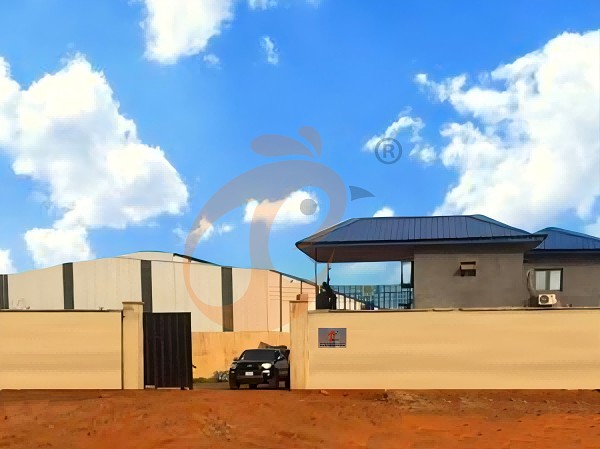
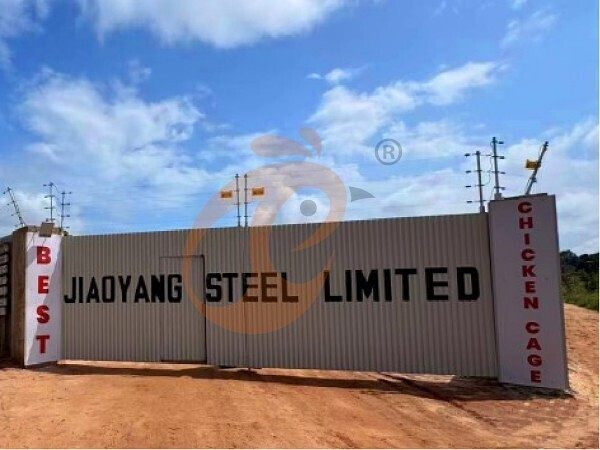
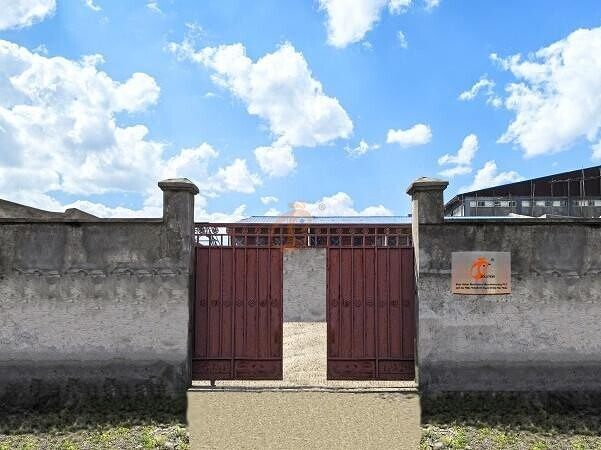
Reception /24 WhatsApp NO. : +8618830120193
FAQ
What Are The Main Equipment Components In Feed Mill And Feed Mixer Systems For Poultry Chicken Production?
Hammer mill units operate with rotor speeds of 2800–3600 rpm for efficient grain size reduction.
Twin-shaft mixers achieve batch capacities of 500–2000 kg per cycle for uniform poultry feed blending.
What Dust Control Requirements Are Needed In Feed Mill Operations For Poultry Chicken Farms?
Cyclone separators remove 85%–92% of airborne particles during grinding and conveying processes.
Negative pressure systems maintain airflow velocity between 0.8–1.2 m/s to prevent dust leakage.
What Temperature Parameters Are Used In Feed Mill Processing For Poultry Chicken Feed?
Conditioning temperature reaches 75–85°C to improve pellet durability and pathogen reduction.
Cooling stage reduces pellet temperature to within 5°C of ambient conditions for safe storage.
Message
Products recommended
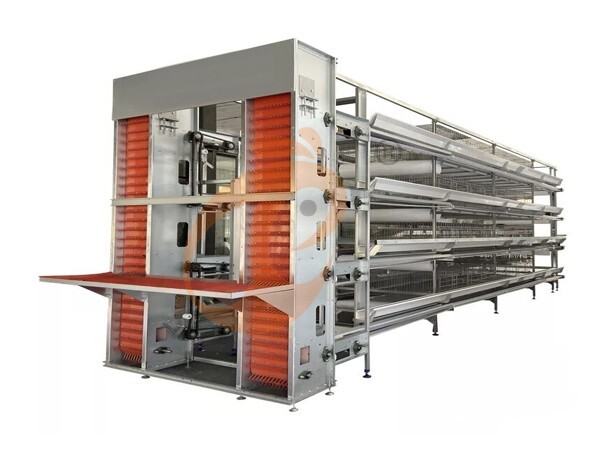
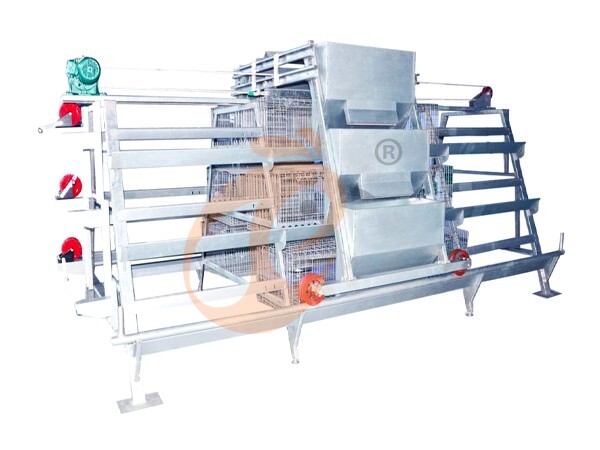
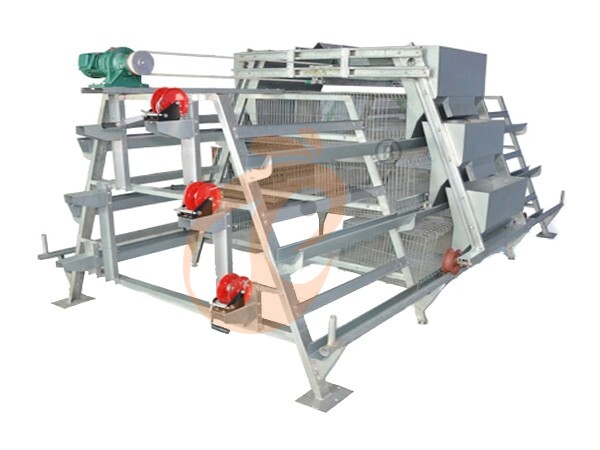
 >30,000 Pullets Automatic H Type Battery Cage1. More than 30,000 pullets a house, choose it.
2. It is designed to rearing older than 1 day old pullets to 12 to 16 weeks old chicken starting laying eggs.
3. Its lifespan is more than 25 years.
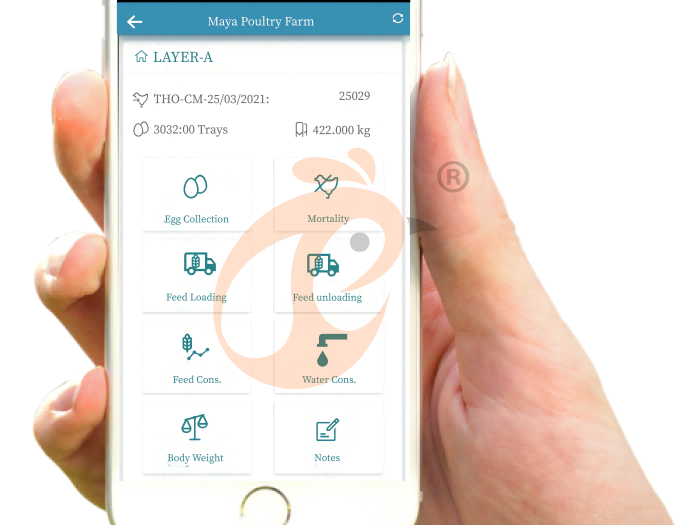
4. Its structure are Vcloud artificial intelligent fusion, electric control cabinet, automatic equipment of drinking, feeding, manure clean, manual harvesting.
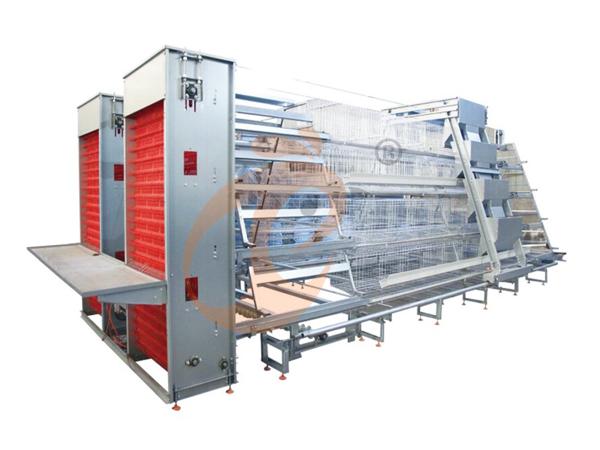
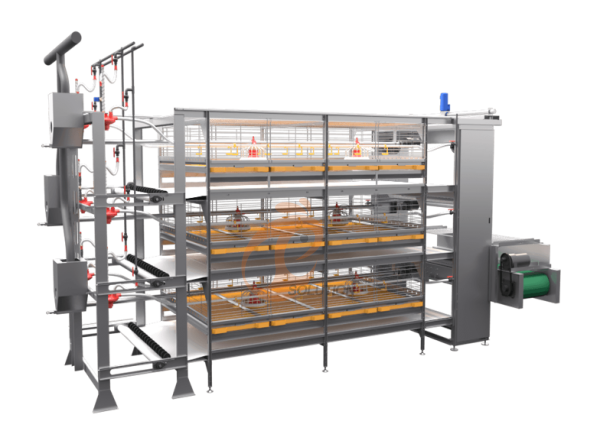
5. Our 24 hour online reception What’sApp NO. is +8618830120193 <30,000 Pullets Automatic A Type Battery Cage1. 10,000 to 30,000 pullets a house, choose it.
2. It is designed to rearing older than 1 day old pullets to 12 to 16 weeks old chicken starting laying eggs.
3. Its lifespan is more than 25 years.
4. Its structure are Vcloud artificial intelligent fusion, electric control cabinet, automatic equipment of drinking, feeding, manure clean, manual harvesting.
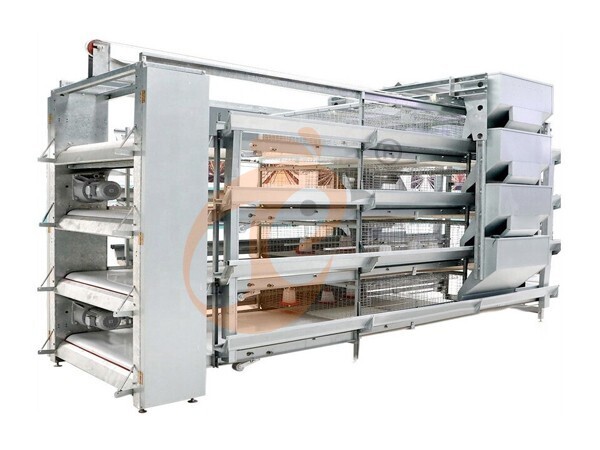
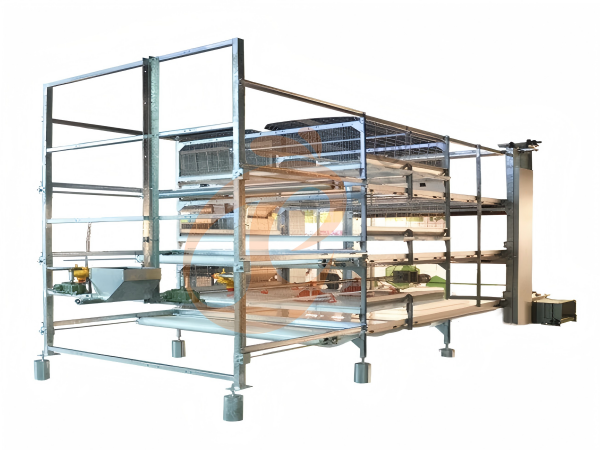
5. Our 24 hour online reception What’sApp NO. is +86 18830120193. >30,000 Broilers Semi-Automatic Harvest H Type Battery Cage1. More than 30,000 broilers a house, choose it.
2. It is designed to rearing 1 to 45 day old adult broiler ready for market.
3. Its lifespan is more than 20 years.
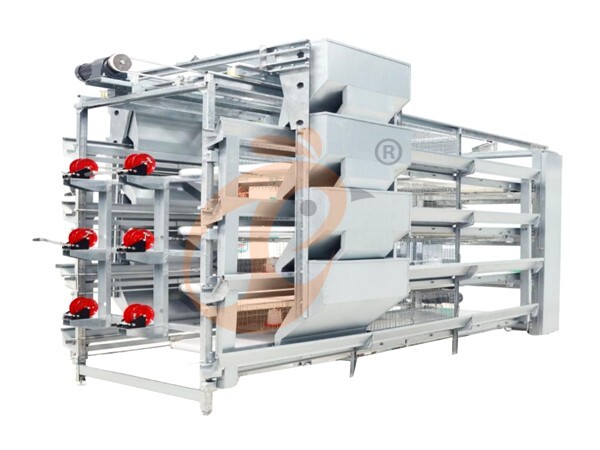
4. Our 24 hour online reception What’sApp NO. is +8618830120193, +234 8111199996. >30,000 Broilers Manual Harvest H Type Battery Cage1. More than 30,000 broilers a house, choose it.
2. It is designed to rearing 1 to 45 day old adult broiler ready for market.
3. Its lifespan is more than 20 years.
4. Its structure are Vcloud artificial intelligent fusion, electric control cabinet, automatic equipment of drinking, feeding and manure clean, manual harvesting.
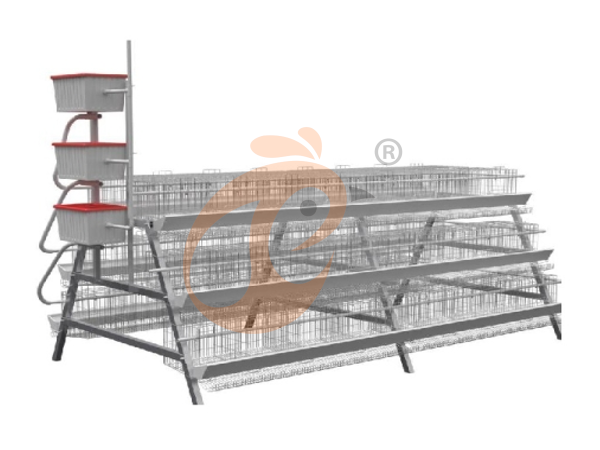
5. Our 24 hour online reception What’sApp NO. is +8618830120193, +234 8111199996. <30,000 Broilers Manual Harvest A Type Battery Cage1. Less 30,000 broilers a house, choose it.
2. It is designed to rearing 1 to 45 day old adult broiler ready for market.
3. Its lifespan is more than 20 years.
4. Its structure are Vcloud artificial intelligent fusion, electric control cabinet, automatic equipment of drinking, feeding and manure clean, manual harvesting.
5. Our 24 hour online reception What’sApp NO. is +8618830120193, +234 8111199996. HK Headquarter Offers EU-standard Poultry Farm Solutions, Manufacture Poultry Farm Equipment1. Continuous communication with the EU and the US
2. China, Nigeria, Ethiopia, Tanzania branch companies and factories
3. The products’ quality is customized for local poultry farms
4. Poultry cage and poultry farm equipment stock for sale
5. 24 online reception Whatsapp NO. : +8618830120193,contact us to get full information China Branch Offer Poultry Farm Business Plan, Manufacture Poultry Farm Equipment1. Address: Flat/RM 2416, 24/F, Runxing Building, Youyi Nan Street, Shijiazhuang City, Hebei Province, China
2. Poultry cage and poultry farm equipment factory and stock for sale
3. Customized for local poultry farms
4. Quality and design are based on Euro
5. 24 online reception Whatsapp NO. : +8618830120193 Nigeria Branch Offer Poultry Farm Business Plan, Manufacture Poultry Farm Equipment1. Address: After Sinoma Office, 200 Meters Near Danco Filling Station, Lagos/Ibadan Expressway, Lagos State, Nigeria
2. Poultry cage and poultry farm equipment factory and stock for sale
3. Customized for Nigerian poultry farms
4. Quality and design are based on Euro
5. 24 online reception Whatsapp NO. : +8618830120193 Ethiopia Branch Offer Poultry Farm Business Plan, Manufacture Poultry Farm Equipment1. Address: Gelan Gura, Akaki-kaliti Sub City, Addis Ababa, Ethiopia
2. Poultry cage and poultry farm equipment stock for sale
3. Customized for Ethiopian poultry farms
4. Quality and design are based on Euro
5. 24 online reception Whatsapp NO. : +8618830120193, contact us to get price list Tanzania Branch Offer Poultry Farm Business Plan, Manufacture Poultry Farm Equipment1. Address: No.8, Sova Road, Msufini, Mlandizi, Kibaha, Pwani, Tanzania
2. Poultry cage and poultry farm equipment factory and stock for sale
3. Customized for Tanzanian poultry farms
4. Quality and design are based on Euro
5. 24 online reception Whatsapp NO. : +8618830120193


Contact